





Our Resources
Sharing knowledge to shape a better tomorrow

Featured

Blogs

The Purpose of Deepa’s Life: Her Daughter
Routine days often take the most unexpected turns for a person in the social development sector. A reflection of this was my conversation with Deepa, a resident of Melakottaiyur in Kancheepuram district, Tamil Nadu. Along with an intern from Sweden and the project team, we visited multiple project sites in and around Chennai and Kancheepuram. Of the beneficiaries we spoke to at these locales, the interaction with Deepa still stands out.
Deepa, an informal waste picker and mother to Sivasakthi, a primary school student, along with their extended family, as well as those living together in this commune near the Melakottaiyur panchayat office, were more than happy to talk to us about their transformative journey post Hand in Hand India’s interventions. The conversation with them - informal waste pickers, or ‘Recycle Guardians’ rather, a term we in the organisation believe they deserve - covered topics like the facilitation of identification documents such as Aadhaar, PAN, and Voter identity cards and ‘Pattas’ or documentation for land; enrolment in government schemes; financial and digital literacy; and material to facilitate waste collection, including Bora bags, vehicles, and fluorescent coloured T-shirts for safety in the dark.
Though projects like these, undertaken by our Sustainable Waste Management team, are no small feat, we often hear these stories of transformation on a routine basis. However, this routine conversation soon took a different turn with the enthusiastic Deepa taking the lead and steering our interaction thereafter.
With a sparkle in her eyes, she spoke to us about her daughter, Sivasakthi, a first-generation school-goer, who was in the middle of a school day when we visited that afternoon. She told us that her daughter wasn’t just stopping at gaining education but was teaching her to read too, and would playfully use a stick to hit her if she was not being a good student – a strict teacher indeed! She even pointed to a poster hanging nearby to show us the way her daughter would read and help her learn as well. Smiling, she then informed us that teachers and the management at the school would proudly exclaim that a girl from a socially and economically marginalised community was gaining education and doing so well.
It was also interesting that the topic of the English language often came up in this conversation, with Deepa mentioning her desire for her daughter to one day be able to speak with ease. Deepa again specifically pointed to a woman member of our project team to highlight her wish for her daughter to be able to speak the language with similar confidence in the future, making one think that she was truly trying to manifest her dreams, being able to connect aspects such as gender and language to those of her daughter.
Furthermore, she pointed out to the anklet worn by the same woman employee, mentioning that she and her daughter would save money using the ‘Undiyal’ (savings box) provided by our team alongside financial literacy, and buy educational material and colouring books, and possibly an anklet like the one worn by our team member too. She then reiterated at the end of the conversation her hope that her daughter would one day get a good job, and that she didn’t mind being a Recycle Guardian, with the hope that getting her hands dirty can at least provide Sivasakthi with a good job and stability.
Deepa’s husband left her when their daughter was merely two months old, something that we were informed about by her uncle later in this conversation, in passing. This life-changing moment was in no way the focus of our conversation. While we often tend to romanticise the underdog story, the interaction with Deepa felt raw in many ways. Though she lived with others in her family, she knew that her daughter was her sole responsibility. With no intentional effort, she guided the conversation in a manner that was anchored in her being proud and in awe of her daughter Sivasakthi, in many ways reflecting aspirations for social mobility, something that we often tend to overlook when covering projects that focus on providing basic amenities to communities that lack them.
Deepa’s life trajectory is not one of overnight transformation. It is a reminder for us to channel discomfort and suffering in our own lives towards a larger purpose and aspiration rather than fixating on it. A choice that is solely our own. Her life, as well as her daughter’s, is a reminder that projects such as these must place decision-making power in the hands of beneficiaries. By doing so, interventions will merely serve as a catalyst, with individuals using them to steer their lives in the direction of their choice. With time, Sivasakthi will also develop dreams of her own. Possibly an amalgamation of her and her mother’s. Irrespective of this, the education, exposure and confidence that come with it, powered by the belief that her mother has in her, will continue to guide her life.
At Hand in Hand India, we believe that true sustainability begins at the grassroots. This is evident in Chennai, where 2 neglected lakes - Tondiarpet Lake and Basin Bridge Lake have found new life through the Chennai Lake Ecological Restoration Project (CLERP).
With generous funding support from Gurukrupa Foundation, we set out on a mission not just to restore 2 water bodies, but to reimagine how urban ecosystems can work for people, wildlife, and the climate together.
Why Lakes Matter More Than Ever
In cities like Chennai, lakes are not just natural assets, they are lifelines. They store water, recharge groundwater, reduce flood risks, support biodiversity, and offer critical green space. However, years of neglect, encroachments, and pollution had turned these vital water bodies into environmental hazards.
That’s where CLERP stepped in.
Tondiarpet Lake:
From Forgotten Wetland to Thriving Urban Oasis
Spanning 40.87 hectares, Tondiarpet Lake had become heavily silted and unusable. Our restoration efforts included the excavation of 18,000 cubic metres of earth, which reestablished natural water flow and enhanced storage capacity.
We also planted 600 native saplings around the lake, ensuring long-term ecological balance and a green buffer that supports birds, insects, and small mammals. The lake now acts as a vital groundwater recharge zone, offering relief to surrounding communities during dry months.
Basin Bridge Lake:
Reclaiming What Was Lost
Once a dumping ground overrun with invasive weeds and dense jungle growth, Basin Bridge Lake was in desperate need of rescue. Our teams cleared 21,780 square metres of overgrowth, removed 8,000 square metres of invasive aquatic plants, and desilted 6,970 cubic metres of sludge.
With the addition of 100 saplings, the lake’s shoreline has started healing. Today, Basin Bridge Lake functions as a restored reservoir, improving urban flood resilience and offering a healthier environment for the local community.
The Bigger Picture: 24 Million Litres of Impact
Together, these 2 lakes now contribute an additional 27 million litres of water storage capacity to Chennai’s urban ecosystem. That’s not just a statistic, it’s cleaner water, healthier soil, reduced flood risk, and a safer, more resilient future for the people who live around these lakes.
Partnerships that Power Change
This transformation would not have been possible without the vision and support of Gurukrupa Foundation, whose funding made this mission possible. At Hand in Hand India, we are proud to have implemented this impactful project, one that sets a benchmark for urban ecological restoration across India.
Together, we’ve shown that even in dense urban environments too, nature can bounce back stronger, greener, and more beautiful than before.
What’s Next?
We see this as just the beginning. With every lake restored, we’re not just reviving water bodies, we're restoring community well-being, environmental balance, and climate resilience. We’re committed to scaling this impact across more geographies in the years to come.
The Transformative Journey of CLERP
In an era where urbanisation often encroaches upon nature, the Chennai Lake Ecology Restoration Project (CLERP) stands as a beacon of hope. Spearheaded by the Guru Krupa Foundation in collaboration with Hand in Hand India, CLERP is making significant strides in addressing water scarcity and enhancing flood management across Greater Chennai. CLERP’s mission is to breathe new life into urban lakes that have long been overlooked. These water bodies are critical for the city's ecosystem, and their restoration is essential. One of the recent success stories of CLERP is the renovation of Tondiarpet Lake. This effort has added an impressive water storage capacity of 1800 CuM. But the initiative didn’t stop at merely increasing water storage. Around 600 avenue saplings were planted around the lake bunds, aimed at boosting biodiversity, providing nesting grounds for migratory birds, and contributing to a greener urban ecosystem. Building on the success of Tondiarpet, CLERP’s next significant undertaking is the renovation of Basin Bridge Lake, bearing a water storage capacity of 69,00,000 litres, which will benefit the surrounding urban dwellings. This project is expected to further enhance the region's water storage capabilities, reinforcing the initiative’s commitment to mitigating water scarcity and flood risks
The restoration efforts extend beyond just bolstering water availability. They are pivotal in fortifying the local ecosystem and fostering a more sustainable urban environment. By planting native trees around these water bodies, the initiative is significantly expanding green cover and establishing new habitats for migratory birds and other wildlife. These multifaceted endeavors align seamlessly with India's National Action Plan for Climate Change and contribute substantially to Sustainable Development Goals 13 (Climate Action) and 15 (Life on Land). CLERP’s ongoing commitment to these projects marks a decisive step towards a cleaner, greener, and more water-resilient Chennai. With ambitions to extend this transformative initiative to other urban lakes in the future, CLERP is not just restoring lakes; it’s rejuvenating ecosystems and fostering a legacy of sustainability for generations to come.
Presenting you an inspiring story from the heart of the Peenjamandhai Hills, where 20 remarkable children from a tribal community have achieved outstanding results in their 10th standard board exams.
Nestled in the scenic Vellore district of Tamil Nadu, these hills are home to 75 villages with a population of 25,000 in Peenjamandhai, Palambattu and Jarthankollai Panchayat hill zone. Despite the breath-taking natural sceneries surrounding them, the tribal communities here have clung tightly to their traditional cultures and rituals.
It is a place where road facilities remain underdeveloped, with only 12 active schools serving 75 villages. Amidst the lush green forests, a concerning trend emerges in a lack of belief and trust in educating their children. Education is considered impractical, especially when it comes to sending girls to school, in this tribal community's way of life.
For decades, this mindset has resulted in children being denied access to education. Consequently, child labour, child marriage, malnutrition, child abandonment, and other societal constraints have constricted the healthy growth of children and development in this community.
Hand in Hand India has been at the forefront in transforming this scenario with our Child Labour Elimination Program (CLEP) in the Peenjamandhai Hills since 2007. Our mission is to create awareness and emphasize the importance of education. We have established three Residential Special Training Centre (RSTC) schools, providing opportunities for dropouts to continue their studies. Moreover, we arrange travel facilities and conduct regular awareness programs to uplift the community's lifestyle through education.
With persistent commitment spanning nearly two decades, our efforts have borne fruit, earning us immense trust and respect from the people of the Peenjamandhai Hills. Through our dedicated efforts, we have empowered children to pursue their education, resulting in an astonishing achievement of 25 degree graduates from within the community. These exceptional individuals have established themselves in respectable professions, encouraging positive transformation in their tribal community.
With persistent commitment spanning nearly two decades, our efforts have borne fruit, earning us immense trust and respect from the people of the Peenjamandhai Hills. Through our dedicated efforts, we have empowered children to pursue their education, resulting in an astonishing achievement of 25 degree graduates from within the community. These exceptional individuals have established themselves in respectable professions, encouraging positive transformation in their tribal community.
A Mission that Started with a Vision
With strong alliances formed within the education department of this region, we have received remarkable support from officials and the education department. Mr. M.Gobi, the esteemed Headmaster of Peenjamandhai High School reached out to our team about the challenges of ensuring regular attendance among 10th standard students to pass the board exams and the need for additional subject teachers to cover the syllabus.
"Even in this current time, out of the total strength of 143 enrolled students, only 60% attend school on a daily basis," Mr. Gobi revealed, shedding light on the pressing issue."
Recognizing that irregular attendance and people's lack of confidence in education in the locality would hinder their chances of excelling in the upcoming board exams, we realized the urgency and importance of our intervention. To handle this situation, our CLEP team embarked on a mission to track down students and engage with their families, encouraging them to prioritize daily school attendance.
With this in mind, Hand in Hand India formulated a strategic plan tailored to ensure students succeed in 2023 board exams. The prime objective was to support 20 children in excelling in their board exams and providing them with the necessary facilities. To initiate the process Hand In Hand made the decision to employ two teachers, Mr. Prakasham and Mr. Vijaykumar, for a duration of one year. Each person was carefully selected based on their expertise in specific subjects and had undergone comprehensive training in our CLC program.
Meanwhile, our passionate CLEP team in Peenjamandhai intensified their efforts, channelling focus towards tracking down 10th-grade students and their parents. Awareness sessions were conducted for each parent in school in making sure no stone was unturned in this mission.
3 Months to Success
As the board exam dates drew near, we encountered fresh challenges in ensuring the student's daily attendance. Multiple factors such as limited transport facilities, lack of electricity, inadequate food provisions, and varying family economic circumstances contributed to these difficulties.
It was disheartening to witness some children having to walk 8 to 10 kilometres every day just to reach school, while others struggled due to the absence of electricity, hindering their preparation time.
Our zealous CLEP team and the school management united their efforts. Collaboratively, they devised a strategic plan to ensure that all twenty 10th grade students would be present in the school for focused board exam preparations.
The road to this Success was not that simple
The prevailing lack of trust in child education within the local community and practical obstacles posed significant challenges in persuading parents to allow their children to stay in school for three months.
Undeterred, our ardent CLEP team members undertook the arduous task of personally visiting each household, diligently enlightening parents about the profound importance of this mission. The process was particularly challenging when it came to convincing the parents of the six girl students, who had privacy concerns.
Assuring them of their children's safety, privacy, sanitization, and provision of essential needs, our team persevered in building trust. Eventually, after extensive discussions, the parents graciously agreed.
With the board exam dates set from April 6th to April 20th, the students were provided accommodation from February 1st to April 20th, ensuring they had a conducive environment for focused preparation.
Activities supported by Hand In Hand India
•Proper sanitisation and toilet facilities were arranged in the school.
•Hand in Hand staff stayed in the school along with students
•Nutritious meals and timely snacks were arranged for the students.
•Ingredients for the meals were sourced from the foothills, overcoming challenging terrain and covering a distance of 40km.
•Awareness programs were conducted to alleviate exam fear and anxiety.
•Weekend fun activities were organized to keep the students motivated.
•Exam kits were provided to meet all their needs
For food ration, education materials, hostel facilities and teacher’s salary we spent around Rs. 1,25,000 in three months. With unwavering dedication, the students and teachers aligned themselves with our vision, displaying an unyielding determination for getting 100% passing results.
The impact of our awareness campaigns ignited a spark of motivation within the students. Their hard work and perseverance paid off when the board exam results were unveiled on May 19th, 2023. On that momentous day, the school was filled with anticipation as our team members and the families of the students gathered, brimming with hope and expectation.
To our immense delight, the results showcased a 100% pass ratio, with many students achieving remarkable scores above 80%. The atmosphere was infused with jubilation and joy, as the shining faces of the students rayed hope for a brighter future.
It was a historic milestone for Peenjamandhai village, marking the very first time a school achieved a 100% pass rate. The families of the students were overjoyed and expressed heartfelt gratitude to the entire Hand In Hand team. Now, with no restrictions, parents wholeheartedly encourage their children to pursue higher education.
Our team continues to maintain close contact with the student's families, extending our support in their pursuit of education through residential schools.
This success story inspires, even more, to work even more to uplift tribal community people in areas like Peenjamandhai. We have just planted seeds in this community with this 20 children journey and we expect them to grow as a tree to inspire more people like them in their community.
Hand in Hand India works across India in the area of Child Labour Elimination. In addition to our residential special training centres for child and bonded labourers in Tamil Nadu and Madhya Pradesh, we run 2 schools for first-generation learners in Kanchipuram. Through our initiatives, more than 3 lakh children have been mainstreamed into formal Government schools and have converted more than 1000 panchayats (groups of villages) into child-friendly ones. Read more about our work here.

Insights
Social Return on Investment is the latest and best way of measuring impact in the development sector. This is how we measured our impact as a nonprofit working to alleviate poverty.
The term ROI is commonly used across businesses to measure Return on Investment or simply put, ‘the revenue received for every rupee invested in the activity or product’. The term works well in a business scenario that measures ‘Financial impact’, but it isn’t the right measure for a Non profit organization to use to measure its impact.

At a non profit, we create change in many ways - social, environmental or economic. These factors are very important to calculate impact created by our projects. This is where SROI - Social Return on Investment comes into the picture. The metric, SROI is a fairly new one and has been helping NGOs like ours measure our impact effectively.
What is SROI?
Social Return on Investment (SROI) is a prominent tool used in the development sector that accords a monetary value to the social, economic and environmental benefits and costs created by an organization or initiative. SROI borrows from techniques of economic analysis as well as social accounting to provide a valuation that can be used to better understand the task, outcomes and impacts of an organization.
The idea behind SROI is that “returns‟ of a social enterprise are accrued by the whole community rather than only the investors. These “returns‟ can be easy to quantitatively measure (e.g. increased income, community tax savings etc.) or hard to measure in monetary terms (increased self-esteem, empowerment).
Though it is commonly compared to a cost benefit analysis, the major difference is that the SROI is a tool that allows for managers to organize and utilize organizational resources in the most efficient manner.
The SROI Framework
Given the volatile and diverse nature of the industry, a framework and tool is essential to evaluate methods to improve performance, aid management decision making and evaluate impact of an investment on stakeholders. It is a framework for measuring and accounting for the broader concept of value; it seeks to reduce inequality and environmental degradation and improve wellbeing by incorporating social, environmental and economic costs and benefits (Nicholas et al, 2012).
A contingency framework developed by Prof Ebrahim and Prof Rangan (2010) of Harvard Business School highlights that the nature of change and choice of operational strategy are the two approaches that must be used for performance assessment within the SROI.
An SROI Study of HiH India
Indian Institute of Technology (IIT - Madras) had taken up a novel and first of its kind study of SROI in India with Hand in Hand. Combining the framework with Hand in Hand’s five-pillar program and a rigorous methodology, SROI metrics were developed for four of the pillars (interventions). The methodology was longitudinal in nature and included three phases of a combined quantitative and qualitative study.
The cost of delivering the benefits was primarily obtained from the financial records of each pillar and Hand in Hand India. A simple net present value of the monetary benefits divided by the present value of the costs provided the SROI for the pillar.
Findings and Conclusion
Self Help Group (SHG) Pillar - SROI INR 41.29
One of the interventions we wanted to study the impact of was our Women's Self Help Groups. Here we included training costs and loans for education, dairy or microenterprises.
We also studied the social benefits that the SHGs gained:
-Making better decisions with children's education
- Increased income- New business and employment opportunities
- New Skills acquired such as banking and book-keeping
- Lesser stress loans were taken
The SROI for the SHG pillar was calculated to be INR 41.29, i.e. every INR1 spent yields INR 41.29!
Child Labour Elimination (CLEP) Pillar - SROI INR 33.5
Our CLEP pillar focuses on bringing education to children and keeping them away from child labour. Here we included costs relating to social mobilization, household surveys, setting up of our residential and non-residential schools and cost of education per child.
We found that the benefits that our CLEP pillar provided were as below:- Reduction in crime rate and percentage of youth involved in crime- Saving on cost of unemployment- Private benfits per individual visible in the long run.
The SROI for the CLEP pillar was calculated to be INR 33.5 i.e. every INR1 spent yields INR 33.5!
Health Pillar - SROI INR 36
Through our Health pillar, we try to make healthcare accessible to rural India. Here we included costs relating to setting up clinics, conducting medical camps, health care checkups like anaemia and more.
Here's what our Health Pillar's benefits were:
- Better wage hours and Higher income due to better health
- Reduced hospital costs for individuals
The SROI for the Health pillar was calculated to be INR 36 i.e. every INR1 spent yields INR 36!
Environment Pillar - SROI INR 15
Our Environment pillar consists of Solid Waste Management and Natural Resource Management wings. Hence the costs included here are partnering with local bodies and cost per hectare of land.
The benefits of our Environment pillar were as below:
- Direct benefit of transforming uncultivable land to cultivation fields
- Single to Double crop growth- Lifesaving irrigation
- Longterm benefits of ground water restoration
- Increase in employment
The SROI for the Environment pillar was calculated to be INR 15 i.e. every INR1 spent yields INR 15!
In conclusion, this study proves to be a stepping-stone to future research in the field of SROI and of quantifying variables in a field where value or output is measured through joy and smiles created. The challenge ahead as rightly pointed out by Ebrahim and Rangan (2010) lies not only in measurement of these variables but about infusing these results with governance and strategy.
On International Youth Day, we bring you some of the bright young stars who work with us in the Social Sector. They are our teachers, our communications team, and even a doctor.We asked them what makes them want to work for a nonprofit? What or who inspires them? We hope they inspire more to work for the social sector, bringing change as they go.
Milkal
Teacher - Hand in Hand India Residential School
“A relative told me about Hand In Hand India, I was inspired by their mission and vision. So I did my teacher's course and joined as a teacher when I was 19 years old, I've been a teacher ever since. Most times I'm not just a teacher but also a parent, an elder sibling, or friend.
Someone who impacted me personally was Mrs. Vidhya, a fellow teacher. She gets everyone involved in any team work, and works well under pressure. All the students enjoy her class. And she always says that there's so much to learn from these students, especially those who have come from difficult backgrounds.
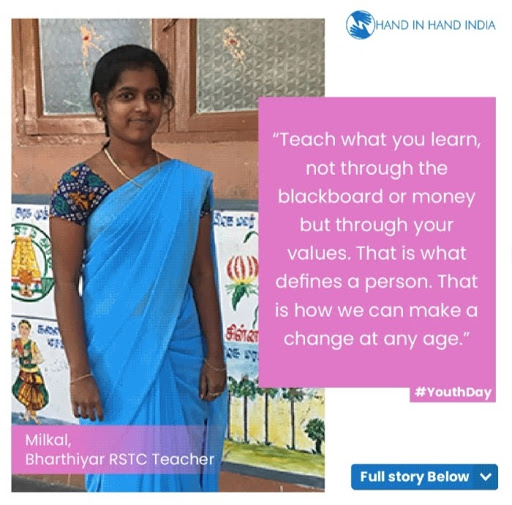
The greatest way for me to create impact is to care for my students and to teach them their worth. I'd advise everyone else to be confident. Teach what you learn, not through the blackboard or money but through your values. That is what defines a person. That is how we can make a change at any age.”
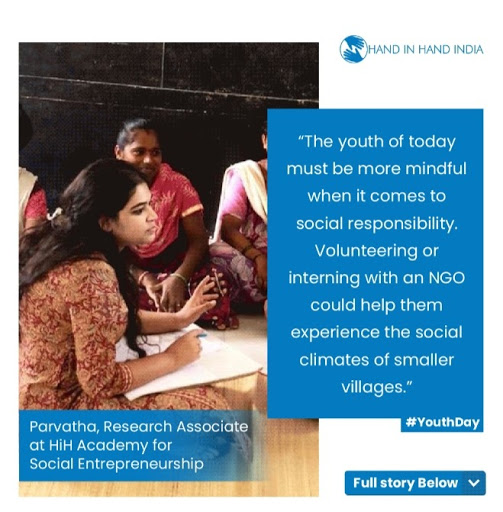
Parvatha
Research Associate, Hand in Hand India Academy
“When I first joined Hand in Hand Academy, I was an intern involved in health projects and now I'm a research associate. I enjoyed research because details always get the ball rolling for new strategies.
Every person I worked with was very dedicated and purpose-driven. Mr.Ethirajan, in particular, is a strong presence. He’s the head mobilizer from the health pillar. He always encouraged people to participate and interact more. As I was new to the villages he ensured I was safe. It's because of him that I now understand the bigger picture and am constantly motivated to do good for society.
As a medical practitioner, my profession revolves around helping people directly. I was at crossroads in my career when I interned at Hand in Hand India and the work I did then guided me and resonated within me.
The youth of today must be more mindful when it comes to social responsibility. Volunteering or interning with an NGO could help them experience the social climates of smaller villages. The difficulties, faced by so many could make them more passionate and be the driving force behind them wanting to do their part too.”
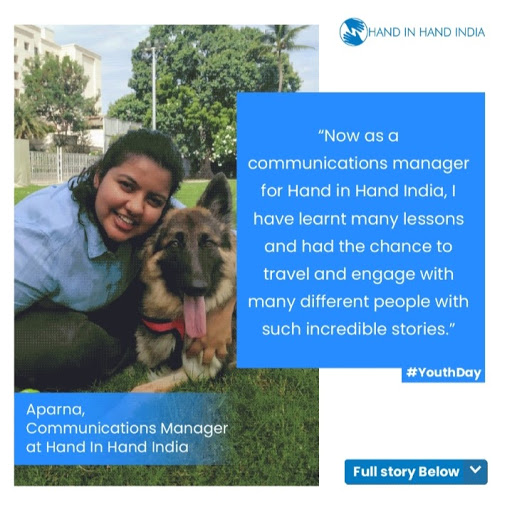
Aparna
Communications Manager, Hand in Hand India
“My work at SHG enterprises began when I started there as an intern and had to do research on women’s financial independence. Now as a communications manager for Hand in Hand India, I have learnt many lessons and had the chance to travel and engage with many different people with such incredible stories. Alongside handling social media, I work on different campaigns, case study documentation, and blogs.
I have great respect for Ms. Babita, an SHG mobilizer, she was one of the first people I met when I was just an intern with broken Tamil. She was always ready to answer every question I had with such care and patience. Over time I began to realize how she and the other mobilizers are vital pieces to the entire organization.
I worked hard to become a development practitioner and am extremely passionate about inclusive socio-economic development which is the sole reason why I wanted to work for Hand in Hand India.”
Sounder
Teacher, Hand in Hand India Residential School
“My journey began in July 2015 when I started my work at Peenjamanthai RSTC at Jawadu hills. Once I had joined, I realized I had to play a bigger role in the children's lives as many of them had faced issues in the past and because they were all away from their family and friends. I was not only a teacher but a brother and friend to them.
Back when I started my Teacher Training course, my goal was simply to work with children. But when I joined the RSTC, I felt satisfied that I was making a difference in the young lives at the centre. I started to teach children games, yoga, and counseling them using creative methods.
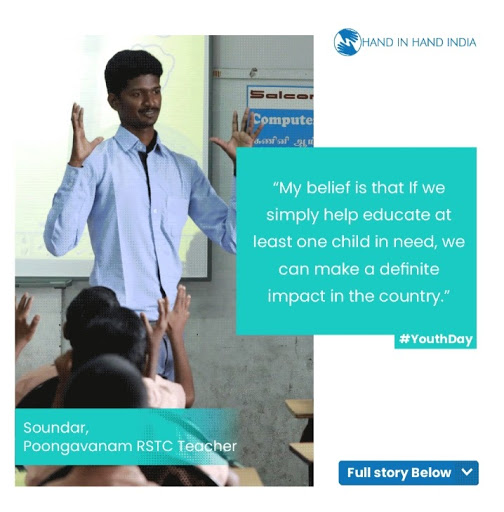
My colleague, Mr. Veeraraghavan is my role model. His patience and cheerful nature make him a favourite among students.
I chose this job because this is the place where children, who are rejected from other systems, are taken in. I take immense pride in helping the organization identify more of these children and guiding their education.
My belief is that If we simply help educate at least one child in need, we can make a definite impact in the country.”
A vast majority of India’s farming operations is carried out by marginal farmers, who may or may not be landholders. With small landholding, these farmers face several problems – lack of control on cost, process efficiency, scaling to bigger levels and most importantly, access to finance. Solving these problems is the idea of a cooperative association or a Farmer Producer Organization (FPO). Today, with the Athmanirbhar Bharat model gaining importance, FPOs play an important role in linking farmers producers with agri-food markets or the consumer. More so, during COVID-19 lockdown, these FPOs have adapted to the new situation and focusing on product differentiation and food safety.
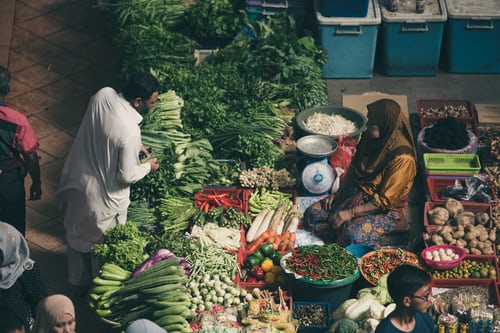
Our recent series of webinars have focused on various development related topics, the latest one being the ‘The Future of Farmer Producer Organizations in India’. In this seventh edition of our webinar series, our esteemed panellists discuss the way forward for FPOs and strategies to unearth their potential. Our discussions as captured below focused on how the FPO acts as a catalyst for farmers, equipping FPOs for efficiency and how to achieve profitability.
Here’s a brief on our panellists:
Dr.Venkatesh Tagat is Chief General Manager (Retd) of NABARD who initiated the development of producer organizations in 2014 and has authored a paper on FPOs in 2016.
Mr. Anil Kumar is the founder of Samunnati, driving markets for smallholder farmers through his organization.
Prof Annapurna Neti is Associate Professor at Azim Premji University and comes with vast experience in MSMEs, financial inclusion and producer companies.
Ms.Kusum Balsaraf is the General Manager at Mahila Arthik Vikas Mahamandal Ltd. She has managed several Government schemes and worked in grassroots livelihood promotion.
The discussion was moderated by Mr. N Krishnan, a farming enthusiast and our Chief Operating Officer.
Question: How do FPOs act as a catalyst in changing the farmers' economic situation?
VT: The two most critical problems of farmers are – cutting down on cost of cultivation and setting a better market price for produce. Cutting down on cultivation cost is not easy, as farmers spend most of their money on purchases, while market pricing is not within their control. These are the two points which FPOs help in a macro level – by providing better input supplies through bulk purchases, for instance, seeds and fertilizers are cheaper when bought in bulk. A critical role is also played in getting access to markets.
KB: In addition to the two issues mentioned, we also noticed farmers do not have a risk-taking behaviour as individuals. The cooperative format of FPOs have stringent rules and help farmers who are otherwise illiterate to grow together.
AN: The economy of farming can only be increased through greater participation and control over the value chain. FPOs will help strengthen value chains and creating more jobs.
AK: FPOs help farmers only if the produce is being sold at market prices, if they support farmers in primary processing and finally aid in bringing a little liquidity for their next crop. Only if these factors are covered, can an FPO improve income generation in farming. The role of an FPO is complex; farmers face a loss when they sell right after harvest when prices are lowest. An FPO at this point can offer liquidity to the farmer by ensuring support for selling at higher prices. The set of farmers who come together as the FPO should have access to the working capital as soon as market linkages happen.
Farmers are comfortable farming and not running an institution alongside their regular day. Hence a sound marketing advisory is essential for FPOs to develop their capabilities as an institution.
Question: FPOs are for the farmers and run by the farmers. How are they equipped to navigate complex areas such as credit access, management, governance?
AN: Compliance requirements for FPOs are important. Often it has been seen that farmers who are the producers are also seen as the supplier to the FPO, in some cases they could also be a consumer, the owner and a part of the board of the producer company! It is difficult for these small and marginal farmers to navigate these roles as a professional. Hence it is necessary to have a good resource institution who can handhold and help these producer companies through challenges and compliance requirements.
AK: The main objective of bringing these entities under the Company’s Act is to bring out a governance dimension. Compliance in terms of secretarial/audit dimension is essential to the FPOs as part of their engagement. This makes FPOs stronger in ways like risk mitigation. It is a symbiotic relationship where they are compliant when the farmers are compliant. So investing in these building blocks in the initial days are quite quintessential.
KB: Since company laws are stringent, resource organizations should give handholding support. The future becomes more sustainable when we invest in building capability.
Question: What are the critical elements that contribute to FPO viability (break-even and profitability)? What sort of model works well?
VT: A great starting point for businesses would be on the input angle. Procurement processes and access to market linkages are key to viability. Larger participation can help viability too.
AK: Active participation from members, aggregated demand, creating economic interest among members and importantly communication skills – make FPO models work well.
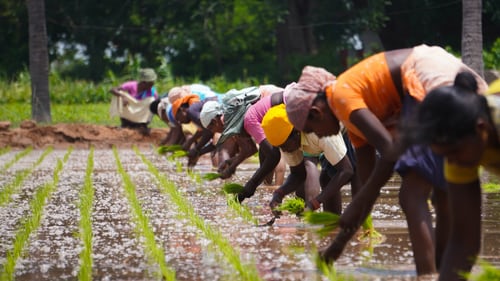
Question: How do you see the role of women in FPOs and how can their participation be enhanced?
AN: In India, among 7000 producer companies, there are less than 200 women. However, in recent decades, a lot of women collectives have trained them on multiple aspects such as financial literacy and business skills. The challenges seen in forming women FPOs from these Self Help Groups were: finding a common business activity to scale, governance issues and lack of awareness among board members of their responsibilities. Just because we have an SHG architecture we can't just form an FPC. We need an FPO policy to set the structure in place with strong business plans.
KB: Not even 18% of women own lands in India, which indirectly means they are not farmers and membership in an FPO is a question. Unless we create an enabling environment we can’t enable women to participate in an FPO. Other issues include gender biases; women labourers being paid less than men. Also, society diktats that expect women to handle household chores and FPO affairs makes it difficult without family support.
Question: To the extent possible, FPOs have to satisfy their role as both social and economic organization. How do we make the FPOs future proof – in terms of enhancing their financial capability, governance, and contributions to society? In other words, what is the way forward?
VT: An FPO’s viability is higher when it plays a role in ensuring agri-operations and becomes an essential service.
AN: The COVID-19 pandemic has show how important collective processes are, and how important technology helps FPOs take their produce to market. Support is required from the Government to ensure success.
KB: It is important to make FPOs more cohesive entities so they can influence the future of farming.Youth should be brought into this sector and technology plays an important role in this.
AK: Policy level initiatives are bringing in private sector capital flow into the agriculture sector and startups are working directly with farmers. This is an opportunity for FPOs.
Question: The role of youth in FPOs
VT: To attract youth into farming, we need to formalize a more enterprise based set up.
AK: Nature of the activity is important in attracting youth. An ability to handle technology in FPOs boosts the self-esteem of the young. They can deploy new-age techniques to make farming better.
Watch the webinar here!
Key Takeaways from the webinar
1. Focus of FPOs must be improving input supplies first, then on market linkages for the produce and later on processing, value addition and branding.
2. An FPC’s statutory compliance is important, but also difficult to achieve. A two-tier model can help, where Tier-1 FPCs with experience can help others. This arrangement can extend to the procurement of inputs, marketing of produce, capital investments for processing etc. Often, statutory compliance manifests into a better governance system, which in turn keeps a check on better compliance systems to be in place.
3. Women working in FPOs can transform the rural scene in terms of gender equity. Opportunities must be enhanced.
4. Increased participation of youth in FPOs helps in leveraging the role of technology in the farming sector.
Hand in Hand India’s Natural Resource Management wing has been implementing watershed programmes successfully since 2006. We work in the states of Karnataka, Madhya Pradesh and Tamil Nadu. Our team trains farmers in reviving agricultural traditions and promotes organic farming with training support. We also have helped organic farmers come together under a common umbrella called the ‘Indian Natural Farmer Producer Company Ltd. and help them market their products. Read more about our work here.
Booklets

_page-0001.webp)
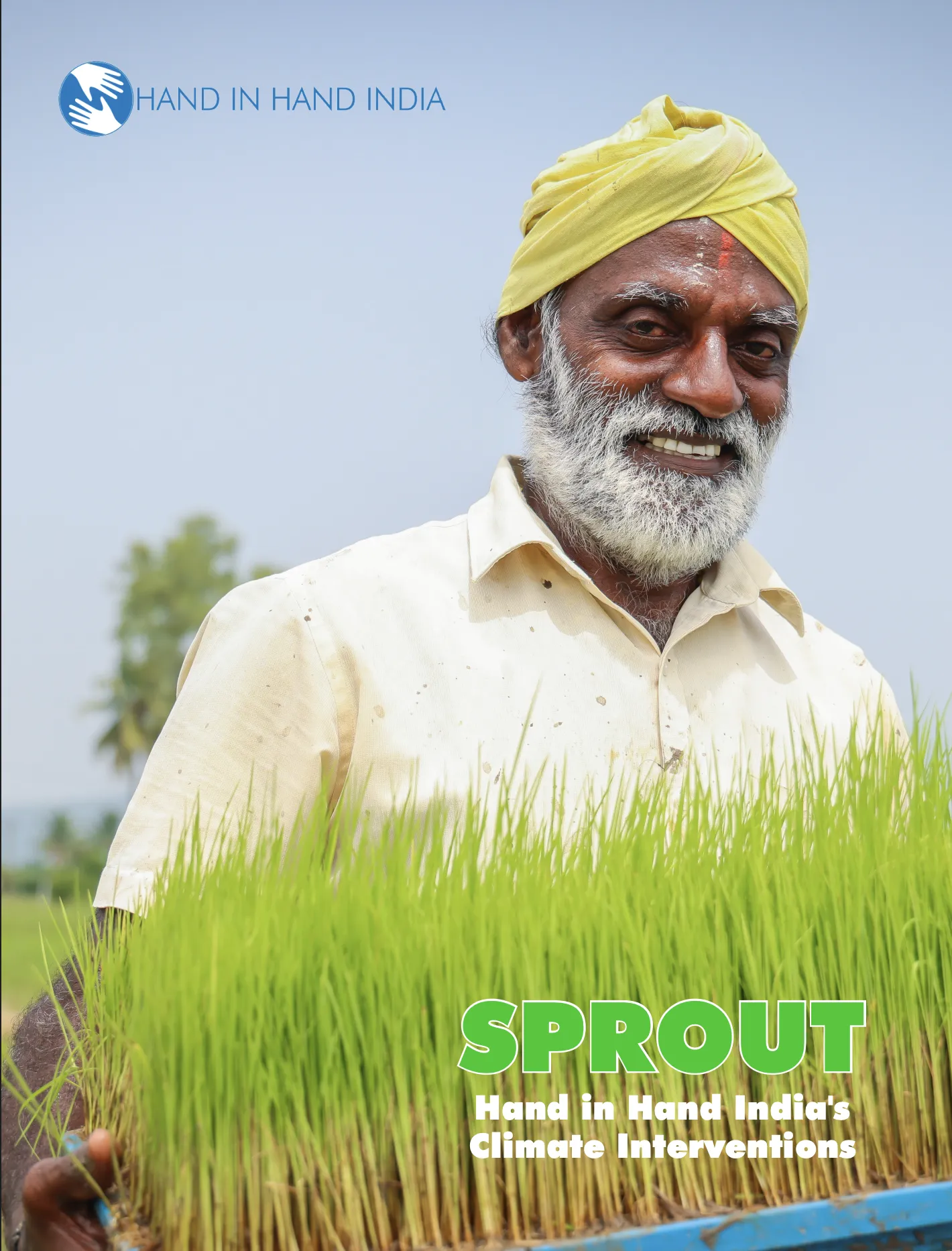
The Purpose of Deepa’s Life: Her Daughter
Routine days often take the most unexpected turns for a person in the social development sector. A reflection of this was my conversation with Deepa, a resident of Melakottaiyur in Kancheepuram district, Tamil Nadu. Along with an intern from Sweden and the project team, we visited multiple project sites in and around Chennai and Kancheepuram. Of the beneficiaries we spoke to at these locales, the interaction with Deepa still stands out.
Deepa, an informal waste picker and mother to Sivasakthi, a primary school student, along with their extended family, as well as those living together in this commune near the Melakottaiyur panchayat office, were more than happy to talk to us about their transformative journey post Hand in Hand India’s interventions. The conversation with them - informal waste pickers, or ‘Recycle Guardians’ rather, a term we in the organisation believe they deserve - covered topics like the facilitation of identification documents such as Aadhaar, PAN, and Voter identity cards and ‘Pattas’ or documentation for land; enrolment in government schemes; financial and digital literacy; and material to facilitate waste collection, including Bora bags, vehicles, and fluorescent coloured T-shirts for safety in the dark.
Though projects like these, undertaken by our Sustainable Waste Management team, are no small feat, we often hear these stories of transformation on a routine basis. However, this routine conversation soon took a different turn with the enthusiastic Deepa taking the lead and steering our interaction thereafter.
With a sparkle in her eyes, she spoke to us about her daughter, Sivasakthi, a first-generation school-goer, who was in the middle of a school day when we visited that afternoon. She told us that her daughter wasn’t just stopping at gaining education but was teaching her to read too, and would playfully use a stick to hit her if she was not being a good student – a strict teacher indeed! She even pointed to a poster hanging nearby to show us the way her daughter would read and help her learn as well. Smiling, she then informed us that teachers and the management at the school would proudly exclaim that a girl from a socially and economically marginalised community was gaining education and doing so well.
It was also interesting that the topic of the English language often came up in this conversation, with Deepa mentioning her desire for her daughter to one day be able to speak with ease. Deepa again specifically pointed to a woman member of our project team to highlight her wish for her daughter to be able to speak the language with similar confidence in the future, making one think that she was truly trying to manifest her dreams, being able to connect aspects such as gender and language to those of her daughter.
Furthermore, she pointed out to the anklet worn by the same woman employee, mentioning that she and her daughter would save money using the ‘Undiyal’ (savings box) provided by our team alongside financial literacy, and buy educational material and colouring books, and possibly an anklet like the one worn by our team member too. She then reiterated at the end of the conversation her hope that her daughter would one day get a good job, and that she didn’t mind being a Recycle Guardian, with the hope that getting her hands dirty can at least provide Sivasakthi with a good job and stability.
Deepa’s husband left her when their daughter was merely two months old, something that we were informed about by her uncle later in this conversation, in passing. This life-changing moment was in no way the focus of our conversation. While we often tend to romanticise the underdog story, the interaction with Deepa felt raw in many ways. Though she lived with others in her family, she knew that her daughter was her sole responsibility. With no intentional effort, she guided the conversation in a manner that was anchored in her being proud and in awe of her daughter Sivasakthi, in many ways reflecting aspirations for social mobility, something that we often tend to overlook when covering projects that focus on providing basic amenities to communities that lack them.
Deepa’s life trajectory is not one of overnight transformation. It is a reminder for us to channel discomfort and suffering in our own lives towards a larger purpose and aspiration rather than fixating on it. A choice that is solely our own. Her life, as well as her daughter’s, is a reminder that projects such as these must place decision-making power in the hands of beneficiaries. By doing so, interventions will merely serve as a catalyst, with individuals using them to steer their lives in the direction of their choice. With time, Sivasakthi will also develop dreams of her own. Possibly an amalgamation of her and her mother’s. Irrespective of this, the education, exposure and confidence that come with it, powered by the belief that her mother has in her, will continue to guide her life.


The Purpose of Deepa’s Life: Her Daughter
Deepa, a Recycle Guardian from Melakottaiyur, dreams of a brighter future for her daughter through education. With support from Hand in Hand India, her family gained access to essential documents, government schemes, and financial literacy. Inspired by her daughter's learning, Deepa is also learning to read. Their story reflects resilience, hope, and the power of community-driven change.
At Hand in Hand India, we believe that true sustainability begins at the grassroots. This is evident in Chennai, where 2 neglected lakes - Tondiarpet Lake and Basin Bridge Lake have found new life through the Chennai Lake Ecological Restoration Project (CLERP).
With generous funding support from Gurukrupa Foundation, we set out on a mission not just to restore 2 water bodies, but to reimagine how urban ecosystems can work for people, wildlife, and the climate together.
Why Lakes Matter More Than Ever
In cities like Chennai, lakes are not just natural assets, they are lifelines. They store water, recharge groundwater, reduce flood risks, support biodiversity, and offer critical green space. However, years of neglect, encroachments, and pollution had turned these vital water bodies into environmental hazards.
That’s where CLERP stepped in.
Tondiarpet Lake:
From Forgotten Wetland to Thriving Urban Oasis
Spanning 40.87 hectares, Tondiarpet Lake had become heavily silted and unusable. Our restoration efforts included the excavation of 18,000 cubic metres of earth, which reestablished natural water flow and enhanced storage capacity.
We also planted 600 native saplings around the lake, ensuring long-term ecological balance and a green buffer that supports birds, insects, and small mammals. The lake now acts as a vital groundwater recharge zone, offering relief to surrounding communities during dry months.
Basin Bridge Lake:
Reclaiming What Was Lost
Once a dumping ground overrun with invasive weeds and dense jungle growth, Basin Bridge Lake was in desperate need of rescue. Our teams cleared 21,780 square metres of overgrowth, removed 8,000 square metres of invasive aquatic plants, and desilted 6,970 cubic metres of sludge.
With the addition of 100 saplings, the lake’s shoreline has started healing. Today, Basin Bridge Lake functions as a restored reservoir, improving urban flood resilience and offering a healthier environment for the local community.
The Bigger Picture: 24 Million Litres of Impact
Together, these 2 lakes now contribute an additional 27 million litres of water storage capacity to Chennai’s urban ecosystem. That’s not just a statistic, it’s cleaner water, healthier soil, reduced flood risk, and a safer, more resilient future for the people who live around these lakes.
Partnerships that Power Change
This transformation would not have been possible without the vision and support of Gurukrupa Foundation, whose funding made this mission possible. At Hand in Hand India, we are proud to have implemented this impactful project, one that sets a benchmark for urban ecological restoration across India.
Together, we’ve shown that even in dense urban environments too, nature can bounce back stronger, greener, and more beautiful than before.
What’s Next?
We see this as just the beginning. With every lake restored, we’re not just reviving water bodies, we're restoring community well-being, environmental balance, and climate resilience. We’re committed to scaling this impact across more geographies in the years to come.
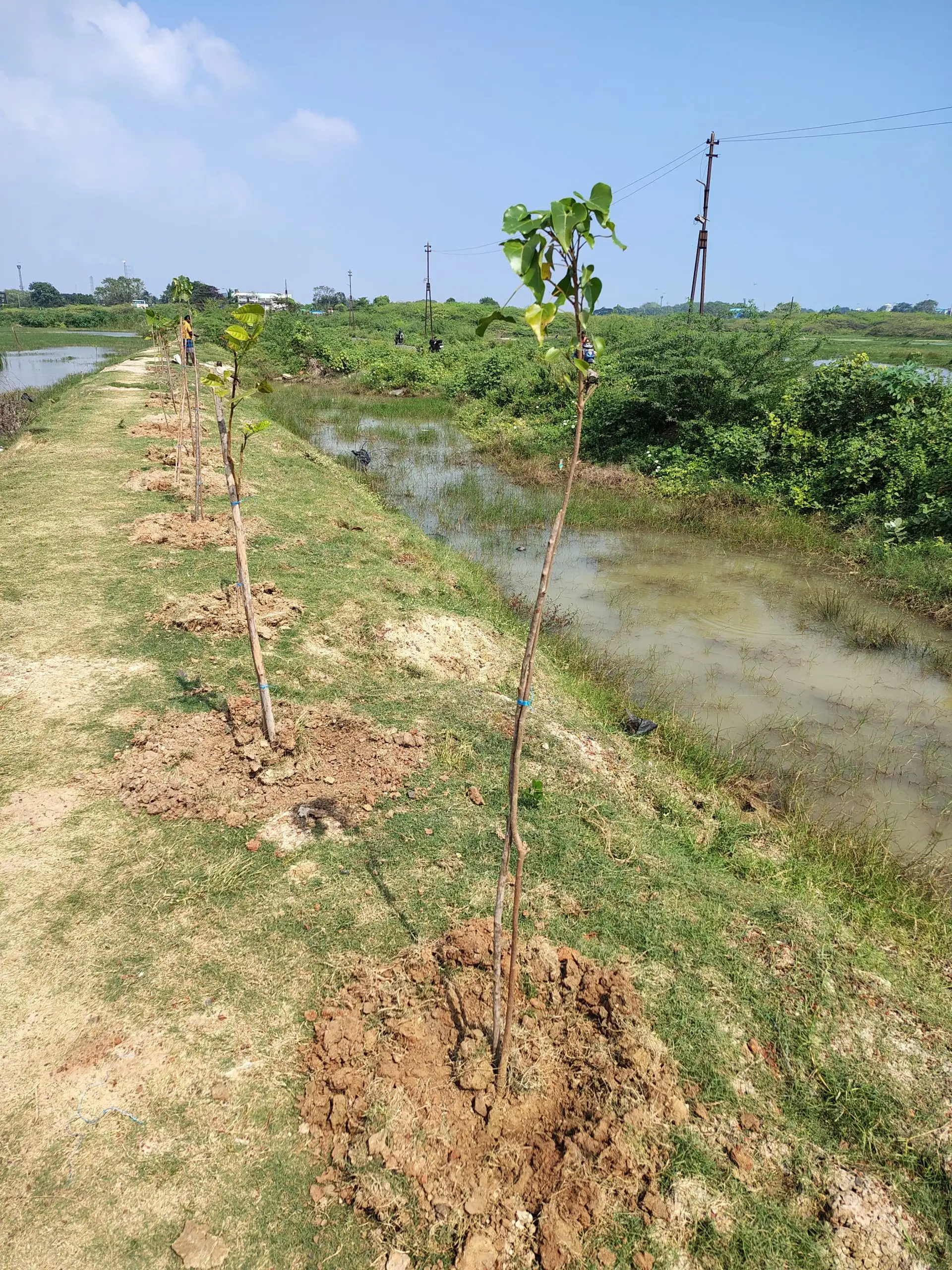
Breathing Life Back into Chennai’s Lakes
Reviving Chennai’s lakes through CLERP—where communities, nature, and climate resilience come together.
The Transformative Journey of CLERP
In an era where urbanisation often encroaches upon nature, the Chennai Lake Ecology Restoration Project (CLERP) stands as a beacon of hope. Spearheaded by the Guru Krupa Foundation in collaboration with Hand in Hand India, CLERP is making significant strides in addressing water scarcity and enhancing flood management across Greater Chennai. CLERP’s mission is to breathe new life into urban lakes that have long been overlooked. These water bodies are critical for the city's ecosystem, and their restoration is essential. One of the recent success stories of CLERP is the renovation of Tondiarpet Lake. This effort has added an impressive water storage capacity of 1800 CuM. But the initiative didn’t stop at merely increasing water storage. Around 600 avenue saplings were planted around the lake bunds, aimed at boosting biodiversity, providing nesting grounds for migratory birds, and contributing to a greener urban ecosystem. Building on the success of Tondiarpet, CLERP’s next significant undertaking is the renovation of Basin Bridge Lake, bearing a water storage capacity of 69,00,000 litres, which will benefit the surrounding urban dwellings. This project is expected to further enhance the region's water storage capabilities, reinforcing the initiative’s commitment to mitigating water scarcity and flood risks
The restoration efforts extend beyond just bolstering water availability. They are pivotal in fortifying the local ecosystem and fostering a more sustainable urban environment. By planting native trees around these water bodies, the initiative is significantly expanding green cover and establishing new habitats for migratory birds and other wildlife. These multifaceted endeavors align seamlessly with India's National Action Plan for Climate Change and contribute substantially to Sustainable Development Goals 13 (Climate Action) and 15 (Life on Land). CLERP’s ongoing commitment to these projects marks a decisive step towards a cleaner, greener, and more water-resilient Chennai. With ambitions to extend this transformative initiative to other urban lakes in the future, CLERP is not just restoring lakes; it’s rejuvenating ecosystems and fostering a legacy of sustainability for generations to come.
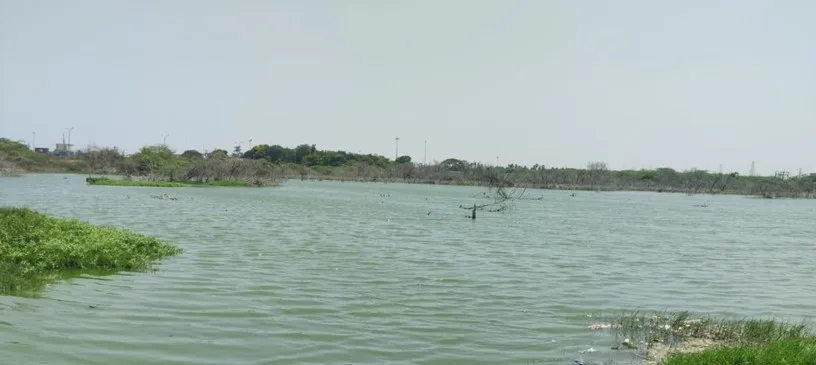
Reviving Urban Lakes
CLERP, led by Guru Krupa Foundation with Hand in Hand India, is restoring Chennai’s urban lakes to improve water storage, enhance biodiversity, and build climate-resilient ecosystems.
Empowering Menstrual Awareness
Do not head near the prayer room or the kitchen during that time of the month! I am sure every Indian girl has had these statements directed at her during her menstrual period at least once in her lifetime.
We are always told to not speak out loud about ‘that time of the month’. It is not good etiquette to speak about your periods out in public, they say. Some women and girls do not even have the space to talk about these within their very own households. This was the every month scene at Ayisha and Tamilarasi’s (aka Tamil) households. This story is about these two 17-year-olds arising from the rural communities of Tiruvannamalai district of Tamil Nadu. In rural India the rules are much more intense and strict, but Ayisha and Tamil have broken barriers around menstruation to help themselves and their community!
Ayisha and Tamil are two 17-year-olds are peer educators at their respective schools. As peer educators, their objective is to educate more women and adolescent teens about menstruation and its effects. In the small hamlets that comprise the rural community of India, nothing is a secret amongst its society members. Hence you can imagine the many restrictions and barriers the two girls face daily. Ayisha is from a religious minority background where her extended family is eagerly urging her parents to stop her education and have her married and Tamil’s mother is also keen on getting her married off as soon as she turns 18.
At Hand in Hand India (HIH India) we had Menstrual Health Management (MHM) training conducted at all regional rural schools to educate the girls and this is how we discovered these two young influencers. Both exhibited great interest in the training and seemed very keen to help others understand the importance of MHM. They wanted to raise awareness and make sure no other women or children face the same struggles and restrictions they did. For Ayisha and Tamil, the training they received from the HIH India was like a wake-up call.
“I had no idea about menstruation or on ways to dispose of the pad as my mother would not talk about it,” says Ayisha. She also noted that the girls at school were also not aware of the safe disposal of pads and would often leave the used pads or clothes lying around in the washrooms at school or stuffed into windowsills. This is why she took it upon herself to educate these girls and ensured that they are aware of the hygiene practices that need to be followed during menstruation. Ayisha is a change maker in her community as she did not just break barriers of the religious restrictions and the myths around menstruation through raising awareness but through her continuous persuasions and efforts, she had two incinerators installed at the school.
As for Tamil, she is known as an independent and headstrong girl in her village community. She is also a peer educator and an activist who has advocated for the need for toilets amongst the rural communities. Her is goal is to see everyone in her village strive and evolve, “I want my village to the best of them all” she says with bright and twinkling eyes. She has been instrumental in more than a dozen households’ decisions to build toilets. She noted that health and hygiene go hand in hand and that it is very important for people to conform to it and that this is accomplished by raising awareness.
Tamil quotes that “If I educate one person or 10 people about the need to use toilets and about the various complications that arise from defecating out in the open, then they would intron educate and raise awareness towards more people. This would then become a chain reaction and the numbers will keep growing. This is what I want, I everyone to take responsibility and make this world a beautiful place.”
The belief will power, and determination of the two girls have created a massive impact in their society and communities. This has also caused a lot of women and adolescent girls to leave the unhygienic practices behind and move on to safe and healthy options. This is the exact output the Menstrual Hygiene Management training provided by Hand in Hand India at India’s government school hopes to achieve. We aim to create strong and independent women who do not have to conform to some old and rusted myths and beliefs of menstruation. For years these prejudices have bounded our women and have given the impression that they are not capable of certain things in life. Ayisha and Tamil are the shining examples of how these prejudices can be abolished that women are made for greater things and are anything but equals to men.
The menstrual hygiene training catered to by HIH India has enabled numerous women and adolescents to move out of their restricted spaces. HIH India’s Healthcare pillar has been training the community to take care of their nutrition and sanitation needs that are part of our integrated approach. Menstrual hygiene camps, school health camps, maternal and child health training, and child growth monitoring system are some ways by which we prepare communities for a healthier future. Till date through the Menstrual Hygiene Management program the Health pillar has assembled 1259 peer-educators and raised awareness on personal hygiene, reproductive health and sanitation among 8043 women and adolescent girls.
Hand in Hand India works across India in the area of Child Labour Elimination. In addition to our residential special training centres for child and bonded labourers in Tamil Nadu and Madhya Pradesh, we run 2 schools for first-generation learners in Kanchipuram. Through our initiatives, more than 3 lakh children have been mainstreamed into formal Government schools and have converted more than 1000 panchayats (groups of villages) into child-friendly ones. Read more about our work here.
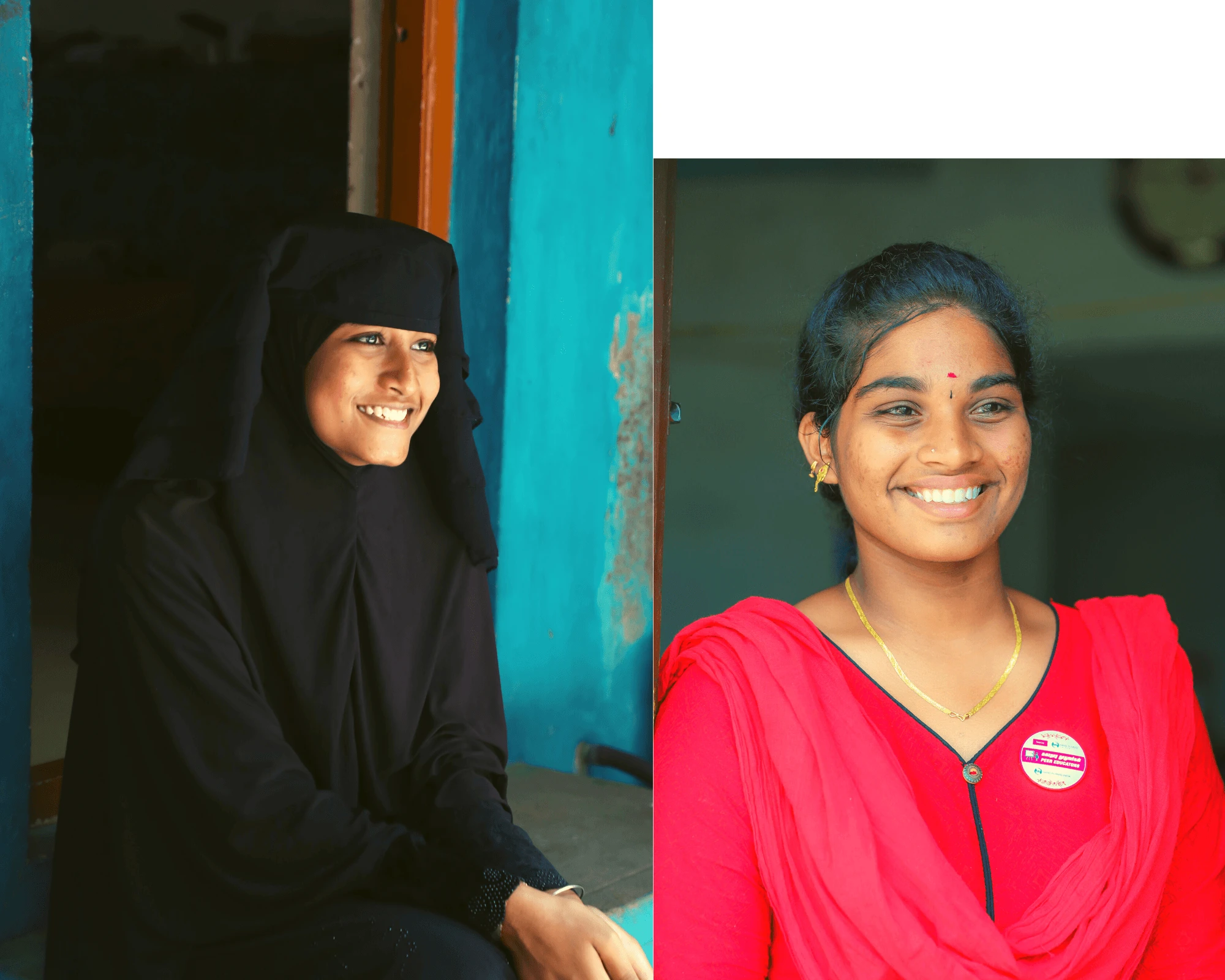
Ending Prejudices about Menstruation through our Peer-Educators
Breaking menstrual taboos through peer educators who promote awareness, dignity, and health.
Presenting you an inspiring story from the heart of the Peenjamandhai Hills, where 20 remarkable children from a tribal community have achieved outstanding results in their 10th standard board exams.
Nestled in the scenic Vellore district of Tamil Nadu, these hills are home to 75 villages with a population of 25,000 in Peenjamandhai, Palambattu and Jarthankollai Panchayat hill zone. Despite the breath-taking natural sceneries surrounding them, the tribal communities here have clung tightly to their traditional cultures and rituals.
It is a place where road facilities remain underdeveloped, with only 12 active schools serving 75 villages. Amidst the lush green forests, a concerning trend emerges in a lack of belief and trust in educating their children. Education is considered impractical, especially when it comes to sending girls to school, in this tribal community's way of life.
For decades, this mindset has resulted in children being denied access to education. Consequently, child labour, child marriage, malnutrition, child abandonment, and other societal constraints have constricted the healthy growth of children and development in this community.
Hand in Hand India has been at the forefront in transforming this scenario with our Child Labour Elimination Program (CLEP) in the Peenjamandhai Hills since 2007. Our mission is to create awareness and emphasize the importance of education. We have established three Residential Special Training Centre (RSTC) schools, providing opportunities for dropouts to continue their studies. Moreover, we arrange travel facilities and conduct regular awareness programs to uplift the community's lifestyle through education.
With persistent commitment spanning nearly two decades, our efforts have borne fruit, earning us immense trust and respect from the people of the Peenjamandhai Hills. Through our dedicated efforts, we have empowered children to pursue their education, resulting in an astonishing achievement of 25 degree graduates from within the community. These exceptional individuals have established themselves in respectable professions, encouraging positive transformation in their tribal community.
With persistent commitment spanning nearly two decades, our efforts have borne fruit, earning us immense trust and respect from the people of the Peenjamandhai Hills. Through our dedicated efforts, we have empowered children to pursue their education, resulting in an astonishing achievement of 25 degree graduates from within the community. These exceptional individuals have established themselves in respectable professions, encouraging positive transformation in their tribal community.
A Mission that Started with a Vision
With strong alliances formed within the education department of this region, we have received remarkable support from officials and the education department. Mr. M.Gobi, the esteemed Headmaster of Peenjamandhai High School reached out to our team about the challenges of ensuring regular attendance among 10th standard students to pass the board exams and the need for additional subject teachers to cover the syllabus.
"Even in this current time, out of the total strength of 143 enrolled students, only 60% attend school on a daily basis," Mr. Gobi revealed, shedding light on the pressing issue."
Recognizing that irregular attendance and people's lack of confidence in education in the locality would hinder their chances of excelling in the upcoming board exams, we realized the urgency and importance of our intervention. To handle this situation, our CLEP team embarked on a mission to track down students and engage with their families, encouraging them to prioritize daily school attendance.
With this in mind, Hand in Hand India formulated a strategic plan tailored to ensure students succeed in 2023 board exams. The prime objective was to support 20 children in excelling in their board exams and providing them with the necessary facilities. To initiate the process Hand In Hand made the decision to employ two teachers, Mr. Prakasham and Mr. Vijaykumar, for a duration of one year. Each person was carefully selected based on their expertise in specific subjects and had undergone comprehensive training in our CLC program.
Meanwhile, our passionate CLEP team in Peenjamandhai intensified their efforts, channelling focus towards tracking down 10th-grade students and their parents. Awareness sessions were conducted for each parent in school in making sure no stone was unturned in this mission.
3 Months to Success
As the board exam dates drew near, we encountered fresh challenges in ensuring the student's daily attendance. Multiple factors such as limited transport facilities, lack of electricity, inadequate food provisions, and varying family economic circumstances contributed to these difficulties.
It was disheartening to witness some children having to walk 8 to 10 kilometres every day just to reach school, while others struggled due to the absence of electricity, hindering their preparation time.
Our zealous CLEP team and the school management united their efforts. Collaboratively, they devised a strategic plan to ensure that all twenty 10th grade students would be present in the school for focused board exam preparations.
The road to this Success was not that simple
The prevailing lack of trust in child education within the local community and practical obstacles posed significant challenges in persuading parents to allow their children to stay in school for three months.
Undeterred, our ardent CLEP team members undertook the arduous task of personally visiting each household, diligently enlightening parents about the profound importance of this mission. The process was particularly challenging when it came to convincing the parents of the six girl students, who had privacy concerns.
Assuring them of their children's safety, privacy, sanitization, and provision of essential needs, our team persevered in building trust. Eventually, after extensive discussions, the parents graciously agreed.
With the board exam dates set from April 6th to April 20th, the students were provided accommodation from February 1st to April 20th, ensuring they had a conducive environment for focused preparation.
Activities supported by Hand In Hand India
•Proper sanitisation and toilet facilities were arranged in the school.
•Hand in Hand staff stayed in the school along with students
•Nutritious meals and timely snacks were arranged for the students.
•Ingredients for the meals were sourced from the foothills, overcoming challenging terrain and covering a distance of 40km.
•Awareness programs were conducted to alleviate exam fear and anxiety.
•Weekend fun activities were organized to keep the students motivated.
•Exam kits were provided to meet all their needs
For food ration, education materials, hostel facilities and teacher’s salary we spent around Rs. 1,25,000 in three months. With unwavering dedication, the students and teachers aligned themselves with our vision, displaying an unyielding determination for getting 100% passing results.
The impact of our awareness campaigns ignited a spark of motivation within the students. Their hard work and perseverance paid off when the board exam results were unveiled on May 19th, 2023. On that momentous day, the school was filled with anticipation as our team members and the families of the students gathered, brimming with hope and expectation.
To our immense delight, the results showcased a 100% pass ratio, with many students achieving remarkable scores above 80%. The atmosphere was infused with jubilation and joy, as the shining faces of the students rayed hope for a brighter future.
It was a historic milestone for Peenjamandhai village, marking the very first time a school achieved a 100% pass rate. The families of the students were overjoyed and expressed heartfelt gratitude to the entire Hand In Hand team. Now, with no restrictions, parents wholeheartedly encourage their children to pursue higher education.
Our team continues to maintain close contact with the student's families, extending our support in their pursuit of education through residential schools.
This success story inspires, even more, to work even more to uplift tribal community people in areas like Peenjamandhai. We have just planted seeds in this community with this 20 children journey and we expect them to grow as a tree to inspire more people like them in their community.
Hand in Hand India works across India in the area of Child Labour Elimination. In addition to our residential special training centres for child and bonded labourers in Tamil Nadu and Madhya Pradesh, we run 2 schools for first-generation learners in Kanchipuram. Through our initiatives, more than 3 lakh children have been mainstreamed into formal Government schools and have converted more than 1000 panchayats (groups of villages) into child-friendly ones. Read more about our work here.
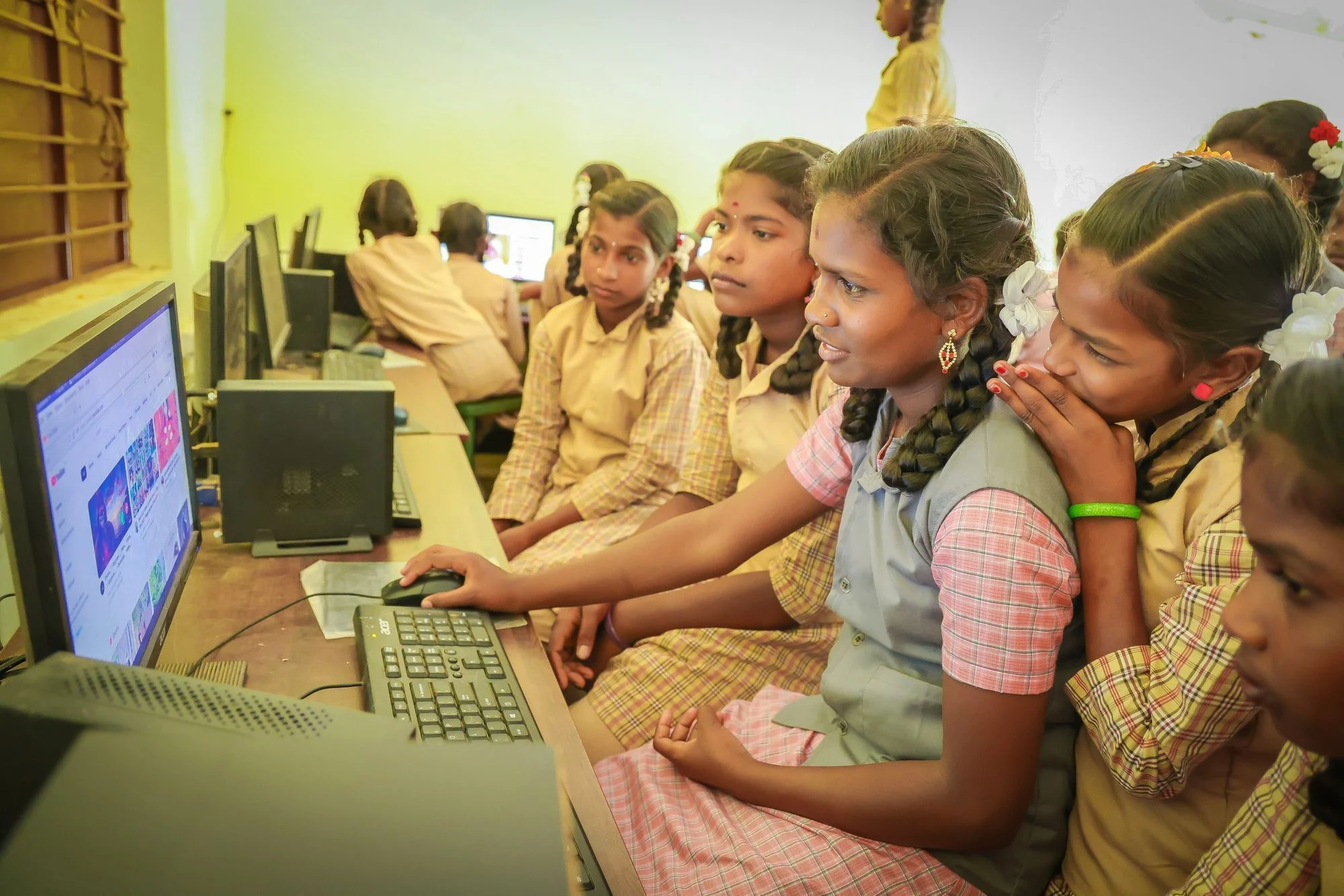
Breaking Barriers, Igniting Dreams: The Remarkable Journey of 20 Tribal Children in Peenjamandhai Village
Restoring Chennai’s Lakes
The Hand in Hand India-led Chennai Lake Ecology Restoration Project (CLERP) supported by the Guru Krupa Foundation has made significant progress in its first year. The project focuses on increasing water resilience to promote sustainability by restoring lake ecology in Chennai, overcoming challenges such as drought, flood, pollution, and climate vagaries.
The main objective of the project was to rejuvenate two lakes namely Tondiarpet Lake and Sathankadu lake over two years. Tondiarpet lake with 40.87-hectare land extent located in northeast Chennai, has suffered from pollution and environmental degradation. The restoration efforts included desilting, removal of invasive jungle species, construction of inlet grid chambers and outlets. These measures have increased the lake’s storage capacity to 18,000 cubic metres, creating a healthy and safe environment and benefiting more than 48,000 people living in its vicinity.
An important part of the project is community engagement. The formation of the Urban Water Management Committee (UWMC), composed of local women, re-established community stewardship of the lake. This committee has been instrumental in organising regular visits, meetings to discuss the status, and maintaining the same.
The environmental benefits of the project are manifold in terms of increased water availability, water usage, groundwater recharge, reduction in temperature and making the location safer from anti-social elements. The restored pond is now a haven for migratory birds and supports the local ecosystem. On the other hand, the lake is also an important flood mitigation mechanism, potentially saving communities from the economic devastation caused by annual flooding.
As the project progresses, the expected completion of tree planting and other community engagement efforts will enhance the sustainability and resilience of Chennai’s water resources.
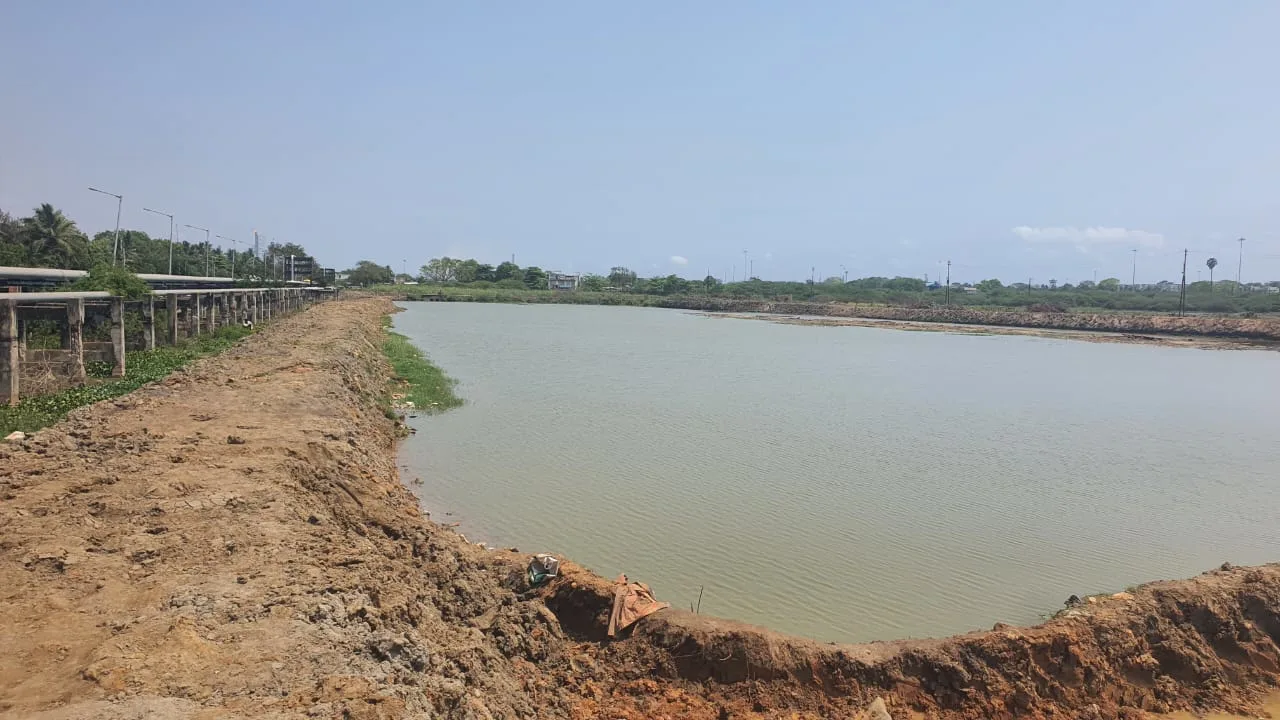
Restoring Chennai’s Lakes
CLERP, led by Hand in Hand India with support from Guru Krupa Foundation, is restoring Chennai’s lakes to strengthen water resilience and ecosystems. The initiative combines ecological renewal with community stewardship to benefit urban communities.
Empowering communities to end child labour
Ending child labour and child endangerment by empowering communities with a sense of agency.
Tabasum Parveen aged 14 years; her daily schedule was something like helping her mother at home with chores, accompanying the parents to mica mines for work, and then attending the local Madarasa (religious educational institution). This life came about due to her parent’s financial situation. Her educational knowledge was rather low when compared to others of her age and the present educational stream was inadequate for the regular academic syllabus.
Many children like Tabasum are pushed into child labour to support their family’s financial situation or this is the only option available to them. In the last two years with the economic world being hit, it has been reported by ILO and UNICEF that 9 million additional children are at risk as a result of the COVID-19 pandemic, worldwide. The progress to end child labour has staggered for the first time in 2 decades.
In Jharkhand, the infamous mica mines came back into the picture and started drawing children in for hard labour along with their parents. Hand in Hand India has been working in the deep interiors of Jharkhand to ensure that no child is out of school and that they are certainly not engrossed in the depth of a mica mine.
Where it all began…
It all started 17 years ago when 5 little hamlets in the Melkottivakkam Panchayat in the Kanchipuram District of Tamil Nadu were declared to be Child-Friendly Villages. Our Child Labour Elimination and Education Programme mobilisers identified 28 children in the panchayat out of school. Out of the lot, 20 were school dropouts and 8 were working as child labours in the local brick kiln. The rigorous motivation, awareness, and continuous counselling of the team led to the inception of the first Child-Friendly Panchayat/Villages under Hand in Hand India.
With over 1000 Child-Friendly Panchayats under our umbrella, Hand in Hand India has now dared to step foot into the territories of Jharkhand riddled with Mica mines. The mines are known to be a job opportunity that most choose and eventually have their children drawn into it as well.
What makes a village/panchayat, child friendly?
A village with every child (6-18 years) in school, pursuing a proper education along with the active participation of the community is declared as a Child-Friendly Village/ Panchayat (CFV). The major players in ensuring the successful transformation of a village to a CFV are the mobilisers and the Child Rights Protection Committee (CRPC), as they monitor the children’s education and retain them in schools.
The mobilisers track the villages and go about surveying every household in a village panchayat taking note of every child's current education status. They then set about in a series of awareness programs motivating, convincing, and counselling the parents to have their children receive a proper and quality education. Now, this is the most difficult part, for someone you have never known to do something. But, our mobilisers at HiH India are known to be determined and adamant in overcoming difficult situations.
Once the parents are convinced through the rigorous mobilisation and follow-ups, we immediately have the children enrolled in a Children Learning Centre to help them make up their lost time in education and then mainstream them into the local government schools. The progress of the children is regularly monitored by the CRPC as well as the mobilisers. We would like to ensure that the children in school stay in school and are not side-tracked by anyone or anything.
Seeping into the rural
In the Koderma district of Jharkhand, we focused on identifying the children who had dropped out of school and those who worked in the mica mines of the region along with their parents. Sensitisation, awareness, and social mobilisation programs were immediately started in the region by our mobilisers. We started with the teachers, panchayat representatives, district government officials, and more importantly the parents of the children. The team then moved forward to engaging the children in various education and extra-curricular activities for greater visibility.
Children like Tabasum were identified through door-to-door surveys and monitoring. The most common reason for the children to drop out of school was the financial instability of the parents. So to ensure this loss doesn’t affect the right to education, the children were provided scholarships, books, stationery, bags, and all the learning materials required to ensure that they are back at school. The team also set up CLCs in the region to help those who have had a major break and are lagging, thus helping them catch up to the age-appropriate education.
Tabasum was one among the lot to receive this scholarship. She was enrolled in a CLC before being mainstreamed into a govt. school. As noted by the teachers, Tabasum was a natural; she quickly caught up to the syllabus and started scoring well at school while also taking part in the extracurricular, shining throughout.
The friendly approach
The team stepped into Koderma intending to turn 50 villages in the region into Child-Friendly Villages. We are now off to a good with 6 villages already declared as CFVs. Our mobilisers Identified 217 children who were either school dropouts or child labours and had them enrolled in CLCs (bridge schools) and the government school. We ensured that not one child in the villages are out of school. Every child’s dream and education matter.
In the process of declaring a Child-Friendly Village, the team conducted 879 social mobilisation/awareness meetings; run 6 CLCs and enrolled 178 children; offered 47 scholarships and cultivated 12 community teachers, thus creating jobs along the way; conducted 9 medical camps through which 53 children were recovered from malnutrition; 2341 community members were reached out through our interventions and last but not the least 100% student involvement in education was achieved.
This is just the stepping stone in the long-term plan for ridding all the mica mines in Jharkhand of the child labourers and in ensuring that not one child between the ages of 6-18yrs is out of school and forging education. Hand in Hand India through its interventions has declared 1,145 panchayats as Child-Friendly Panchayats to date and this number is not going to stop growing.
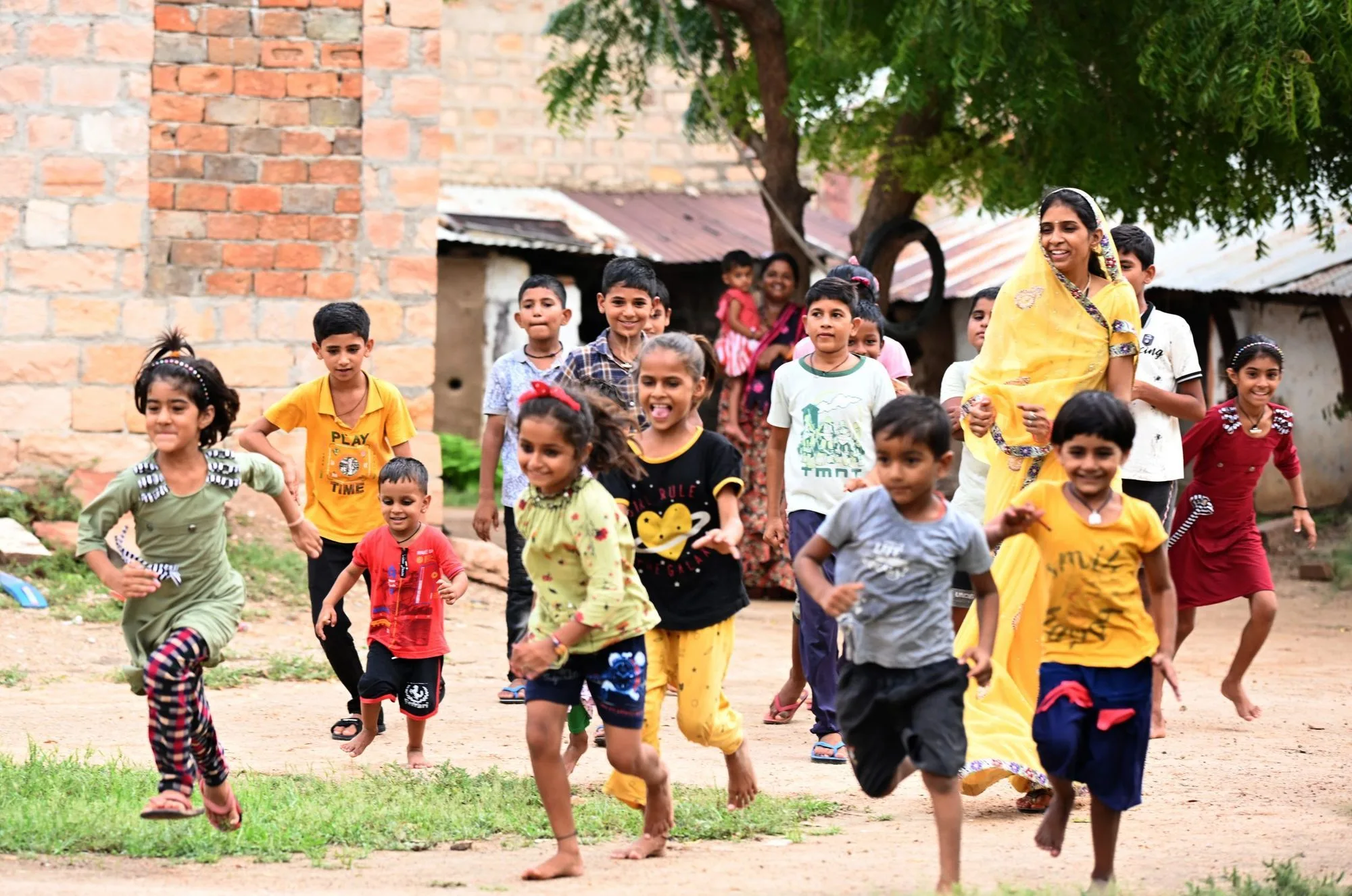
Tackling Child Labour Through Friendly Communities!
Ending child labour and child endangerment by empowering communities with a sense of agency.
A young boy’s fight to conquer malnutrition.
This is a story of a little boy who is on the verge of beating his archenemy, Malnutrition.
Jabeesh is his name. Jabeesh was underweight at birth, but due to the lack of awareness and no information, his parents were unaware of this factor. The fact of his illness was identified much later, at the age of 3. Through the intervention of the Hand in Hand (HIH) India health team, the parents were educated about Jabeesh's malnourishment.
We at HIH India conduct numerous medical and pediatric camps for the rural communities to ensure that all get equal and accessible healthcare. All these camps are free of cost, and we at HIH India have mobilizers working in the area encouraging people to participate. One such Pediatric camp was organized in the Perinjambakkam village of Tamil Nadu (Jabeesh's town), funded by Wipro cares under their CSR program.
At all pediatric camps, children are screened for illnesses or anything that could have been overlooked by the parents. The issue might take a drastic turn if the parents are not aware and untreated, which is one of the main reasons to conduct the camps. The child's weight is also noted and compared with the average age versus weight scale. If the child is underweighted for their age, they are classified as malnourished and enrolled in treatment. In most scenarios, the parents are not aware of the child's condition and continue to feed them junk foods. There are no meal plans devised or followed; the child is fed an unbalanced diet in most scenarios. This was the case of Jabeesh as well.
In Jabeesh's case, the mother continued to feed him junk foods like chips and whatnot due to the lack of awareness. The child's stomach would get packed with just one packet of chips and refuse to eat anything else. The mother would also not force him to eat more as she believes that he was not hungry. Once a kid tastes junk food, they will not have an appetite for anything else. His parents also did not stop him and always bought him all the junk foods he requested.
The Road to Recovery
When the HIH India team screened Jabeesh and found him malnourished, they immediately conducted multiple other tests to ensure no underlying life-threatening issues. The mother and family members were counseled on methods to cure the illness and help the child overcome this. HIH India team had social mobilizers pay frequent visits to the family to follow up with the mother on the child's progress.
The team also educated the mother, helped her understand the severity of the situation, and helped her plan the meals accordingly. It was advised that the child be fed six times a day to catch up to his goal weight. The team planned all the meals, and the mother was asked to follow this to the T. Yes, we know what you are thinking; feeding six times a day while the mother had other members in the family to care for is a tedious job. Therefore an elaborate training was provided to the mother to ease the process and help her efficiently.
The family members were also counseled by the HIH India team and were requested to support and help Jabeesh grow out of malnourishment. The team also supplied deworming tablets for the child along with the nutritious food plan. The mother was advised to feed the child a variety of foods and not the same staple. All these processes and the child's meal plans were regularly followed by the mobilizers of the health team at HIH India.
The Final Leg of Journey!
All these efforts and continuous monitoring led the child towards his first month of recovery from malnourishment. Typically, a child's recovery process from malnourishment is monitored for three months by the HIH India team. As every month passes by, the child is considered to have achieved a new milestone. At the end of the third month, if the child shows drastic weight changes and has maintained the diet plan, he is given the pass certificate and is deemed to have won over his archenemy, malnourishment. During the three months recovery time, if the child falls back into the wagon, then the slate is wiped clean, and the treatment process is started all over again. The road to recovery needs to be paved again.
But this was not the case with Jabeesh; Jabeesh has completed his second month and is now. His weight and meal plans are regularly monitored by the team through frequent visits to the house. Under the supervision of the HIH India Health team, we currently have 36,791 children cared for under the nutrition program. This team has been crucial in helping 9,992 children recover from malnourishment. We have to date and conducted 8,492 medical camps in five different states: Tamil Nadu, Madhya Pradesh, Bihar, Jharkhand, and Odisha. The HIH India Health team has also organized 49,276 awareness camps across the five states mentioned.
Hand in Hand India works across India in the area of Child Labour Elimination. In addition to our residential special training centres for child and bonded labourers in Tamil Nadu and Madhya Pradesh, we run 2 schools for first-generation learners in Kanchipuram. Through our initiatives, more than 3 lakh children have been mainstreamed into formal Government schools and have converted more than 1000 panchayats (groups of villages) into child-friendly ones. Read more about our work here.
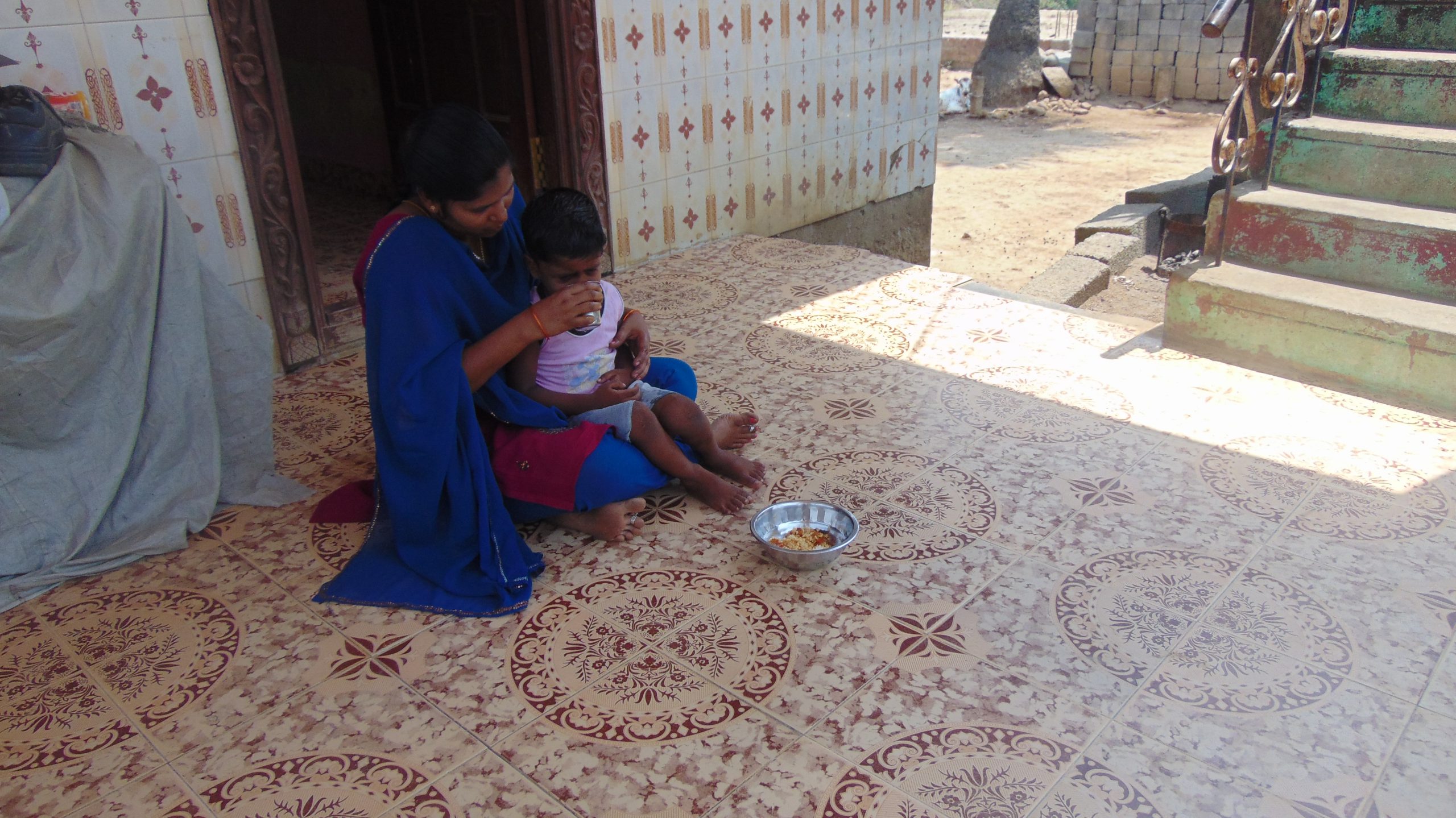
The Boy who lived through Malnourishment!
A young boy’s fight to conquer malnutrition.
When a Bonfire Turns Hazardous
Bonfires and winters are the perfect combination until something untoward and unexpected takes place. 12-year-old Khusboo Kumari happened to be a victim of such an unexpected tale, where a freak bonfire accident led to severe burns on her foot.
Of course, the first thing anyone would do is to visit the medical center and have it treated. Yet this is not the first thought that crosses the minds of the folks in rural Jharkhand. Owing to the long travels into the town to visit a good doctor and the high costs, they resort to home remedies. But these remedies aren’t the most advisable and often lead to a more serious issue.
Current Scenario of Healthcare
Access to Healthcare in rural India has always been reported to be very difficult. With a rural population of 88% and 75%, respectively Bihar and Jharkhand’s healthcare system has always struggled to bridge the gap of lack of access to quality healthcare amongst the rural communities.
The high poverty rate (Bihar @ 51.91% and Jharkhand @42.16%) has most of the rural population work in the mica mines of Jharkhand and this is their only form of accessing a decent livelihood that would earn them an income. The health facilities in Bihar are located at quite a distance; some hospitals are at least 30 to 40kms away from rural locations. Hence access to quality healthcare is a challenge.
Making a Change
To tackle the various issues, Hand in Hand India’s Health team has been instrumental and hands-on in implementing numerous health initiatives under an integrated project of promoting education and improving healthcare facilities. This integrated project's overall goal is to reduce child labour and promote child rights; improve access to healthcare and facilitate livelihood activities across 50 villages of Nawada and Koderma districts of Bihar and Jharkhand, respectively.
One of the initiatives being implemented in the states is the Tele-Medicine services. This initiative was launched to ensure that timely care is provided to the rural folks without much ado during the COVID-19 period. The Tele-Medicine staff offer door-to-door services/consultations to the villagers who otherwise do not have any means to access or travel to the local PHCs.
This initiative ensures that timely help is sought either through video consultations or through regular house calls by the doctors/medical professionals. In emergency situations, the patients are referred to the nearby medical centers. It was during one of these regular house visits did the Tele-Medicine staff identify Khusboo and immediately set about getting her the best medical help possible.
Negligent about Healthy Lifestyles
There are also numerous awareness programs organized for the community with the support of community mobilizers, Accredited Social Health Activists (ASHA), and Auxiliary Nurse Midwife(ANM) workers. The two States have many women who are victims of Anaemia as they lack the basic awareness about nutrients and a healthy diet.
Ranju Devi earns a living by working in the mica mines of Jharkhand and the income from this is the only way the family can afford a living. At seven months pregnant and still working, she complained to be facing constant dizziness. The team noticed that her diet was not balanced and the results of the anaemia test revealed that her haemoglobin count was dangerously low, which was a matter of dire concern for her and the baby. Hence to make sure the mother and child are healthy, iron tablets, awareness about proper nutritional foods, as well as fruits, vegetables, and pulses were given to Ranju. To ensure that women like Ranju are receiving the necessary medical care, the team conducts regular camps (General & Gynaecology) in the districts where the health workers identify, educate, and counsel the women and adolescent girls.
The greatest challenge in the two states is the low literacy rate, particularly among the girls. This combined with the lack of awareness about the importance of health and education among women and children is a major concern. Motivating, counselling, and promoting the rural folks to care for themselves and gain knowledge about the various health hazards was in particular, a long task for the team. With counselling and behavioural change communication, women and girls are more aware of health, hygiene, water and sanitation aspects of healthcare.
Caring for the Future Generations
Among the already listed interventions, there are also regular paediatric camps where severely malnourished children are identified and given the proper care necessary. Samridi Kumari, age two was one such severely malnourished child identified by the team. Her mother, sole caretaker and the breadwinner of the family was a mica mines worker but the pandemic and lockdowns snatched away from her only source of income. The lack of income led to the poor nutrition-less diet of little Samridi.
So, when the child was identified her Mid-Upper Arm Circumference (MUAC) was immediately conducted, and was tagged as malnourished. Improving the health of the child was of utmost priority and so the team provided the mother with the necessary nutritional support and food and was also counselled on how to maintain this diet regularly. In cases of anaemia and malnourishment, the families/children are regularly monitories with weekly visits to the house or consultations and all of these services are provided to the beneficiaries free of cost.
Awareness and training on the importance of nutritious food are regularly provided to the mothers and children at schools along with training on maintaining and heeding a child’s physical and mental health.
This is only the beginning…
We at Hand in Hand India have been striving to improve and better this very condition of rural Bihar and Jharkhand. We started out interventions two years ago during the 1st COVID-19 lockdown and it certainly has been a challenging, difficult, and nerve-racking journey thus far but it also has been fruitful, impactful, emotional, educational, and an eye-opener to many. All of our interventions are currently ongoing we proudly present the impact we have created in these neglected regions.

Bridging the gaps in Rural Healthcare
A winter bonfire turned tragic for 12-year-old Khusboo Kumari, who suffered severe foot burns in an unexpected accident.
Can you imagine even a day without water?
Can you imagine a life, day, or even a minute without water?
Oh God seems like an indescribable nightmare that we can’t even imagine. So let’s not. Let’s imagine this, walking close to 1km to fetch water from a well multiple times a day? Sounds tedious, doesn’t it? Well, why don’t we add some rules to this game? Rule one; no access to well before the morning prayer at the temple nearby. Rule two; women to stay away during the menstrual cycle. So, can you see yourself doing this? We certainly do not believe anyone would last a week.
Here we bring to you the troubles faced by communities in Thiruvanaikaval, Tamil Nadu in finding water for their everyday needs. Our Natural Resource Management team brought together the community, harnessed solar power and brought the much-needed water to this region.
The long walk to bring home water
The Irula tribe of Thiruvanaikovil has been trapped under these rules for years. Women, being the homemakers, are expected to do this tedious work. Ms. Selvi, a resident of Thriruvanaikovil travels frequently on foot to fetch the well water for her family. She has two children and a husband to care for in addition to the physical work of carrying heavy pots of water, every day. All this work can be extremely strenuous to the body and mind.
Water collected from the well is solely used for domestic purposes. For drinking purposes, the villagers contribute Rs. 30 to Rs. 50 each to have a 250-liter plastic barrel filled up to the rim. To sum it up, residents have not only been facing a physical burden but also a financial burden for years.
The Solution
Our Natural Resource Management team (NRM) works closely with NABARD and CSR partners towards the upliftment of rural and tribal communities via their various initiatives, such as watershed management, organic farming, and horticulture development by promoting farmer producer organizations and green livelihoods. With financial support from Grundfos India as a part of their CSR program, the NRM team implemented a drinking water project in Thiruvanaikovil hamlet to ease the residents’ difficulties. Multiple surveys by the team led to the understanding of water deprivation in the hamlet.
The team assessed all options available and arrived at a decision to set up a solar-powered borewell for everyone to access free of charge. The team conducted a scientific hydrogeological survey and the wisdom of Mr. Kannan, a senior citizen in the village was attainted, to locate the point of the water source. Due to the installation of solar panels no additional cost will be incurred for pump operation.
The Solar Relief!
Post thorough assessment, work to provide basic rights of safe drinking water to the residents commenced. A bore well was dug to a depth of 400ft. A 3 core submersible pump was used to pump water. Solar panels of 2 Kilowatts were used as a power source and a storage tank with 2000 liters capacity was erected over a cement platform with four outlets for water supply. The villagers were ecstatic to have their own water supply after years of dreadfulness. Mr. Kannan noted that the visitors were all amazed by the results and they stated that the borewell water tastes better than well water.
HIH India’s team worked tirelessly to fulfill this basic need of 24hours access to water, free of charge. The old well also soon went dry and the neighboring villagers lost their only water source. But the new solar borewell was present to fulfill their needs as well. Saritha, a resident of the village stated that the water project has been quite a reliable source for everyone including migrants, students, and the workers who return from the 100 days employment guarantee program of the government. The project did not just tackle the problem of one village but helped many more indirectly.
One led to another!
Impressed with the results of the Thiruvanaikovil project, the Grundfos India team decided to fund another project at Kanniyamman Nagar, Meyyur. The story of this village is something out of the ordinary. The residents traveled to a government-built borewell about 2kms away and sometimes even fetched water from agricultural fields for domestic needs. During monsoon season there is a little more creativity needed. The villagers dig up pits in the nearby river basin, collect the rainwater, filter it out and then use it for domestic purposes. This was the routine work performed for nearly two decades. This indicates that an entire generation was accustomed to collecting water in this demeanor!
Sounds fictional and like something you only see in Indian movies doesn’t it? Well, where do you think the movies get their ideas from? A National survey states that close to 82% of Indian households lack piped water in their homes. The NRM team understood the needs of the Kanniyamman Nagar residents. Post thorough research, the team set up a solar-powered borewell project about 850 meters away from the city. The distance was due to the fact that there were no water sources available closer to the village. The team also set up a kitchen garden around the water tank for the villagers to benefit from. Any water spill from the tank caterers to the vegetation planted around. Both the above-mentioned projects were completed prior to the Coronavirus pandemic.
Sustainability Goal Fulfilled
It must come as a relief to know that the Government along with numerous private and non-governmental organizations has been working day and night to eradicate this situation of water shortage. HIH India is one such organization whose aim to provide safe water and sanitation for all will continue till the end. With the aforementioned two water projects we have met the Sustainable Development Goal 6 to provide safe water and sanitation for all. The fundamental right to access safe drinking water was fulfilled by the NRM team at HIH India in partnership with the Grundfos India CSR team.
The NRM team has cumulatively created 266,622 cubic meters of water storage facilities through its partnership with numerous CSR programs. The team has also implemented 8118 hectares of lifesaving irrigation for farming. NRM’s community drinking water program promotes rainwater harvesting and increases drinking water sources in villages.
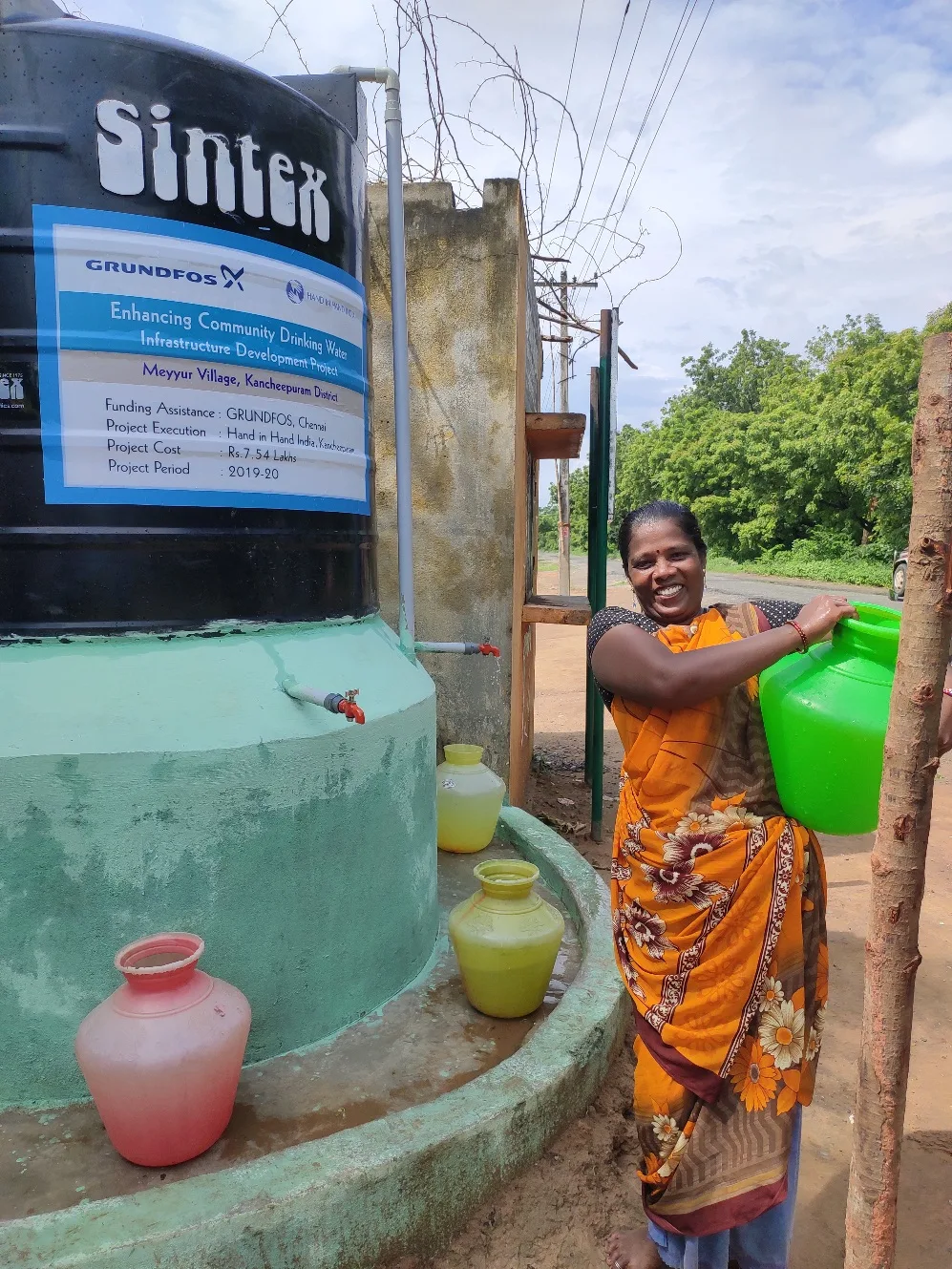
How we harnessed solar power to bring water to rural communities
On World Water Day, here's a story of how we harnessed Solar Power, Community power and brought water to rural communities in Tamil Nadu.
Child marriage—still happening?
We have heard many people ask us over time; ‘Does child marriage still exist in the 21st century? Isn’t that ancient history?’
Well, it is not and we at Hand in Hand India are going to tell you how technology and the pandemic incentivized child marriage.
Technology has been often accused to be a bad influence on the current generation. Yet, when countries shut down for months, everyone turned towards the electronic equipment/gadgets to ensure that learning sustains. Even a daily waged worker was forced to buy a smartphone for their child to obtain and keep in touch with knowledge. Malini, 17 (name changed to maintain confidentiality) was thrilled to receive her new smartphone. Though the phone was provided solely for online classes, Malini used it to stay in touch with Manoj, 24 (name changed to maintain confidentiality) who worked at the local bus stand. The lockdown forbade them from meeting but technology groomed their love affair. The couple was seen endlessly texting and constantly on calls. When the parents confiscated the device stating the difference in the behavior of the girl as the reason, the couple resorted to elope and got married at a temple. If you are wondering why we picked this story, then you surely missed noticing something.
Have you identified it yet?
Fine, we’ll help you; it is the age of the girl. The legal age of marriage in India is 18. Yes, Malini is underage. Hence this marriage is illegal and a criminal act. An FIR filed by Malini’s parents and Hand in Hand India led to Manoj’s capture and arrest. Manoj, being the major, was accused of the crime. Malini was given counseling and handed over to her parents who agreed to care for her.
We at Hand in Hand (HIH) India work towards eradicating child marriage and other child-related crimes in partnership with Childline India. Childline India Foundation is the nodal agency of the Union Ministry of Women and Child Development. HIH India is the Nodal agency for Childline in Kanchipuram and the Collaborative agency in Vellore, Ranipet, and Tirupathur districts. The lockdown may have kept millions homebound but a new crop of silent child marriages emerged. During the lockdown alone, the HIH team intervened and prevented some 401 marriages. The team at HIH noted that the majority of cases reported were a result of digital relationships. The second influencer was the financial burden exerted on the family by the pandemic job loss.
‘Covid Kalyanams’
These Covid Kalayanams (Kalyanam meaning marriage in Tamil), provided a great opportunity for the families to plan a budget wedding and avoid the irrelevant spending on guests and festivities. Most marriages took place in temples due to the low/no cost and in hopes of hiding it from officials and society. The team noted that some marriages were arranged by the grandparents of children from broken families. The former took it their responsibility to have the child settled before they passed away. The team noted that there has been a 170% increase in child marriages this year due to the lockdown.
Spreading Awareness and Care
We at HIH India have numerous awareness and outreach programs arranged to educate the people about child rights. The HIH India team has conducted 69 awareness programs attended by 7213 participants to date. Most of the awareness programs take place door to door where pamphlets and booklets are handed out to the people. During these programs, the team understood that many are aware of the laws and illegality of the act. The HIH India team in partnership with Childline India has awareness programs organized in slums, tribal communities, bus stations, for government employees, schools, colleges, etc. The team also organizes night awareness programs.
What’s the point of spreading awareness despite people’s ignorance you ask? Well, most people are aware of the age limit but they aren’t aware of the consequences that arise later. There are cases where the child is taken from the parents, to ensure that this does not happen again. This is just the extreme measure taken if even after a warning the family goes ahead with the marriage. But in scenarios when the marriage does take place, the child is handed over to the Child Welfare Committee (CWC). The CWC officer enrolls the child at a Government Home. Here the child is cared for until they turn 18.
The Action Force
Once a complaint call is received about a potential child marriage, an entire cavalry is formed. The police are informed along with the District Child Protection Unit, Childline India team, and the CWC. A thorough investigation is conducted to ensure that the information received is correct. As this involves the safety of a child, all departments respond promptly and immediate deployment of teams takes place. Hand in Hand India works in close partnership with all the stakeholders and has also conducted awareness programmes with concerned officials in attendance.
During the investigation process, there are numerous hurdles and backlash the team endures. Families sometimes threaten to hurt themselves if the child is taken away. Town people blocked roads to ensure the team does not reach the marriage location. The Covid19 lockdown added some unforeseeable hurdles to the team. The team stated that due to the scarcity of public transport, they used their vehicles and transports to reach the locations. There were situations when they took to walking to reach the destination.
In the financial year of 2020-2021 alone the HIH India Vellore team received and tended to 888 calls in total via 1098. The Covid-19 induced lockdown 355 child marriage cases were reported, a 75% increase from the previous year in the Vellore district. The unprecedented lockdown event enabled people to break all records and create a new extremely implausible number
The HIH India team continues to conduct awareness drives and hopes to obliterate the practice of Child Marriage in India. The HIH India team works day and night and against all odds to assure that this objective becomes a reality. Aside from its partnership with Child Line, HIH India runs residential special training centers for child and bonded laborers in Tamil Nadu and Madhya Pradesh with support from Samagrah Siksha. Through our initiatives, more than 3,43,037 have been mainstreamed into formal Government schools and we have converted more than 1142 panchayats (groups of villages) into child-friendly ones. Read more about our work here.
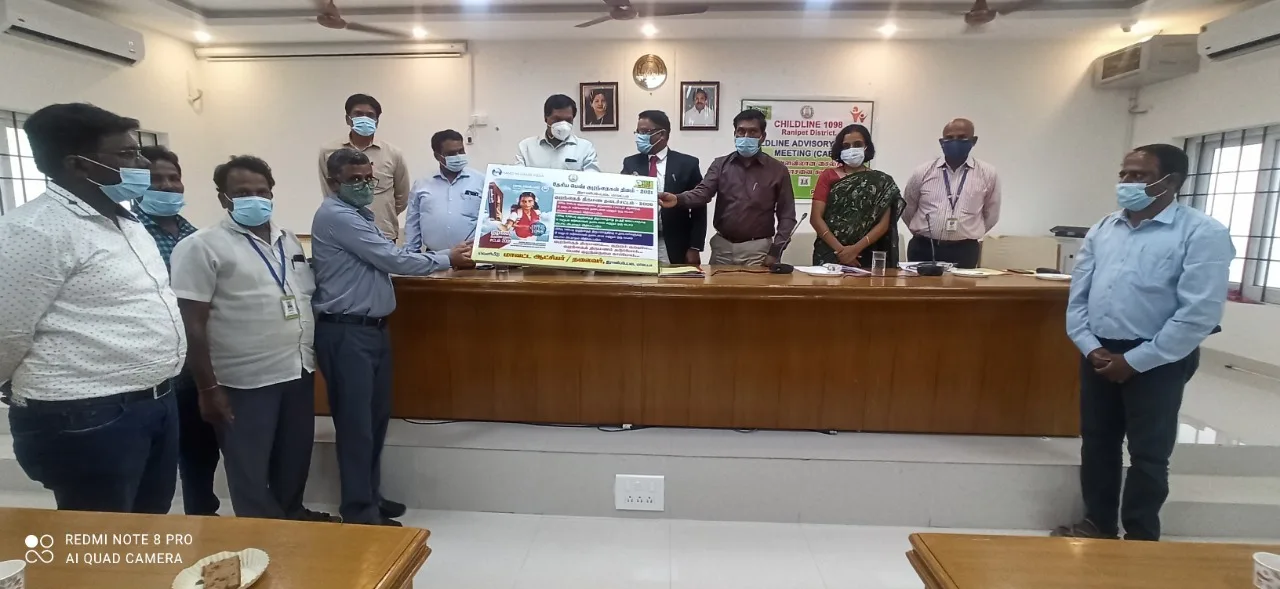
Child Marriage – The Lockdown Trend!
The COVID-19 lockdown saw a worrying rise in child marriages, driven by economic hardship, school closures, and social pressures.
Bringing classrooms to children.
In a time when all schools were shut, we took the schools to the children!An insight into the Satellite Learning Centers organized by the Child Labor Elimination Program at Hand in Hand India.
The pandemic has immensely affected the livelihoods of billions of people in this past year. Numerous businesses and sectors were affected, but the most affected would be the education sector. Due to the multiple lockdowns imposed by the Indian government to control the spread of the Covid-19 virus, academic centers shut down, and everyone turned to e-learning platforms. But there was a big gap and many assumptions made when schools turned to zoom and google calls.
This assumption was that everyone (child or parent) owns at least one electronic device to access the digital platforms. World Economic Forum states that close to 350 million students were affected by the pandemic lockdowns. Not all of them were able to access the e-learning platforms due to various technical issues.
Detached: Rural India
Electricity and Internet access are the key aspect of online learning. However, only 47% of Indian rural households have over 12 hours of electricity and over 36% of India's schools don't have electricity. The pandemic only increased problems and took rural India back in time to a place with little or no access. Moreover, with schools shut down and with parents losing their jobs due to the pandemic, most families are left with very few options to make a living and feed the members. Due to this fact, a great many families are equipping the children to work with them at factories and on farms. This action is affecting the several years of progress made in curbing child labor and the eventual fate of India's future generation.
The Child Labor Elimination and Education Programme
At Hand in Hand India, we noticed this gap and hence strived to help the children from our Residential Special Training Centers (RSTC), especially run for vulnerable children to stay up to date with classes and the reading materials. The aim is to eliminate child labor and ensure that it remains that way. The children from the RSTC’s were sent home with their parents when the lockdown was induced by the government
The Child Labor Elimination Program (CLEP) of Hand in Hand India, organized for surveys to be taken of these children to assess their learning skills. The surveys were conducted at their villages, even covering interior remote places since children were not attending regular classes at the center. The surveys were conducted by volunteers and the RSTC teachers. They went from door to door and provided the children with assessment sheets and conversed with the parents to understand the situation they were in during the lockdown. All Social distancing protocols and measures were taken to ensure the safety of everyone present.
The survey’s results showed that the learning levels of the children, during the lockdown, had fallen back to where they were when they started learning at the RSTC's prior to the lockdowns. The team in Madhya Pradesh also noticed that the migrants resumed the practice of taking their children to the farm for extra help and earn extra money for living expenses. The reason provided to the team was that the children could not be left alone at home when the parents were at work as it was not safe. The families state that they had no option but to take the children to work with them.
The Solution: Let’s take the School to the children
Taking all these into a note, the CLEP team decided to have remote Satellite Teaching Centers (STC) conducted for the children who are unable to attend the e-learning platforms. When the children could not access schools, we brought the schools closer to them.
The centers were first conducted for the RSTC students but in no time the team observed that the Non-RSTC students or ‘Covid Dropouts’ i.e. students who were unable to attend online classes as they have no access to schooling, internet, or electricity. Along with these two categories of students, the centers also comprised all other dropouts in the community, people who couldn’t finish their studies due to numerous personal, social, and cultural reasons.
The classes are conducted for two hours every day where the Teaching & Learning Materials (TLM) is provided to the students. The teachers and volunteers are also provided with training to ensure that they are proficient and skilled in their teaching methods. The classes take place in batches to ensure that every child has ease of access and to ensure their safety during the pandemic. The CLEP team mapped the locations of the children and set up centers in and around those areas.
Some centers are conducted in government schools, in government buildings while some take place even on open grounds or under the shelter of trees. The teachers and volunteers traveled on their own vehicles to the locations as there was no public transport due to lockdowns. Some even traveled close to 50kms each way, to teach and help these children. At the STCs, all of the Covid-19 protocols were followed, the kids were provided with masks, sanitizers were present, children washed hands before entering the STC for the day and social distancing precautions were taken to ensure the child and the teachers' safety.
The STC's are currently active in two states namely Tamil Nadu and Madhya Pradesh. Combined currently we have 114 active centers with 1555 children attending classes every day in batches. It was noted by the CLEP team managers of all districts that the children are eager to join the classes, and that the parents are also encouraging and supporting the teachers to take up more students and help more people.
To ensure that the families and the children are well-fed and that they get the necessary nutrients, the CLEP team distributes groceries to families with the help of donors. The other crucial reason for the distribution of groceries was to ensure that the families have all the essentials needed and that the necessity to have the children sent for work to earn an income would be non-existent. If the groceries were not provided then one would notice a sharp rise in child labor, as that parents would have fewer options left to earn a living and to put food on the table.
The grocery kits included - 5kg wheat flour or Rice (MP & TN, respectively), pulses, oil, rice, masala items, salt, etc. The CLEP team has distributed grocery kits to 137 RSTC Children to date.
That Extra Mile!
In the Vellore district, some classes take place in the Anaikattu hills, where the tribal community resides. They do not have regular access to the plains, and hence the STCs were arranged on the hills. The teachers here are volunteers who are part of the local community and are not RSTC teachers. The volunteers are 10th or 12th pass students who are given proper and vigorous training to enable them to teach the kids in the region.
The kids who could not make it to regular classes due to geographical reasons are provided with electronic tablets to attend the online courses. These tablets are donated to the students by various donors and well-wishers. There are also dance lessons offered to the students in this region by fellow students who have acquired training. Two students namely Shalini and Rekha voluntarily go around all schools providing dance lessons so that the other students could participate in various cultural programs and competitions. They also conduct classes for primary school children studying in STCs.
Fun incorporated into Learning
The children at STC’s participate in extra-curricular activities to ensure that their minds are free and they get a break from all the learning. These activities enable the students with new skills and art forms. The kids take part in tournaments and competitions to demonstrate these skills. The extra-curricular activities provide recognition to the students when they step out into the real world. The children at STC’s are supplied with Sports kits and materials for the extra-curricular activities. The CLEP team along with the assistance of donors has provided 13 STCs with sports kits benefitting 240 children.
At the STC's, the children are provided with ‘movement breaks’ where they choose a game or activity of their choice and play with, learn and build skills, in between classroom sessions to give them a break. The team noticed that the children's attendance rate and their span of attention had been increased considerably within one month of this practice. In Chengalpattu and Tirupur districts, the children were provided with some craftworks to design greeting cards. The kids used their thoughts and ideas to create colorful and beautifully worded cards for the donors in and around the area.
These cards were then handed over to the donors by the CLEP team, extending festival wishes from the kids. Apart from the above-mentioned activities, there are many new initiatives introduced in the STCs for the children to benefit, enjoy and learn. The STCs have regular classes conducted on Yoga, Arts & Craft. The children are also provided with the opportunity of taking part in Online Quiz competitions, Book festivals through puppet shows, Food festivals, Pottery. There is also training conducted on the usage of laptops and email communication.
The teachers also use crafts to make the daily studies more exciting and eye-catching for the students. Teachers use craftworks and cutouts to teach students alphabets, poems, and even storytelling sessions have crafts utilized to enhance the attention span of the children and their interests. The teachers at Kanchipuram and Thiruvallur districts used craft paper to create palm leaf (Ollaichuvadi) manuscripts of 'Thirukural' for the children. The CLEP team also has QR codes embedded on the back of learning materials for the children to scan and access extra reading materials and works when necessary. 3D animations are also accessible for the students to understand how animals and creatures behave and react.
The teachers, field staff, and donors are the backbones of the CLEP team in Hand in Hand India; they ensure that the utmost care and attention are given to every child. They ensure that these children turn into responsible adults and create their own space in this world. At Hand in Hand India, we are nurturing the future generation of the country and making sure that we play, no matter how small a part, in helping the most vulnerable children establish themselves and have a chance at seizing opportunities in this world.
The CLEP team will continue with the satellite teaching centers until all lockdowns are lifted and educational centers are open. The team took the classrooms to the children when the schools were not safe anymore. The team proved that anything is possible with determination and a great deal of enthusiasm. The CLEP teams, through an orderly approach and timely mediations, have ensured that none of the RSTC children have returned to child labor in this difficult time and are followed up at regular intervals.
Hand in Hand India works across India in the area of Child Labour Elimination. In addition to our residential special training centres for child and bonded labourers in Tamil Nadu and Madhya Pradesh, we run 2 schools for first-generation learners in Kanchipuram. Through our initiatives, more than 3 lakh children have been mainstreamed into formal Government schools and have converted more than 1000 panchayats (groups of villages) into child-friendly ones. Read more about our work here.
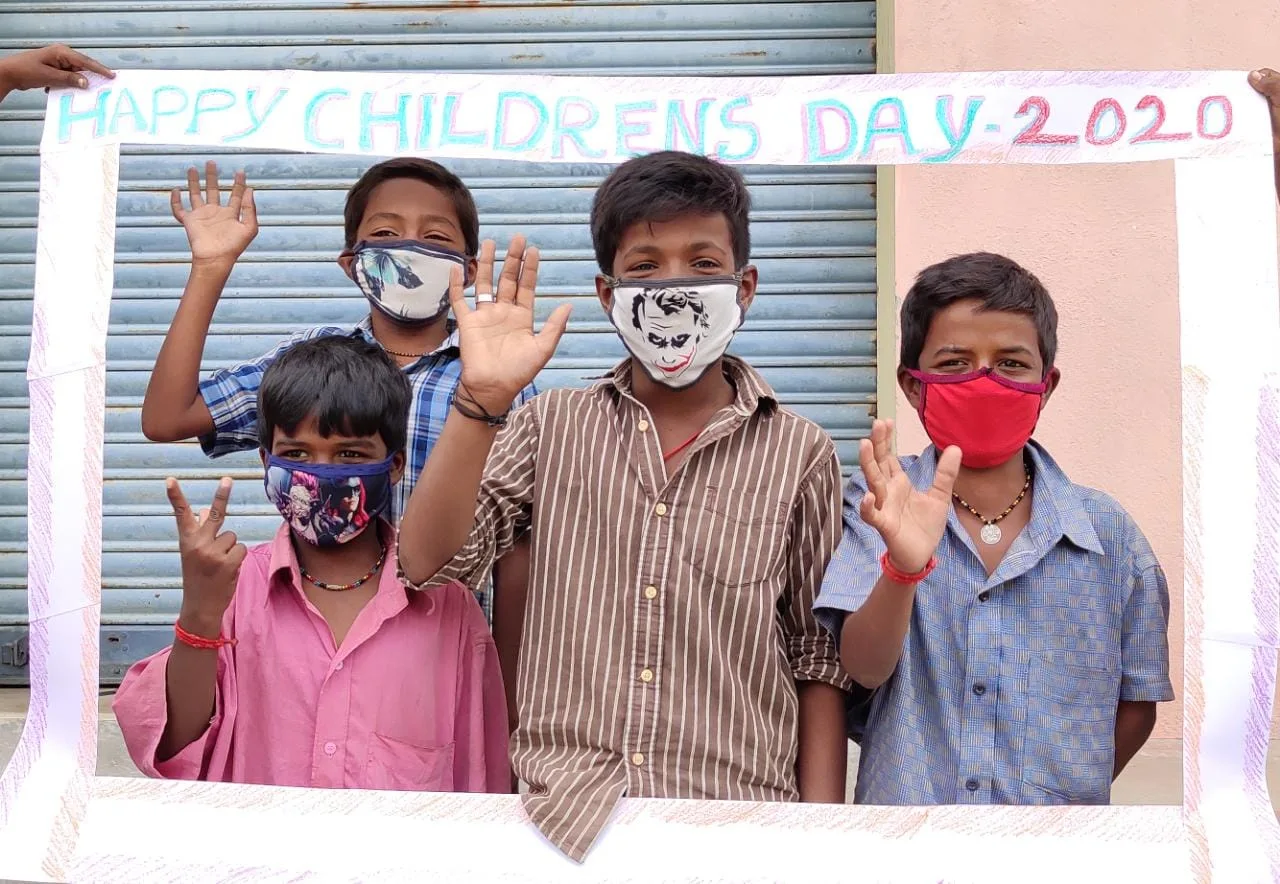
Innovation in Education during the COVID-19 Pandemic
During the COVID-19 pandemic, we took innovation in education to a new level. Read more on what we did in this post.
Someone once said, a team is not just a group of people who work together, but a group that trusts each other. In Maharashtra’s villages, there’s plenty of this camaraderie and trust to be seen in rural folk. We work across 33 villages in this state, with an aim to bring holistic development of the rural community. Across these villages, there was one common factor that struck us; how villagers are ready to work together in groups for their common good. Our Group based enterprises were the result of this discovery.
Our Village Uplift Programme essentially brings development to villages and improvements in livelihood for the community at large. The villages are largely dependent on agriculture and our interventions focus on skill development, infrastructure upgrades, enterprise development, education and healthcare. In Maharashtra, we brought together not just women, but men too and trained them to set up their own enterprises.
Here are four stories of trust, friendship and much more from the hinterlands of Maharashtra.
Clean Enterprise: Devale Panchayat
Away from bustling Pune city lies Devale panchayat, a quiet rural Maharashtrian setting. The men of the villages here are busy with their agricultural work, while women look after their households. But during lean times, the family’s income dips. This is where Hand in Hand India stepped in.
In Devale panchayat, our programme’s core objective is women empowerment and job creation. The women here are enthusiastic, but we found they were unable to find jobs due to lack of higher education and low skills. Our first step was to form different self-help groups to train these women on how to save and manage money. We also introduced them enterprise-oriented skills such as pottery, soap making and more.
The first group that came forward to start their own enterprise decided on soap making as their business. A scoping study showed soap to be a good product, after all, detergent soap bars are used by rural as well as urban population and are an everyday requirement. The Hand in Hand India team motivated the Sanyojini group and taught them how to procure materials from the village itself.
The ‘Sanyojini’ SHG women group started their enterprise and called it the M. K. Soap making unit. The four women group started with an initial investment of INR 4000 in their venture and today earns INR 5200! The women market their products in the village and nearby local shops. We are also in the process of helping the women find bigger markets for their products.
Farmers Unite! | Bhoyare Panchayat
In Bhoyare panchayat, we came across a unique problem. We had set up our Self Help Group of women, training them to be entrepreneurs and create their own sustainable livelihood. We were soon approached by the husbands of these women too to help them out with enterprise development!
We had six young farmers from this are come together and brainstorm with us about their problems. The problem area was discovered – an unavailability of a paddy thresher machine, irregular labour availability for rice harvesting – which meant a loss of crop and thereby income for these farmers.
Hand in Hand India encouraged these farmers by forming a group called the Bhairavnath Farmers Group. We supported them in building their capacity on identifying a minimum-investment enterprise, skilling and various business strategies. After multiple meetings, the Bhairavnath group decided to support them in their investment of a semi-automatic rice cutting machine. The machine cost INR 20,000 and became a huge asset in the paddy harvesting season. On day one, the group earned INR 3000 from the machine and continues to earn INR 60,000 to 80,000 during the season.
The group is now encouraged and plans to evolve new business using a similar minimum-investment strategy.
Adding a fragrance to life | Taje Village
Taje village like its neighbouring villages described above, clearly depending on agriculture and the land. When the Mumbai- Pune expressway was built, many of these farming families had to sell their land and move to working in industrial areas such as Kamshet, Talegaon and such. However, the women members of these families did not get an opportunity to earn a living due to lack of education and skills.
Our Village Uplift Programme is a nascent one in Taje, started in July 2020. Despite the recent start we had here, the progress we see is fantastic! One of our self-help groups named Udyogini approached the team to get guidance on starting an income generation activity for bettering livelihood. The preliminary meetings discussed pros and cons of many enterprises and finally the group hit upon the Scented Oil Making Unit.
Interestingly, this is the first scented oil unit from Maval block, Pune. The enterprise is led by eight women and was started with a collection of INR 16,000 from all its members. The Hand in Hand India team put in some effort to help guide purchasing materials and skilling these women. Today, the women have gone to the next level and increased their market scope with different fragrances such as jasmine, lavender and more! Their monthly output has gone up to 1000 bottles of different sizes, each costing between INR 30 and 60. The monthly profit earned by this group is around INR 23,000 is shared by the members. The Udyogini women (which incidently means industrious) are immensely proud of their efforts and rightly so!
An inspiringly unique enterprise| Kashal Panchyat
In India’s villages, the one common factor is the availability of cows and therefore plenty of cow dung. This has multiple uses, as fertilizer, pesticides and more. At Kashal panchayat, however, we found a very unique use for cow dung – Dhoop or fragrance sticks made from dung!
Five women of the Tejaswini self-help group are busy at all times of the day. These are the women who came forward when the Hand in Hand India skilling team came up with an idea for an income-generating activity. Creating an enterprise with raw materials available at little or no cost appealed to these women. The handmade product is totally natural and made from cow dung, cow urine, ghee, ash, tulsi, camphor, neem, turmeric and such easily available ingredients. The initial investment for the enterprise was taken care of by Hand in Hand India to facilitate packaging etc.
The fragrance sticks not only smell good, they also act as an insect repellent – two uses in one product! The women are currently aiming at making 300kg of this handmade dhoop, with a target of INR 10,000 net profit every month. Hand in Hand India has helped the group by identifying two buyers for the product to start with.
Hand in Hand India’s Group based enterprises in rural Maharashtra have had a great start. These group-based ventures ensure that women don’t have to travel great distances to create sustainable livelihoods. Read about our other set of group-based enterprises in Punjab and see what a resounding success they have become. These rural women have not just transformed into businesswomen, they’ve also inspired other rural women to come forward to create their own success!
Hand in Hand India’s Self Help Group (SHG) model is based on women empowerment and job creation. We mobilise women into groups, draw on the collective social capital, facilitate access to economic capital, provide skills training, hone their entrepreneurial ability and act as a catalyst for a gender-equal and empowered society.Read more about our work here.
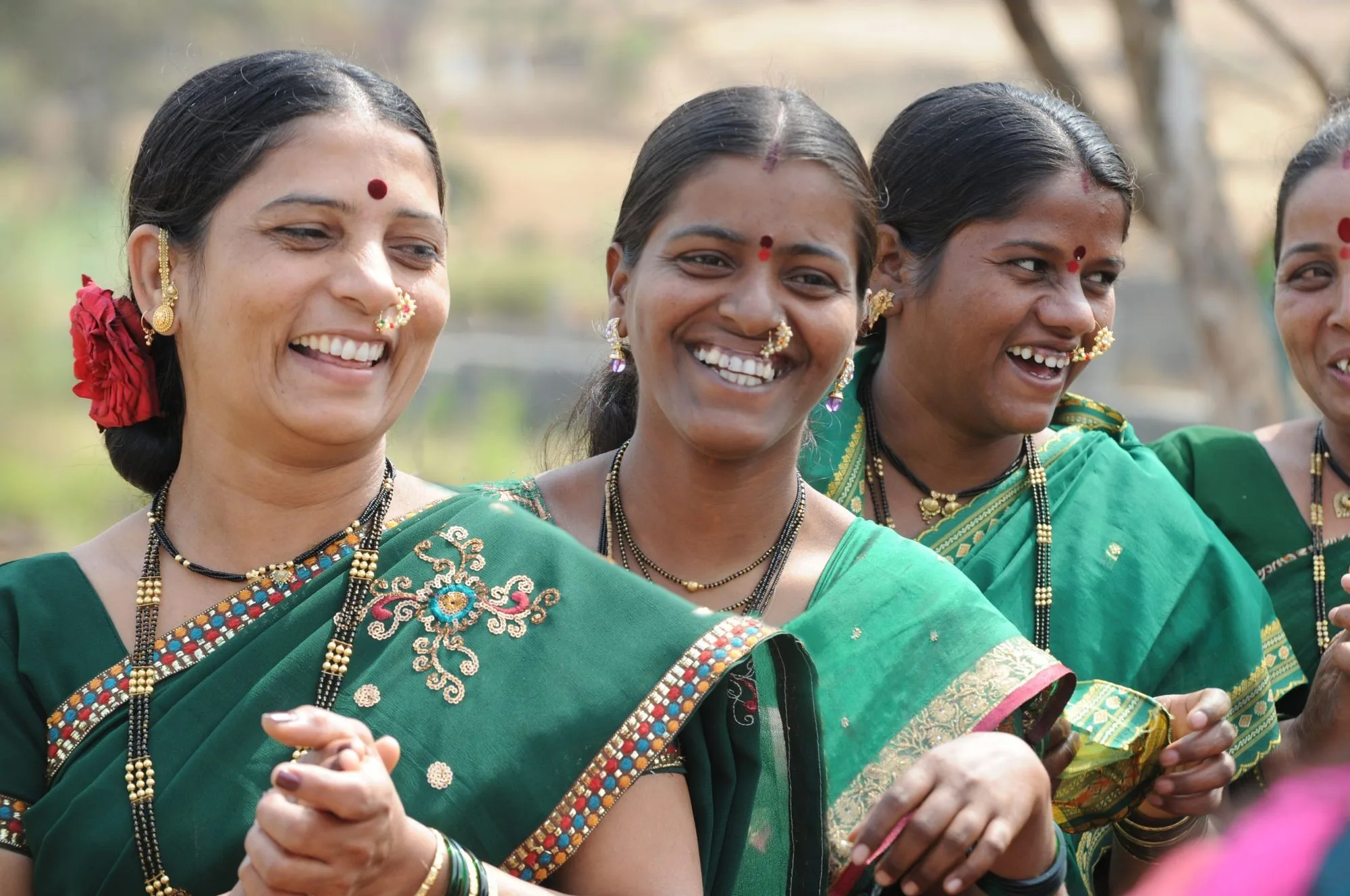
Rural Entrepreneurship: Success stories from Maharashtra
We study four group based enterprises from Maharashtra that set the tone to successful rural entrepreneurship.
At Hand in Hand India, we empower women as entrepreneurs across 16 states. We believe getting women involved in the community and creating their own channel of income generation is important for economic and social development. In Punjab, however, we went beyond individual and family-based enterprises to encourage women to establish group based enterprises - yet again finding solidarity in a group!
Since 2017, we have been working on a unique corporate partnership in this state to empower rural women. The project is spread across 26 villages around Bhatinda, Punjab and aims to promote 100 sustainable group based enterprises with effective market linkages.
Enterprising Punjab
Our Punjab model follows a process; social mobilization of women into SHGs, training and capacity building, financial literacy, skill development and finally access to credit and entrepreneurial support. While doing a needs analysis in interior Punjab, we checked the supply-demand gap in the local markets. We shared the results of this with our Self Help Group women. The result was something new, the women wanted to join hands and form an enterprise that would yield them substantial income, rather than take on small jobs themselves.
The enterprise ideas that came up involved substantial investment for machinery and infrastructure. The initial investment for each enterprise ranged from INR 3 lakh to 10 lakh, depending on the scale and type. The project has support from donors for the infrastructure cost. The SHG members contribute 15% of the total cost from their own savings or credit linkages for procuring raw material, operation and maintenance and other such requirements - bringing ownership to their business.
Today we have supported over 923 women in establishing over 88 Group Based Enterprises in 26 villages of Bhatinda, with a total investment of INR 53.26 million in these GBEs. The enterprises include seeders and tractors, sanitary pad making units, bakeries and more.
Happy women and their Happy Seeders
In late September and October each year, farmers in Punjab and Haryana burn tons of crop waste from their paddy fields after harvesting. This is considered a low-cost straw-disposal practice to reduce the turnaround time between harvesting and sowing for the second (winter) crop. A Happy Seeder is a mechanism that is mounted on a tractor, removes residue and also allows the farmer to seed the new crop without involving manual labour and cutting down pollution. Punjab, being a predominantly agricultural state, sees a high demand in Happy Seeders.
In Kanakwal Village, Punjab, 11 women entrepreneurs started their Happy Seeder enterprise with an investment of 8.5 Lakh, of which the SHG members contributed INR 1.5 Lakh from their own savings. The SHG members give the Happy Seeder on rent in their own village as well as other nearby villages and earn approximately 40,000/- per month as profit.
The group has taken their lessons from Hand in Hand India’s training to a next level and now support their families with their income. The group plans to expand their venture by buying more agricultural equipment to rent out to the villages. The pride and confidence these women exude is visible indeed!
Bringing home water solutions
In Sekhu village of Bhatinda, Punjab, drinking water is a precious commodity. The supply of potable water has been through water trucks which would sell it at high prices. This is when the members of the Baba Farid Self Help Group from this village stepped in. The women got together and looked for a solution. With our assistance this group installed a Reverse Osmosis system to bring water to the village. Members of this group were trained by the Hand in Hand India team in running this as a business enterprise and managing it on a daily basis. Today the residents don’t have to depend on the expensive option of tanker water. They pay less for the RO water and are also free to take water when they want to.
Today the enterprise supplies nearly 3000 litres of water daily to the residents of the village and nearby areas. While the enterprise makes INR 15,000 per month, the residents make use of money saved in educating their children. That is two purposes solved in one!
Cattle Fodder Enterprise
Punjab being primarily an agricultural state, many of our group based enterprises are created around agri and agri-related practices. It was found in a survey that dairy animals have limited access to cultivated fodder and grass. Take Phullokari village in Bhatinda, locals here had to bring fodder for their animals from a market that was 20km away.
The enterprise took off to a great start. The locals are happy that they don’t need to travel far for the cattle fodder, and are able to economize on the transport cost. The women in the group are employed and are bringing home an income too! They make a profit of INR 100 a bag and sell at least 85 bags a month.
In Punjab, we found strong patriarchal values that have led to women not being able to showcase their talents and business skills enough. The group based enterprise project has given us an insight into building ecosystems for rural women.
Hand in Hand India’s Self Help Group (SHG) model is based on women empowerment and job creation. We mobilise women into groups, draw on the collective social capital, facilitate access to economic capital, provide skills training, hone their entrepreneurial ability and act as a catalyst for a gender-equal and empowered society.Read more about our work here.
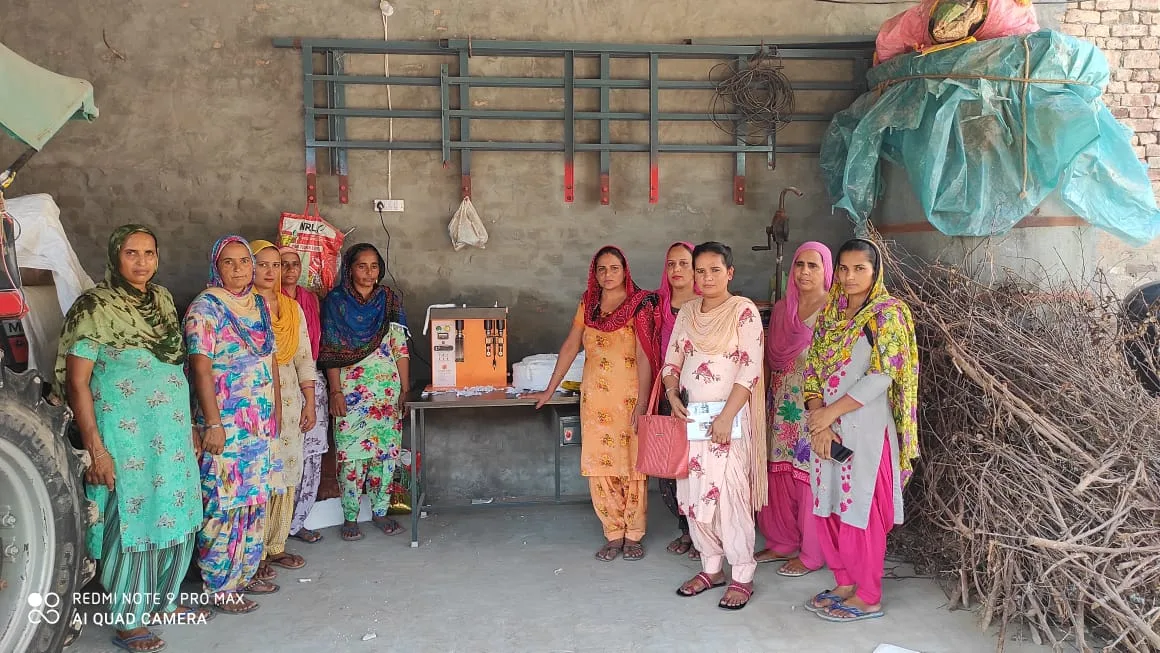
Finding Power in Groups - Stories of Strength
Stories of solidarity from North India that show women coming together to start enterprises and change the face of their villages.
“A period should end a sentence, not a girl’s education.”
This is what Guneet Monga had in mind when she produced the Oscar-winning documentary titled ‘Period. End the Sentence’. Set in a rural landscape, the short film describes the travails of women from a village in North India who set out to empower their community by making sanitary napkins. The world became aware of the stigma of menstruation in India, especially rural India.
Menstruation holds deep connotations for women in rural India. Taboos on women during these times are plenty, the most common one is not entering the kitchen. A menstruating woman in some parts of India can even be considered an unlucky sight or not allowed into their own homes.
When life comes to a standstill
Titipura is a remote village in the Dhar district of Madhya Pradesh. This is where the indigent tribal community of Bheel lives. Their life revolves around rain-fed agriculture and small scale businesses. Durgabai, 33 year old mother of three children, hails from this community. While young women in the cities go around their normal life even when menstruating, women like Durgabai in Titipura dread those four days. For them, life comes to a standstill. Blame it on impurity, say the elders.
Durgabai has a pile of old rags that she saves very carefully. They are torn into long strips and kept ready for her time of the month. The rags are used and washed after every use, then dried in the darkest part of the house away from any prying eyes. For the young women of Titipura, sanitary napkins are unheard-of luxuries. The thought of hygiene does not cross Durgabai’s mind; for there is no choice or knowledge of any other option.
No school for four days!
It’s not just women like Durgabai who go through a tough time every month, young girls like Swathi are in the same boat too. Swathi is 14 and lives in Thaenapakam village of Tamil Nadu. The chirpy youngster loves going to school, she enjoys playing with her friends and is in every way a happy girl.
This young girl from Madhya Pradesh was part of our Menstrual Hygiene sessions
However, talk to Swathi about her periods, and a cloud seems to darken her bright face. It is, after all, the one time of the month when she doesn’t go to school. Not a happy time for the young girl! Being absent from school isn’t her only grouse. She too uses the cloth, that needs to be washed after every use. Swathi is filled with shame when she talks about the process.
Brace yourself for shocking numbers
In early 2018, when Hand in Hand India entered the village of Titipura, most women did not understand the importance of menstrual health. With the use of cloth during their periods, regular infections were the norm among women. We also discovered that women did not have a bath during their periods, causing more personal health issues.
In schools across rural India, girls being absent from school was a common phenomenon. No questions were asked. It didn’t stop there, girls dropped out of school when they got their periods!
In 2014, a research study by an organisation called Dasra, revealed that more than 20 million girls drop out of school when they get their periods. The key reasons attributed to this were - lack of toilets in school and no awareness of menstrual hygiene products such as the napkin - among other reasons.
Around the same time, UNICEF reported that the percentage of girls and women who were unaware of menstrual hygiene practises ranged between 60% to 80% across India. A Ministry of Health Survey also quoted that nearly 60,000 deaths due to cervical cancer are reported in India and that menstrual hygiene is the cause for nearly two-thirds of them.
Shattering the Taboos
In 2015, the Government of India released the National Guidelines on Menstrual Hygiene Management (MHM). It was a part of the Swachh Bharat Mission and was a detailed directive on how to build MHM in rural India.
Having worked with maternal and child health, MHM was a natural extension for us at Hand in Hand India. We implement MHM projects in rural Tamil Nadu and Madhya Pradesh.
The approach we used was a three-pronged one, the target audience being:
- Young Girls in schools:
Reach: 73 schools covered across two states between 2018-20. 45 sanitary napkin incinerators installed.
Goal: Education, removing taboos, Peer group awareness building and improving absenteeism.
2. Self Help Group Women
Reach: 4036 women in Self Help Groups in rural India
Goal: MHM awareness, Introduction of products such as napkins and menstrual cups.
3. Community at large
Educating on the importance of MHM. Involving men in the dialogue too. Garnering eyeballs for the MHM case.
Recently, on Menstrual Hygiene Day, we had a campaign in Madhya Pradesh across 45 villages. What was different about this was that we spoke to the MEN about menstruation. We told them why it is important for them to support women and how they could help.
It was an eye-opener for many. That day, taboos were shattered.
The past year of working on Menstrual Health Management has been eye-opening for us too. We have seen the rural-urban divide come crashing down in many instances. Take for instance the first-ever user of menstrual cups in our rural areas - read Usha Nandini’s story here.
Hand in Hand India’s Healthcare intervention aims to bring access to healthcare across rural India. Our model works by partnering with district authorities and bridging gaps in the Government’s healthcare network. Through our initiatives of medical camps, sanitation and hygiene management, maternal and child healthcare, we have reached out to more than 20 lakh families across India. Read more about our work here.

Menstruation Matters
Menstruation should never be a barrier to learning—every girl deserves dignity, awareness, and uninterrupted education.
The COVID-19 pandemic has created a paradigm shift in the way the world functions. When businesses are failing and old ideas are no more valid, how are rural India’s women entrepreneurs coping?
In Kanchipuram, Tamil Nadu, when there is a wedding in the family, Shakthi is the go-to person. Food, decor, you name it and Shakti gets it done. March is one of Shakti’s busy months, but this March, the wedding planner’s plans came to a standstill with the COVID-19 lockdown.
Far away in Madhya Pradesh’s Dhar district, a dairy cooperative that buys cow's milk from rural women stopped their collections. With sweet shops and restaurants closing down, the cooperative had no choice. Can necessity create entrepreneurs out of rural women?
These women (and more stories down below), are but a tiny, but significant part of India’s 13.5 million women-owned enterprises. These enterprises also give employment to a whopping 22 million people in India (TOI article)! Take Shakti, she employs nearly a 100 people for every big wedding event she undertakes.
Take a sneak peek into how rural India’s women entrepreneurs nurtured by Hand in Hand India are coping with these changing times!
How has COVID affected women entrepreneurs in India?
We spoke to women entrepreneurs in different parts of India and asked them how the COVID-19 situation has affected their livelihoods. We found that they were not cowed down by the pandemic and the resulting loss in business. Instead, they have utilised the time to either help the community or make changes to their business plan.We relate here, their stories and how they propose to make the best of the situation.
These women entrepreneurs have been with Hand in Hand India’s journey in empowering women for more than a decade. As an NGO, we provide rural women in India a foothold in entrepreneurship through business development training, financial and digital literacy and access to credit. Over the 15 years of our work, we have helped create 23,72,000 women-owned-family-run enterprises across India. Our women entrepreneurs may be a small store owner or a neighbourhood tailor to a large scale food enterprise owner or even running a manufacturing set-up. Read more about how we have tied up with the Indian Institute of Technology to give these women a head-start into the business world.
Sathya | Kancheepuram
Large-scale Food Catering business owner
Sathya is the self-appointed Chief Marketing Officer of her business. Her husband could be called the Chief Operations Officer. Together they run a food catering business, servicing weddings, corporate orders and family events in and around Kancheepuram.
Sathya is a thinker, talker and a treasure trove of recipes. Her analogies on life and business are very interesting too. She compares a small business to a young sapling - on the outside, the sapling might appear puny with just a few leaves, but beneath the ground, the sapling is working hard to establish its wide network of roots, or a foundation.
The story of her business is akin to that of the sapling. In March, as they were in the middle of a booming wedding business, the COVID pandemic hit her business hard. Sathya’s business, however, had got its roots firmly into soil - the goodwill of customers and families around town are keeping it going. Sathya and her family are now busy making and packing snacks and sweets that have a long shelf life and selling to her customer base. This keeps the home fires burning for now.
In times like these, one must admire Sathya’s far-sight. Her instinctive business skills have led her to the idea of a horizontal integration plan. She is utilising the lockdown time to test out a home-made range of condiment powders and pastes - herbal rasam powder (rasam is a concoction of whole spices), vethakuzhumbu mix (a spicy gravy to go with rice) , paruppu podis (lentil mixes) and more. The brand is called ‘ShivaShakti’ and she is slowly starting to distribute in the town as the lockdown eases. Her logic is sound; “ We are very busy during the wedding season but otherwise we have a lot of free days. Why not utilise these times for packaged product manufacturing?”
Shakti has taken advantage of the many training modules offered by Hand in Hand India to women entrepreneurs. She particularly thanks us for the Audit training, “I know how to run a business, but when it comes to the books and auditing, I was clueless. These auditing classes cleared my doubts and I learnt a lot”. While Shakti and her husband await for the world to re-open, she leaves us with a thought, “this pandemic has taught us to look beyond ourselves too”.
Mamta, Madhya Pradesh
Group Dairy Initiative
Dhar district in Madhya Pradesh borders one of India’s busiest cities - Indore. Mamta lives here with her husband, two children and her parents-in-law. Mamta belongs to Hand in Hand India’s Self Help Group and joined 8 years ago. That was when they got introduced to a lot of new things - milch animal upkeep, tailoring, maintaining bank accounts and more on the path to empowerment.
The most important part of Mamta’s daily routine is to check on her children, not just her two boys but her cows and buffaloes.The animals give her a good yield of milk everyday - 40 litres per day. A milk cooperative takes her yield and that of her neighbours for supply to sweet shops and restaurants.
This March as the world moved into a lock-in, these shops closed down and left Mamta and her neighbours in a spot. Necessity drove Mamta and five of her Self Help Group friends to put on their thinking hats. Why should they depend on the cooperative to buy their milk? They had milk to spare, nearly 100 litres a day between the five of them. They also had a community around them that needed milk everyday. So they set out with the help of their menfolk in delivering milk, twice a day.
A month later in May, the ‘Vraj Vala Doodh’ team is delivering milk to 50 families in Dhar. Together they also make ghee and curd and sell that too. In times of pandemics like now, these families prefer to buy milk from a trusted source. The group is also earning more now - INR 45 per litre, five rupees more than the cooperative paid them. Mamta is proud of their group’s name, “We are from the Gowli community, the cattle herders of Lord Krishna who was born in Vraj bhoomi”. What makes her even more proud is the fact they are now an independent enterprise with the goodwill of their customers.
Immunity and ingenuity, two things India is getting a boost during the pandemic!
Selvi | Pondicherry
Beautician, Tailoring instructor and Trainer
A native of Pondicherry, Selvi is a very busy woman - she runs a beauty salon, tailoring unit and an Aari embroidery enterprise. To top it all, she is an accredited National Skill Development Centre trainer and works regularly with Hand in Hand India’s SHG teams as a trainer. Her association with Hand in Hand India goes back many years ago when she got into one of our Self Help Groups and took a loan to buy herself a sewing machine. That was just the beginning.
Selvi is fiercely independent and believes financial autonomy is the first step to women empowerment. She is proud of her achievements - setting up her beauty salon, educating her children and training hundreds of women to stand on their own feet. The COVID pandemic, however, has caught Selvi unawares, but not totally unprepared.
Upskilling comes naturally to Selvi. From tailoring, to embroidery and then to a beautician course and most recently, a Physiotherapy certificate course. Today, Selvi uses her tailoring skills to stitch masks for the community - around 13,000 so far. She uses the income to help her women friends who don’t have a means of livelihood.She now plans to move into an online beautician course and to put her physiotherapy skills to use. Selvi asserts that she has never let her lack of English language to come in the way of her growth. She has only completed her 10th Grade, but smartly uses Google translate to help her with business emails!
We found Selvi’s drive to constantly innovate herself and the ability to market herself as an individual, inspiring. This is the same reason her more than 100 students look up to her too. Clearly, there ain’t no mountain high enough for Selvi!
Hema | Kancheepuram
Owner of an Event Management business, Beauty Salon and an Organic Outlet
Hema reminds one of a buzzing bee, busy and very productive. This woman entrepreneur, armed with an MSME license is the very spirit of ‘never say die’. She runs a beauty salon, an event management company with catering attached and also runs an organic products outlet.
Her foray into the business of beauty is not just a salon, but the A-to-Z of beauty itself. So, when the pandemic closed down her salon, Hema did not panic. Her staff are trained in massage and physiotherapy too, so those in pain were attended to at home. Hema having taken a cosmetology course, also helps people with skin problems. It helps that she has the distributorship for a range of natural beauty products as well. . When the COVID pandemic hit, Hema too stepped in to help the community with making sanitizers with neem and aloevera. She has been using a natural formula and now wants to take up Hand in Hand India’s training to make alcohol based sanitizers.
Hema’s organic shop supplies healthy food alternatives and has been doing brisk business during the pandemic. She sells millet based food, kanji maavu (porridge mix), soup powders and more. She says the pandemic has made people health conscious, “When this pandemic wave subsides, I would like to extend my organic shop into a small food business that sells herbal juices and snacks”. Her ideas don’t stop there - currently Kanchipuram has no wholesaler of tailoring supplies and Hema plans to be the first to fill this gap.
When the going gets tough, is when Hema gets going!
Ramandeep Kaur, Punjab
Food processing enterprise owner
When Ramandeep Kaur spoke in an interview to All India Radio during the lockdown, there was no trace of nervousness in her voice. In Malkana village in Bhatinda, Punjab, women were listening in with pride and awe. She was speaking on the AIR as a woman entrepreneur from rural Punjab.
For this graduate in agriculture, a chance course she took up in food processing changed her destiny. The training exposed her to pickle making, baking and more. Ramandeep was all set to set up shop and help out her family with a steady income. As with any woman entrepreneur, her journey too had its set of challenges - getting a food processing license to begin with and later on, lack of funds to set up her shop.
Ramandeep with her mother
The tables turned when she met the Hand in Hand India team who hand-held her in getting a license. Ramandeep also became part of a Self Help Group that helped her get trained in running an enterprise and take loans to kick start her business. Starting with INR 1000, today the young woman is the owner of Kirat enterprises earning more than INR 12,000 per month!
During the COVID lockdown, Ramandeep found it difficult to source raw materials at reasonable prices and also packaging materials. Business at the shop was slow, so she has started to home deliver products. She has utlized this time to create new health products for older people and children.
Her message to fellow-women-entrepreneurs on the radio interview was simple, “Empower yourselves through training and setting up your own enterprise”. And simplicity is the key to success!
Abirami | Villivalam, Tamil Nadu
Organic Farmer, Rice and pulses distributor.
The first thing that comes out when we speak to Abirami is that she is a staunch believer of organic farming. This entrepreneur runs her organic farm, Shenbagam Farms along with her husband Veeraraghavan. Together they have been popularising traditional varieties of rice such as kichli samba, thooyamalli and poongar.
Yet another deviation they decided to take was going directly to the customer. Abirami was one of the first rural women entrepreneurs who took her business online with the revolutionary RISE App. This unique project of Hand in Hand India and Vodafone brought the market to the doorsteps of such women entrepreneurs and expanded their customer base with very little effort!
Abirami finds the Covid19 pandemic has brought on a difficulty in distribution, “Orders are coming in, a little lesser than usual. The bigger problem we face is sending the orders to customers. We are waiting for the lockdown to end”.
This lockdown seems to have had its share of positives for Abirami too. The farmer couple are making plans of expansion into an oil pressery, as they also harvest sesame seeds. Their small start with dairy is also showing promise and Abirami hopes to be supplying milk products and eggs too. Based on customer feedback, Abirami also has plans to foray into ready-to-eat foods that use the base ingredients from their farm - peanut and sesame laddus (healthy energy balls) and more.
Abirami’s biggest lockdown learning is ‘keeping one’s spirit up and always looking at the positive’. She adds a valuable afterthought - ‘always keep technology as your best friend!’.
The increasing number of women entrepreneurs setting up businesses however small, is getting India back on to the micro-entrepreneurship map. Further studies say that these women entrepreneurs are capable of boosting India’s economy by $700 billion!
Going local is the catch word, and who better to build a self-reliant nation than these sprightly women entrepreneurs. We at Hand in Hand India salute them!
Hand in Hand India’s Self Help Group (SHG) model is based on women empowerment and job creation. We mobilise women into groups, draw on the collective social capital, facilitate access to economic capital, provide skills training, hone their entrepreneurial ability and act as a catalyst for a gender-equal and empowered society.Read more about our work here.
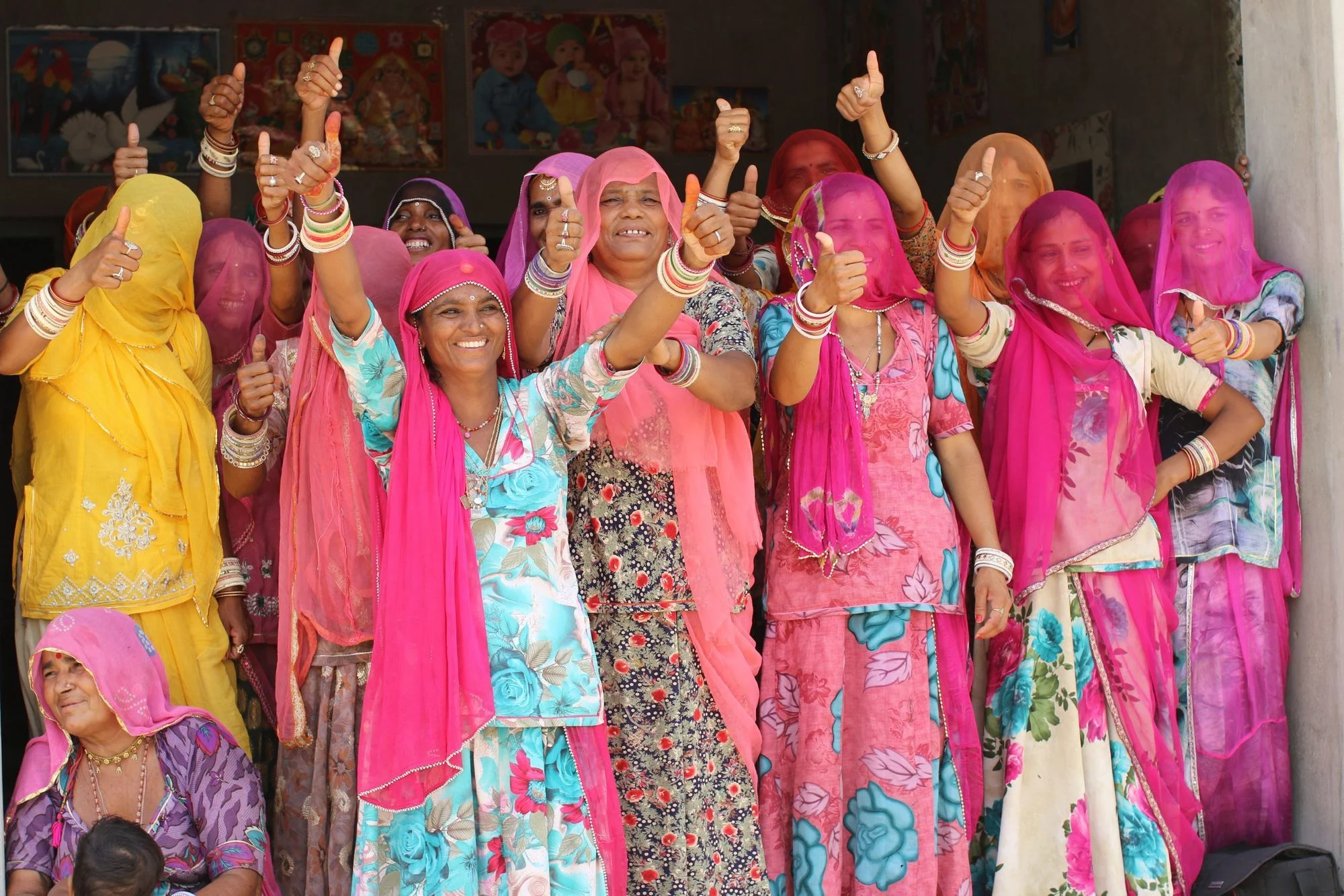
Adapting to the Post-Covid world - Six women entrepreneurs from rural India show the way
We interviewed women entrepreneurs from rural and semi-rural India on how they plan to face the post-COVID world. Here are six stories.
The theme of the World Environment Day in 2020 is ‘Celebrate Biodiversity’. Here are stories from our projects on how people and nature are connected deeper than ever.
In the 2007 movie called ‘Bee Movie’, Barry the Bee finds that humans have been stealing honey for millions of years and decides to sue humanity for theft. While he does get a ban on humans stealing honey, what happens is an upset to the delicate balance of nature. When the bees stop working, earth dries up - colours vanish from the surface.
The movie was probably a reminder on how a tiny bee, rather the absence of it, could become a threat to human kind. The co-existence of flora and fauna is something humankind takes for granted. This biodiversity is what the World Environment Day celebrates - calling out to the world to be #ForNature in all our actions.
At Hand In Hand India, we work with the environment in more than one way. Our project with National Bank for Agriculture and Rural Development (NABARD) - The Green Livelihood Project in the Pachamalai hills of Tamil Nadu is our way of giving back to nature. This intervention has given a new lease of life for landless labourers and farmers of the hills. The project focuses on three aspects; strengthening the tradition of milch animal rearing, generating steady livelihood using traditional farming practices and finally ensuring the mountain folk don’t migrate and continue to look after their homeland.
Here are four stories of people from these hills and their unique connection to the environment.
Livelihoods by Nature
P.Ravi | Farmer
The Pachamalai hills of Tamil Nadu are remote and fed by seasonal rains only. Livelihoods for these farmers were dependent on the standard crops of the hills - tapioca and castor seeds. These were the only crops that would survive the rocky soil that receives very little rain.
Hand in Hand India identified 1300 farmers in Pachamalai who owned over one acre of land for a plantation project. One among these was Ravi, who was given saplings of 50 mango trees, 50 cashew and 80 silver oak trees. Pachamalai being a rain-fed region, farmers required basic water storage mechanisms such as a field bund and tanks. Ravi and others were aided with these structures.
Before he became part of the Green Livelihood project, Ravi was like others - planting acres of the lazy crop or tapioca on all his six acres of land. Ravi and other farmers here were following habits blindly. Neither did they think innovatively nor look back at the positives of what was carried out in the times of their forefathers. The traditional wisdom of alternating crops in cycles across the year in order to let the soil rest and bring back fertility without pesticides - these ideas were brought back with Hand in Hand India’s implementation methods.
Today, Ravi has extensively tried multi-cropping. One small part is devoted to different vegetables and paddy - these he harvests in three cycles throughout the year. On a larger area of 4 acres, he has planted coffee, mango, cashew and silver oak trees. Yet another part of his land has the popular crop of the hills - tapioca. Among all these plantations, he also has invested in api-culture units and a vermicompost pit. The cows on his land ensure the manure in the pit is always replenished. Cash crops such as pepper, mango and cashew were introduced to boost income in future years. Meanwhile crop-rotation ensures he receives a handsome profit of INR 1lakh per annum.
P. Ravi’s farm in Vengamudi, Pachamalai today sets the gold standard for farmers in the hills!
Pollination by Nature
Kuppuswami | Apiculturist
Barry the Bee would have changed his mind about the honey-human-case if he had spoken to Kuppuswami. Talking to Kuppuswami gives one a feeling of contentment. This 50 year old Apiculturist from Tamil Nadu can easily be mistaken for a Godman, given his simple attire and constant chanting of hymns. Infact, Kuppuswami believes that his bees produce more honey as they are happy listening to his hymns.
NABARD and Hand in Hand India are focusing on reviving the occupation back in the fields. Pollinating bees are responsible for 75% of food crops around the world. Bees travel within 3-5 km radius to gather nectar. And farmers are able to extract more honey between January to June (in these hills) during the flowering months. They are provided 3 boxes of honey bees and a well-detailed training workshop on beekeeping. A couple of months later, Apiculturists are ready to harvest their honey!
Kuppuswami is a farmer first and has acres where he cultivates different crops organically using crop-rotation techniques. In the last year however, he undertook the Hand in Hand India training for Apiculture and has since then set up 3 bee boxes. Over the last six months, the boxes have yielded nearly 8 litres of honey, each litre being sold for INR 1,100.
Kuppuswami is a content man, he earns a steady income of INR 3 lakh every year and is quite happy with his life. He is able to look after his family and gets his daughters to study. Kuppuswami has very little complaints and is at peace with nature.
Clean Air by Nature
Vasanthi | Smokeless Chula User
It’s a smoke-free revolution of sorts in the hills of Pachamalai. Smokeless, affordable and efficient chulas are replacing traditional chulas at homes in Pachamalai.
Under the NABARD and Hand In Hand India’s Pachamalai project, 100 households have been given subsidised smokeless chulas to rural households. The reason being, it’s durable, requires minimum maintenance and uses up to 50% less firewood than traditional Chula. It’s designed in such a way that adequate oxygen is supplied in the burning area which results in efficient combustion and up to 80% less smoke. The chula also reduced drudgery for women who walk miles to collect firewood and gives them time for themselves. Women Empowerment is one key factor we are addressing here too.
Vasanthi lives in Pachamalai and her everyday routine was a back-breaker. Up at 4m to collect firewood, she would walk 3 hours and carry a 20kg bundle on her head. Wood is the most common fuel for rural and hill folk, as LPG transportation is tougher and more expensive here. Hours spent in the kitchen with smoke and heat did Vasanthi more harm than good.
Now, with the smokeless Chula she spends less time in the kitchen and therefore has changed her life drastically. The smokeless Chula conserves time and fuel, is easy on the pocket and environment-friendly. It has cut down the usage of wood by half. Earlier she used 1 kg of wood for 20 days, now she uses the same for 40 days. Evidently, this has reduced her visits to the forest to collect firewood.
The smokeless chula comes in 2 sizes, the large on costs ₹1750 and the small one cost ₹1250. It is said that a rural household using the smokeless chulha will save 1500 kg for firewood in a year. This translates into savings of Rs. 3,000 per annum. And if an entire village of about 200 firewood burning households adopts the new chulha then this village will be saving 600 trees per annum.
Clean air and low carbon emissions are not far away!
Fertilizer by Nature
Jyothi | Farmer
Meet 34-year-old Jyothi, who might as well just be called Pachamalai’s superwoman. The first female farmer in Pachamalai has very rightly earned this name for herself.
This is how a typical day in Jyothi’s busy life looks like - she is up by 4 am and heads to the field around 9 am. If one thinks she does nothing between this time, they are sadly mistaken. Jyothi collects wood from the forest, finishes up household chores, cooks for the family and gets her 3 children ready for school. Post working on the farm, she is a clerical assistant. This requires her to work in an office for the next few hours, under a clerk. And between the hustling, she is also the leader of a Self Help Group. When asked if she ever gets tired, to which she smilingly responds, “I have no time to get tired!”.
Jyothi became part of the NABARD and Hand in Hand India’s Green Livelihood Project in 2017 as well as the vermicomposting project. While she continues to grow tapioca by herself, she received 50 saplings of mango and cashew. A total of a 5-acre land of her crops is still waiting for their first yield. She also supplements her income with selling the milk from her cows.
Like all farmers, Jyothi has faced the terrible lows of her farm. Her most expensive, yet constant expenditures have been pesticides and labour. She purchases pesticides by taking small loans from the SHG. Now however Jyothi has taken on a bold step with Hand in Hand India’s guidance - going completely natural on her crops!
The NABARD- HiH India project has taught her to be more resourceful. The cow dung from her farm is now being used in vermicompost. She has been provided 2 kgs of earthworms and concrete bricks to construct vermicompost in her own backyard. The modest Vermicompost unit does its work quietly, but is of utmost importance to Jyothi’s farm. She feeds it 10kg of dung from her cows and ends up with 3 sacks of vermicompost weighing 50kg each. The compost is later used in her crops. She really hopes to get a good first yield, from this natural experiment.
Saying NO to pesticides and going natural is Jyothi’s way of connecting to nature! See more superwomen like Jyothi here.
The Pachamalai Tribal Sustainable Livelihoods Programme
Our Pachamalai Project is in partnership with NABARD and aims to help tribes in remote hills such as these, gain social and economic development. The project covers 41 villages in Trichy and Salem districts (Tamil Nadu), covering a total area of 1322 acres of land area. The highly successful project has also translated into a viable Farmer Producer Organisation for the farmers of this region. We have implemented similar programmes in Jawadhu hills too.
Hand in Hand India’s Natural Resource Management wing has been implementing watershed programmes successfully since 2006. We work in the states of Karnataka, Madhya Pradesh and Tamil Nadu. Our team trains farmers in reviving agricultural traditions and promotes organic farming with training support. We also have helped organic farmers come together under a common umbrella called the ‘Indian Natural Farmer Producer Company Ltd. and help them market their products. Read more about our work here.
Giving Back to Nature - Stories from Pachamalai hills
World Environment Day in 2020 is about Celebrating Biodiversity. Our stories bring you the deep connection between man and nature.
Does Rural India use toilets? Is India Open Defecation Free? What does the 21st century rural Indian woman think of 'toilets'? We put our ears to the ground and came up with some very interesting stories on this.
In 2013, the United Nations came up with the World Toilet Day — to do away with Open Defecation (OD) across the world. The goal was to spread awareness of sanitation and good hygiene. Most importantly it was the start of the ‘Open Defecation Free’ movement across the world.
World Toilet Day, Nov 19, is an observatory day of the United Nations
The Swachh Bharat Mission of the Government of India was started in 2014. One of the primary goals of this project was to make India completely OD Free. The first step of the mission is to ensure all households construct a toilet with working water connections. Each household that owns the land, is given INR 12,000 to build their toilet. Where this is not possible, Community Toilets offer a solution.
India caught up more recently with its Swachh Bharat movement, which has taken the country’s cleanliness quotient to a different level. From the 39% of the rural population who did not use toilets in 2017, we have come very close to ODF status across India.
Nonprofits like Hand in Hand India work together with the Government’s goals of ODF villages. By providing awareness and utilising the synergies of Public Private Partnerships, we have created 10 ODF villages across the country.
Putting Our Ears to the Ground
We conducted a study across 25 villages in Tamil Nadu on what toilets mean to the rural women, how are they using Community complexes, and what makes it difficult to build a toilet at home.
A lot of small stories came up in the process, which we like to call Toilet Tales. Before that, here’s a gist of what we got from our study.
Toilet Tales #1 — The Crusader
Sundari | 60 years | Maintenance staff of the Women’s Sanitary Complex. Dhoosi village, Tamil Nadu
Sixty-year-old Sundari had a story to tell about her village Dhoosi — the name means ‘dust’ in Tamil. She claims the village was once the battlegrounds of ancient kings who raised so much dust during the war, that the name ‘Dhoosi’ stuck!
Like the kings of yore, Sundari is a Crusader in her own rights. She is the maintenance staff of Dhoosi village’s Women’s Sanitary Complex (WSC). While her job profile is to keep the WSC clean, she does more than that. Chatting with the toilet users, helping older women use them and sometimes even keeping an eye on children while their mothers use the WSC — Sundari’s is not an easy job.
Women’s Sanitary Complexes are the lifeline of rural Indian women. This is where women in the radius of 2km come to use the toilets, wash clothes and also bathe. The WSC is part of the Government’s initiative to remove Open Defecation from villages. While the Government sets it up, we at HiH India along with partners periodically renovate them, provide for maintenance staff and advocate the use of these communal toilets. Maintenance staff such as Sundari keep in touch with our mobiliser who ensures she receives cleaning supplies regularly.
On a regular day around 70 women and children visit the WSC at Dhoosi, says Sundari. She herself has built a toilet at home and advocates that to the women too. Cleaning toilets that others use is not something everyone can do. Sundari is clear that if this is her karma, she will do it with the idea of doing good for her community.
To some, however, Sundari is not just the cleaning lady, she is the motherly figure who gives them worldly advice and always a nice smile.
Toilet Tales #2 — Washing Away Worries
Komathi | 23 years |Mother of two, User of the Women’s Sanitary Complex. Echoor village, Tamil Nadu
The petite Komathi comes with a bucket of clothes to wash every morning to the Women’s Sanitary Complex. She tells us that her home has a toilet, yet she visits the complex to wash clothes and bathe. We are surprised.
The young mother of two leaves her children at home to use the complex, primarily because the number of people at home are many. The toilet is only one. The complex however has 6 toilets and there is no queue!
We dig deeper, and find the other reason she comes to the WSC. Washing clothes is a chore that Komathi makes easier for herself by chatting with her friends. The light banter within these walls is something she looks forward to everyday.
Lack of water or lack of a toilet were not the only reasons rural women used the Women’s Sanitary Complexes. We had discovered a social aspect that these community toilets provide!
Toilet Tales #3 — The Power of a Postcard
Leone & Monisha| 10 years |Grade 5 Students and proud users of toilets. Melmadhuramangalam, Tamil Nadu
At the Government Primary School in Melmadhuramangalam, Tamil Nadu a bell announces lunch time. The children quickly form a queue, not where lunch is being served, but at the wash area — to wash their hands before eating.
As part of Hand in Hand India’s community sanitation project, this school has been provided with renovated toilets, hand washing platform and taps. Last year, students from grade 4 were taught the importance of hygiene, using toilets and not defecating in the open and much more. This class wrote letters to their parents, telling them that they require a toilet built in their home.
A simple letter from their own child seemed to drive home the need for a toilet, many of the parents decided to build one. The power of children was seen here!
Leone and Monisha, classmates from grade 5 are two of those who wrote this letter. Having to defecate in the open meant a constant fear of snakes and insects for Leone. When it rained, the trips to the field became difficult. The toilet has changed the life of this family. Monisha was plagued by constant stomach pains, attributed to worms. Over the last year however, after she has learnt proper handwashing, Monisha’s stomach pains have disappeared. Her family has just started constructing a toilet!
Overcoming the Toilet Challenge — The ‘Beyond Initiative’
Hand in Hand India works across India in the area of health and sanitation, having transformed 10 villages that are now Open Defecation Free (ODF). While the numbers may be better today, getting here has been a challenge.
Over our 15 year existence, we have reached out to more than 50,000 rural population creating awareness and imparting training, particularly in the water and sanitation area. Facilitating 13962 toilet constructions have helped us create ten Open-Defecation-Free villages.
Rural India is waking up to the need for toilets. In rural and semi-urban India, toilets in the home are linked with not just economic conditions but also mindsets. We found advocacy is the way to go — with our campaigns for toilets in homes, mass awareness programmes in schools, puppet shows and street theatre. Women are sensitised on the problems that arise with open defecation — worms, urinary infections and also anaemia.
The Beyond Initiative
Our Beyond Initiative gets villages community toilets with the help of Public Private Partnerships. Soundaryapuram, one of the villages in Thiruvannamalai district has been declared an open defecation free village, all with the help of community members. When this village stood up to ask for toilets, they got a Women’s Sanitary Complex that helped the women and children avoid the fields. Today Soundaryapuram has 288 toilets with nearly 85% of the households also having a vermicompost unit that takes care of waste disposal.
Any work in the sanitation sector cannot be complete without access to water. Our work in sanitation — ensuring open defecation free villages, also needed water. Homes needed a water source for their toilets, so also the community toilets. Our WatSan project was the first step to a successful sanitation campaign. Through this project, we gave water access to nearly 270 villages around Tamil Nadu.
Working hand in hand with the district authorities, we have been slowly but steadily bringing about a change in the attitude of rural folk towards health and hygiene. We firmly believe that women and children are the agents of change both in a family and a community.
Hand in Hand India’s Healthcare intervention aims to bring access to healthcare across rural India. Our model works by partnering with district authorities and bridging gaps in the Government’s healthcare network. Through our initiatives of medical camps, sanitation and hygiene management, maternal and child healthcare, we have reached out to more than 20 lakh families across India. Read more about our work here.
Toilet Tales: What do Toilets mean to a 21st Century Rural Indian Woman?
Does Rural India use toilets? Is India Open Defecation Free? What does the 21st-century rural Indian woman think of 'toilets'? We put our ears to the ground and came up with some very interesting stories on this.
Meet the teachers from our residential school for the underprivileged. They also double up as friends and family to their students. Here’s a little peek into what they do in a day- sunrise to sunset. Do they wear a cape? Find out!
A young boy with a toothy grin zipped past on his hand-me-down yellow bicycle with a few boys trailing behind. The carefree hair, untucked shirts and the cackling laughter through the canopied roads was evident enough that these boys were just out of school. Right behind them, a man follows, hollering at them to be careful and get back to class. This is Soundar, the teacher at the Residential Special Training Center (RSTC) run by HiH India at Kancheepuram. Soundar is only in the late twenties but his quiet yet firm tone was enough to get the boys to stop their shenanigans.
Meet Soundar — teacher, mentor, volleyball coach and much more
Soundar began his journey at the HiH India’s centre in 2015 and has been teaching here ever since. He is popular among his students and they have lots to say about him — he is the school’s puppeteer, the volleyball teacher and their best friend, to just mention a few of his many roles.
Hearing so much about him, we decided to get to know him better. We wondered what got him to become a teacher, what keeps him motivated.
We followed him from sunrise to sunset.
Daybreak — Soundar is the Yoga master
Following the school’s timetable, Soundar and his wards begin the day early at 6 am with a yoga class. The students trickle into the school’s courtyard, sleepy yet eager to begin their day. Yoga as a form of exercise and something Soundar stands by firmly. He believes that ‘the Surya Namaskars and asanas lend not just discipline to the students routine but also increases their mental health and build positive energy’.
Yoga brings focus and discipline to the students
Soon after yoga, the whole courtyard is buzzing with activities. It’s bath time for some, reading the newspaper for some and reciting multiples for the rest. Soundar attends to all his students individually and along with his fellow teachers, they plan and allocate themselves to different classes through the day.
Sounder gets his students to read the newspapers to practise their reading skills and also stay abreast of relevant news.
The students at the residential school come from poor, marginalised communities, once subjected to child labour, abuse and neglect before being enrolled here. Education and two square meals was once a far fetched dream for them. Our teachers and staff at the RSTCs patiently work with these children to break the years of trauma they have been through, like this boy from Madhya Pradesh. They are taught everything from washing their hands before eating, the importance of nutritious food, games, art and more. These centres first focus on creating a safe space for these children and later integrating them into mainstream education and society. The process of healing and nurturing is done with the utmost care and kindness.
Midday — Soundar dons the puppeteer's hat
Education is the core of this centre, and the focus is on lessons and concepts through an Activity Based Learning System. Classes are taught through music, dance, theatre and smart classes. We asked Soundar what his favourite activity was, “I love puppeteering and magic shows. In fact, I try to bring in theatrical elements and stories into my class and the children love it too!”
No more chalkboards, smart boards are what we use at our residential schools!
As Soundar finished up with the afternoon class with English, we had a chance to speak to him again. What is his relationship with his students like, we asked? He says it’s everything!
Taking on roles such as a father, elder brother, friend, mentor- going beyond the role of just being a teacher is quite challenging. Unlike a regular school, working at the RSTC is not just a 9–5 job. It is Soundar’s commitment every day to his students and pushing his limits as a teacher.
Evening — Volleyball coach is what Soundar is now!
We asked Soundar, who he is beyond being a teacher?
Volleyball is the stress buster for both teacher and students!
He responds enthusiastically that he is a sportsperson! Heading to the volleyball court is something he looks forward to, as his students. For them, he’s a coach teaching them the true meaning of sportsmanship through his actions. By constantly mentoring them and pushing them to participate in different sports. Volleyball and football are his go-to stress busters!
What motivates Soundar?
Soundar always wanted to be a teacher.
His father was a teacher in his village and when they walked through the streets, people would stop and greet them with immense respect. This always inspired him to get the same kind of recognition and respect someday. His parents are now extremely proud of him, especially when he goes back home. His father makes it a point to call all his neighbours home to meet the ‘teacher son’!
Five years down the line Soundar still pictures himself to be teaching. Yet we wonder what is it that motivates him to stick on?
He says there are times when he misses his family, wanted to quit and go back. Then he is reminded of his students who don’t all have the comfort of homes and families to go back to. The love and respect he receives from his students and the same he gives back are quite unparalleled to the comfort of a home and ambitions of a ‘better-paid’ job.
Do all Superheroes wear capes?
Not at all. We also figured that one doesn’t need a cape to be a superhero. All one needs is good intent and a giving attitude.
Real heroes don’t wear capes, they teach. Like Soundar.
See this video where we’ve captured a day with another teacher at our school — Milkal is the superhero for our wards at the Residential girl's school.
Hand in Hand India works across India in the area of Child Labour Elimination. We run schools for first-generation rural learners in Tamil Nadu and Madhya Pradesh and have prepared more than 3 lakh such children for mainstream schools. We have converted more than 1000 panchayats (groups of villages) into child-friendly ones. Read more about our work here.

Do all superheroes wear capes?
At our residential schools for underprivileged rural children, the teachers are more than just friend, family - they are superheroes.
The Hand in Hand India Annual Report 2018–19
The year 2020 is special to us — we complete 15 years of impactful work to society. Our Annual Report 2018–19 reflects this journey, through photographs.
Fifteen isn’t a small number when it represents the number of years we’ve been contributing to the development of rural India. This year, our Annual Report is a little different. It presents our story, yes. But it also presents the stories of hope and change we have come across in our 15-year journey.
Our Annual Report brings together stories of people we have worked across India, over the past 15 years.
A photograph is worth a thousand words. It is this thought that set us out to make photographs of people, the central element of this Annual Report. We’ve showcased our journey through pictures of our impact — women, children, communities, volunteers and the Government too.
Hand in Hand India is a not-for-profit public charitable trust that has been working towards alleviation of poverty. Our work traverses 16 states in India and the countries of Afghanistan, South Africa, Brazil, Myanmar, Cambodia and Sri Lanka — changing the lives of millions of poor families.
These children from our residential centres are as excited as us about the Annual Report. They are trying to spot their faces and stories in it!
Our interventions include women empowerment, financial inclusion, job creation, alleviation of child labour, education, access to healthcare, skill development, solid waste and natural resource management.
Our Annual Report 2018–19 aims to showcase the vast gamut of our operating areas and widespread impact created. We hope the photographs bring out the voices of the people and act as a testament to our work, commitment, passion and success.
The Hand in Hand India Annual Report 2018–19
Marking 15 years of impact, the Hand in Hand India Annual Report 2018–19 captures our journey of social change through powerful photographs.
Do you know what happens to your trash once it leaves your home?
Behind the scenes of a UNESCO World Heritage Centre, some invisible hands are at work to keep the town spic and span. We bring you the story of how a quaint little town in Southern India, Mamallapuram became waste-wise and garbage-free.
In Mamallapuram, every day is a busy one. The town is a UNESCO World Heritage Site, famed for its ancient rock-cut temples and beautiful seashore. Lakhs of tourists visit the town every year seeking inspiration from its history. Mamallapuram’s lovely shoreline also invites thousands of backpackers. Tourists, however, leave behind a lot of trash. The town itself has a little more than 5000 households who generate garbage.
In 2008, Hand in Hand India India came to manage the town’s municipal solid waste. Today this town with a population of just over 20,000 people has become completely litter-free.
The journey of your household trash is a long one, creating stories as it goes. Here’s a step-by-step on our Municipal Solid Waste Management Process. We call it Recycle for Life.
Step 1: Here come our ‘Green Friends’
The first step in the journey of trash begins in your home. In Mamallapuram, waste is collected from homes by our very own green friends. This brigade of ours is hardworking; their day begins at 6 am when they start going door-to-door. They are well trained in not just waste management but also advocacy. The Green Friends educate residential and commercial spaces on the importance of waste segregation. Different coloured bins are provided for easy identification. The Green Friends come from economically challenged backgrounds, and by employing them we are trying to create stable job opportunities for them. Take, Mariappan, one of our oldest green friends who has come a long way from being a labourer to having a monthly salary. He sets an example for sincerity, “I give out warnings if the waste isn’t segregated!” Since this town also attracts tourist crowd, it becomes a lot more essential to ensure discipline amongst the residents, locals and tourists. Once collected, it’s taken to the Recovery Resource Park to be further segregated.
Step 2: It’s all in the processing
The Resource Recovery Park is a large space where waste collected is further segregated. The aim here is to send as little waste as possible to the landfills. At Mamallapuram, a daily collection of 5.5 MT of waste gets collected every day, out of which 6000 kgs of waste is organic, 500 kgs of inorganic waste is recyclable and the rest is shredded.
Step 3: Composting is the way to go!
Organic waste includes anything that is bio-degradable such as kitchen waste. This is unloaded from trucks, then stacked up in piles to dry out the excess water and liquids. This process takes up to 15–90 days depending on the organic waste material. The drying waste assumes a dark blackish colour, from where it is sieved with the help of a large motor-run sieve that helps further breaking down the waste. The next step is to ensure the sieved organic waste further goes into vermicomposting while the bigger chucks of food waste go into the biodigester. Vermicomposting is one of the best ways to produce compost with the help of earthworms. This enriched compost is further used in the park’s herbal garden and sold to local farmers.
The bio-digester is a bio-methanation plant that ferments food waste. The plant has a capacity of handling 500 kg of food waste every day and generates 100 cu m of fuel every day. Most of the food waste from the many hotels and restaurants in Mamallapuram goes into this plant. This energy is further converted into electricity. The electricity generated thus is used to light up the street lights in Mamallapuram!
The Bio-gas project was awarded the runner-up in the BBC Trash to Gas challenge. Take a virtual look at the Mamallapuram project through this video here.
Step 4: The wonders of upcycling
The inorganic waste collected from Mamallapuram is further segregated into different kinds of materials like recyclable, plastic, glass, metal, sanitary waste etc. Sanitary waste is incinerated while dry waste that cannot be used further goes through the shredder. Plastic has seven different variations and depending on the material, it goes through the plastic shredder. All this is then upcycled into different kinds of products such as furniture or garden decor items like plant holders.
Waste to art projects from our Resource Recovery Parks
Recycle for Life is a success!
Waste Management is a huge crisis that India is facing. Our project in Mamallapuram is a small but extremely successful example of how this crisis can be managed realistically. The Mamallapuram project has an 80% success rate, which means that 80% of the municipal solid waste generated has been averted from going to the landfills.
The model uses a combination of community awareness creation and stakeholder participation. This collaboration has been the backbone of sustainability in our Waste Management intervention. The Recycle for Life model has also been successfully replicated by HiH India in other municipalities such as Sriperumbudur, Rameswaram and Karaikal in Tamil Nadu.
Want to visit our Resource Recovery Park? We arrange trips for school and college students, larger groups of like-minded people or individuals. We also conduct training on segregation of waste and best solid waste management principles.
Hand in Hand India’s Solid Waste Management programme aims to reduce the waste that goes to landfills. We create end-to-end solutions to manage waste generated by urban and rural areas. Our model is called ‘Recycle for Life’ and uses a combination of community awareness and stakeholder participation. Read more about our work here.

The Journey of Trash
Do you know what happens to trash once it leaves your home? Follow us as we recycle for life and reduce landfills in India.
Literacy means something different to everyone. For some it is freedom, for others it is development. Here’s our ode to Literacy, on International Literacy Day.
International Literacy Day 2019 celebrates literacy with a different angle — multilingualism. What better place than India to witness literacy and multilingualism! Barack Obama called literacy, ‘the most basic currency of the knowledge economy’. At Hand in Hand India, we’ve witnessed that literacy changes lives in different ways — learning letters being the building blocks for a lifetime of achievement. This story highlights what we have witnessed in this space across India.
Breaking the barrier of age
Rajasthan
Mamta is the star of her class. She aces her math tests and can rattle with ease the number tables too. Mamta is no primary grade student, she is a grandmother and is 70-years-young!
Mamta is all grins as she shows off her exercise book!
This is Rajasthan, India — where the female literacy rate hovers around a low 52%. We work with the women of our Self Help Groups and encourage them to learn the letters at any age. Mamta is just one among around 176,150-plus women who have benefited through our adult literacy programme.
Meet the teacher, my daughter!
Rajasthan
Meet my daughter, says Kamala!
Kamala is from Pali, Rajasthan and has a lot of fun learning Hindi alphabets from her teacher Pooja. Nothing special as most classes go. Just that in this case, Kamala is the 40-year-old mother and Pooja is her 20-year-old daughter! The mother belongs to HiH India’s SHG where she joined to learn how to utilise her time productively. Kamala quickly made up for lost time and is now able to keep up the business accounting of her family’s dairy farming with great confidence.
Literacy is not just letters
Tamil Nadu
At Vellore, we run a Residential Special Training Centre for girls from underprivileged backgrounds. Literacy here has a multi-dimensional aspect for the students and teachers of this school. While they do learn their alphabets and numbers, their day, however, starts with Yoga and fitness classes. For the teachers, imparting learning starts from scratch, like teaching them table etiquette or personal hygiene. It’s all about trust — both ways!
Here's the story of our superhero teachers too.
A room with a view
Maharashtra
When we visited Maharashtra’s Ovale panchayat, where we run a composite village uplift programme, we saw some cheerful scenes. At the local Anganwadi (Government provided day care centres), the attendance was in full. This colourful Anganwadi is bringing joy to many. In the six months since we upgraded the Anganwadi and had it repainted, the student population has grown considerably.
“With clean classrooms and colourful stories on the walls, which child wouldn’t want to come here!”, says Rukmini, the Anganwadi In-Charge. She attributes higher children retention and learning levels to the upgraded Anganwadi. What is unique about the new students is they are first-generation learners from tribal families in the vicinity. Shall we say then that literacy is also about a school-room with a view? It’s all in the perspective!
Learning about money: priceless
Madhya Pradesh
At the State Bank of India branch in Madhya Pradesh’s Dhar district, three women in their ghoongats (veil) enter the ATM. The look on their faces as they exit is something more than happiness — it is confident happiness if there is such an expression!
These women are first generation literates from our Self Help Groups. They have not just learnt the 3Rs, but have also got the grasp of handling their money, saving it, using a bank’s ATM, and also using a phone. We call this financial literacy. They call it a new life!
Similar is Sakkubai’s story and how SHG’s help rural Indian women.
Literacy beyond classrooms
Gujarat
The strength of Public Private Partnerships can be witnessed in this Government school in Gujarat. We work with our CSR partner in this school to upgrade academic and functional facilities. Learning in this school happens through the STEM system — Science Technology Engineering and Math.
Seen here are children working with a robotic model that helps them learn their subjects. In far away Madhya Pradesh, read Rajan’s story on how he too loves to learn.
When we met all these people from different states, different ages, there was just one thing that kept them going — the eagerness to learn. We remembered an adage, ‘When you hear, you forget. When you see, you remember. When you do, you understand.’ It seems after all that literacy is all about understanding words and thereby the world!
Hand in Hand India, is a public charitable trust working to alleviate poverty through job creation and integrated community development across 16 States of India. Registered in 2002, the organization works in interrelated areas of child labour elimination and education; women empowerment through skilling and access to credit for job creation; skill development; health and environment.

The many faces of Literacy
Meet people from different states, different ages, find out what their idea of literacy is - Literacy is about understanding the world, rather than words!
Safe drinking water and toilets. Something that most of us living in the cities take for granted. For someone from rural India, however, toilets and water are a luxury. This Water Week, we take a look back and bring you the story of a game-changing project that transformed rural lives.
We take you back to 2009, in a village near Kancheepuram, Tamil Nadu. It’s past 10 pm, a dark, moonless night. Sandhya, a nine-year-old from the village is taking a walk, like many others in her village do. They don’t have toilets at home and the open fields are where they head to for a night-time emergency. This night though, Sandhya did not return home. Her parents discover her in the morning, unconscious after tripping over an electric wire.
The incident shook Sandhya’s parents, and other villagers. The extent of the downsides of not having water and sanitation facilities hit them.
WatSan: Bringing dignity to lives
A United Nations study mentioned that mobiles were far more accessible than toilets in rural India. To change this scenario, the WatSan project was launched in December 2008 in partnership with Water.Org, with the primary aim of providing access to water and sanitation to rural Indian households. The objective of the project was to change the behaviour of rural Tamil Nadu towards safe drinking water and sanitation and providing them with hygiene training. With credit support and infrastructure creation in the forms of water tap connections and toilet constructions, WatSan aimed to change the water and sanitation scene in rural areas.
With our existing network of Self Help Group women, we were able to forge larger partnerships with different stakeholders in the community.
While Government systems are designed to cover the poor sections of society, last mile delivery is often a challenge. WatSan supplemented the Government programmes through planning, implementation and rural outreach of the schemes, widening the scope of the public health system.
Our scoping study in 150 villages around Kancheepuram found many surprising results. Questionable potability of water and high levels of water-borne diseases were just some of the notable factors found. Household water connections were a rarity too! Children like Sandhya often had to help parents to fetch water from far away, giving up a day at school. Women would spend a large part of their day collecting, storing and doing their chores. Their contribution to the family’s income was next to nothing.
The primary stage of the WatSan project consisted of mobilising and creating awareness in the community. The second stage was introducing Water Credit Initiatives; loans that were issued to the local community to buy water taps and/or constructing toilets. Renovation of existing toilets was also funded. Loans were also used to legalize the water connections through water tax payment.
The WatSan reach
270 villages in different districts of Tamil Nadu were covered by the WatSan project. Here’s how we went about with the project.
Who?
A significant fact was that the people who benefited from this project live in rural and periurban areas, and more importantly, are first-generation beneficiaries getting access to water and sanitation — like toilets in their homes and water tap connection in their backyard. Women from SHGs were the primary audience, as they were the ones who managed household water supply and usage. School children were a close second and were taught concepts through games and puppet shows.
What?
Here are the different areas we communicated about through the WatSan project:
How?
We used differed vehicles to spread the word: house visits by our staff, vernacular language posters, puppet shows and street theatre.
The WatSan Difference
The numbers at the end of the WatSan project were satisfying indeed. Sandhya’s family led the movement in getting their toilet constructed. The project had reached more than 23,240 people in terms of water issues and 16,874 for sanitation issues. More than 4,220 water connections were given to families in these villages. More than 3,220 individual toilet constructions were facilitated for households.
The HiH WatSan programme’s impact on the developmental indicators covered areas such as health and hygiene. The project showed high impact in these areas; better water and sanitation facilities have meant reduced instances of diseases. This, in turn, has resulted in reduced morbidity, mortality and improved nutrition status. Moreover, providing water and sanitation facilities have resulted in women being more productive, adding to family income! They have also found time to earn additional income or sometimes sell surplus water and increase household income levels.
WatSan continues
While the WatSan project did come to an end in 2011, our work with water and sanitation has not stopped.
Over our 15 year existence, we have reached out to more than 50,000 rural population creating awareness and imparting training, particularly in the water and sanitation area. Facilitating 13962 toilet constructions have helped us create nine Open-Defecation-Free villages.
We work with schools, telling children about the importance of washing hands and using toilets. In the area of water conservation, our Natural Resource Management team works with farmers in reviving traditional water sources. The Killai Canal Project is one that is close to our hearts.
Hand in Hand India’s Healthcare intervention aims to bring access to healthcare across rural India. Our model works by partnering with district authorities and bridging gaps in the Government’s healthcare network. Through our initiatives of medical camps, sanitation and hygiene management, maternal and child healthcare, we have reached out to more than 20 lakh families across India. Read more about our work here.

Taking water to rural India: WatSan
The WatSan project provided access to water and sanitation to over 200 villages in Tamil Nadu, changing their behavior towards sanitation.
How a restoration project of a 300-year-old agricultural canal gave us a lesson in history and ancient agricultural practices.
Recently, we at Hand in Hand India took on a project that involved restoring an agricultural canal. Little did we know that this would take us back in time. The canal in question, Sokkan Odai, has a historical connection that goes back 300 years. This agricultural canal that supplies water to the rice bowls of Cuddalore district in Tamil Nadu is a much revered one. A visionary from this region, Khan Saheb engineered this smart way of distributing water from the river Cauvery. This was in the early 1700s, and the canal became a historical marvel and is named the Khan Saheb canal or Sokkan Odai.
Farmers thrived, paddy grew and the region prospered. Picture lush green paddy fields, happy faces harvesting the crops and a general sense of well being.
In the late 1990’s, the Sokkan Odai began to dry out. Farmers were left with minimum water, crops suffered.
This was when farmers like Ramadoss turned away from agriculture and became a teacher instead. Ramadoss is from Killai, a panchayat in Cuddalore district and where Sokkan Odai is the primary source of water. His sons are now settled outside India, and Ramadoss is the only one in the family to carry on farming.
Nadana Sabapathy, yet another farmer from this area is in a similar situation. His elder son is a civil engineer settled in Saudi Arabia, and Sabapathy doesn’t expect him to come back to farming. His younger son might have completed his agricultural studies, but due to lack of opportunities is also settled in Singapore.
These farmers only reiterated the trend in the country; that the younger generation isn’t proud of its heritage of agriculture. Both Ramadoss and Sabhapathy have seen their next generation move to more lucrative professions. The talk among farmers became not what crop is going on next in their fields, but the bleak future of agriculture.
A little different was the situation in Jawadhu hills - another story that might be interesting.
What happened to the Sokkan Odai canal?
The Sokkan Odai canal is the lifeline of a region that supports more than 200 farmers. It is a 3.5 km stretch water that irrigates 6 villages. Traditionally, farmers in this region go for a 3-crop pattern over the year. However, over the past few decades, this pattern has dwindled down to a single crop. Farmers attributed this to the lack of water for agriculture.
The Sokkan Odai meanders along the paddy fields of Cuddalore
During the 2004 Tsunami and the 2015 floods that affected Tamil Nadu, the Sokkan Odai was heavily silted and the natural flow of water was affected. This, in turn, led to heavy usage of underground water for irrigation, reducing the water levels further. Traditional wisdom earlier saw to it that the multi-crop farming pattern enriched the soil with nutrients. The present-day single crop farming did not help the soil revive itself and thus created an ecological imbalance.
When the Sokkan Odai was given a new lease of life
In 2018, Hand in Hand India stepped in to take up restoration of the traditional canal in partnership with water major, V A Tech Wabag.
The canal needed extensive desilting, along 4 km from its starting point. This was a massive job that involved excavation of 19,000 cubic metres of soil!
Not just desilting, the canal was also deepened and widened wherever required. Ponds were formed along the Sokkan Odai for water storage. To prevent further erosion of soil, vetriver binders were planted along the banks of the canal.
The restored Sokkan Odai
HiH India has also put together the farming community to form a ‘Sokkan Odai Conservation Committee’. The group ensures farmers contribute a monthly maintenance amount for the canal. It also does regular upkeep of the canal with assistance from HiH India.
Reviving history and tradition
Farmer Ramadoss is all smiles, as he tells us how after a decade he has begun cultivation on 11-acre land. After the Sokkan Odai restoration, he expects five times his normal income.
In the last year, farmers in the Cuddalore region have had a good yield of paddy, thanks to the de-silted canal. Sabapathy is keen that his younger son sees the restored canal. He is convinced that his son might see that change is possible!
The project has helped 245 farmers spread over 350 hectares in this region.
Acres of farmland that have been lying fallow for more than 5 years have now been revived. There have also been instances of reverse migration in the Killai region, where farmers who had abandoned their lands have now come back to them. Today the farmers of Killai are confident that their lands will be able to bear the droughts as well as floods.
When we at HiH India took up this project, we expected nothing less of a challenge. However, the lessons we learnt were on a different scale; reviving the Sokkan Odai was equivalent to reviving a state’s history and bringing back the agrarian traditions of Tamil Nadu. In other times, we have brought water and sanitation to villages too, here's another story.
Watch here the short film we made on our Sokkan Odai Canal Restoration experience.
HiH India’s Natural Resource Management wing has been implementing watershed programmes successfully since 2006 in Karnataka, Madhya Pradesh and Tamil Nadu. We also have helped organic farmers come together under a common umbrella called the ‘Indian Natural Farmer Producer Company Ltd. and help them market their products. Read more about our work here.

Restoring traditional agricultural practices
We took up a restoration project of a 300-year-old agricultural canal. What we got was a lesson in history and reviving ancient agricultural practices.
A community of 80,000 tribal farmers in Jawadh Hills have to deal with dying land and poverty. The revival of their land and spirit is what this story is about. This is our ode to Earth Day
“The Earth is a fine place and worth fighting for” — Ernest Hemmingway
Farmer Mani might not know who said this, but he nods his head in agreement. He smiles when we tell him about Earth Day and how it is celebrated across the world. His thoughts? “Every day starts by worshipping the Mother Earth”, says Mani, “We love her, take care of her and she, in turn, provides for us”.
Mani, the farmer from Jawadh Hills in Tamilnadu
We are visiting the farmer at his home in Jawadh hills in Tamil Nadu. Living on the hills, climbing rocky terrains every day has made Mani a strong man. We struggle to match wiry framed man’s quick steps across his pepper plantations.
The Jawad hills of Tamil Nadu are at an altitude of 2000 sqft and are known for its sandalwood, teakwood and medicinal herbs. They have a predominantly tribal population of around 80,000 people who subsist like Mani, part farmers and part wage labourers.
The smile on Mani’s face and others from the farming community in Jawadh hills is a recent phenomenon. The problems that these hill folk faced were multifold. These hills are situated on the Kerala-Tamil Nadu border, are arid and dry for most of the year until the rains come.
Here are some of the challenges Mani faced:
Farming on these lands was not an easy task for Mani and others like him. The rainy season saw Mani farming his lands, but for the rest of the year, he left his family in search of work to Kerala. The tribals did not know how to save water for the dry season. Their lands yielded sporadic income, leading to the nomadic way of life. This, in turn, saw many broken families who lived in poverty.
Their children had to walk 5km every day to reach their school. Most families did not send their children to school and even if they did, their dropout rates were high. Boys who went to school dropped out by grade 8 and girls hardly went to school.
Health issues hounded the tribes of Jawadh hills; malnourishment and high infant mortality rates to name a few. The mortality rate amongst tribes was found to be almost 5 times higher than the national mortality rates!
When the tribes saw that the trees that surrounded them in their forests were valuable, their first thoughts were the money they could earn by selling the wood. Little did they realise the severe environmental damage that was caused by felling these trees; topsoil erosion and in the larger sense global warming.
The nomadic way of life and abject poverty had become the norm in the farming community of Jawadh hills. Until they found Pepper. And Crop rotation. And watershed management.
Mani and his friends did find solutions. Here’s how.
When we at Hand in Hand first met Mani, we were impressed by the tenacity of the man and the rest of his tribe. They believed in their land and did not let go, despite the adverse situations they faced. Very similar to this other set of farmers we worked with in Cuddalore.
We found the core problem of the farmers at Jawadh hills came from poor soil and water management. Having identified the core, we set out to find solutions that would uplift the entire ecosystem.
Enter Pepper
The crop that was habitually cultivated by the Jawadh hill farmers was ‘Little Millet’, a grain that thrives under minimal rain conditions. The net profit a farmer like Mani made on this crop was a measly INR 5000 per acre. Subsistence farming eventually led them to become migrants.
This is when HiH India introduced Pepper as the main crop. These hills had a climate that mirrored its neighbouring state, Kerala where Pepper grows abundantly. Pepper could give them an income of INR 13 lakhs per acre, with an increasing yield year on year. Mani started out by replacing half of his millet crop area with Pepper plantations. Today he is a proud plantation owner.
Multi-crop farming
The farmers at Jawadh had never thought that their dry land could also be used for growing a variety of vegetables and fruits. Today, they harvest papaya, melons, onions, tomatoes and more!
An average profit of INR 40,000 per acre is what these farmers get from the vegetable cultivation. Some also grow flowers such as marigold.
Making a livelihood
Now that Mani’s pepper plantation was in place, he had some spare time. So also his family. Mani was thrilled to know that he could also keep bees in that time and even rear cows for milk. Through HiH India’s Green Livelihood Development, the farmers have been trained in environment-friendly livelihoods such as vermicompost making, cattle rearing, dairy products, poultry and more.
Watershed management
Celebrating the Good Earth
The Jawadh Hills project stands out as an example of rural environmental project implementation. More than 2500 Hectares of land has been revived in these areas through proper watershed management. We borrow Masanobu Fukuoka’s words, “The healing of the land and purification of the human spirit is the same process” to describe our experience with Jawadh Hills.
The rolling hills and green fields of Jawadh hills
Hand in Hand India’s Natural Resource Management wing has been implementing watershed programmes successfully since 2006. We work in the states of Karnataka, Madhya Pradesh and Tamil Nadu. Our team trains farmers in reviving agricultural traditions and promotes organic farming with training support. We also have helped organic farmers come together under a common umbrella called the ‘Indian Natural Farmer Producer Company Ltd. and help them market their products. Read more about our work here.

The Good Earth
In Jawadhu hills, tribal farmers faced poverty and dying land. The revival of their land, agricultural habits and their spirit is what this story is about.
The Union Budget, 2019 for India is out. Here’s the gist of what we find interesting for the social sector of the country.
On the 5th of July 2019, the Economic survey was released followed by the Union Budget presented by the Finance Minister. The strategy was to turning India into a $ 5 trillion economy by 2025 and highlighting Niti Aayog’s new principle — ‘Reform, Perform, Transform’.
The budget primarily focuses on investments leading to growth and reforms that aim to transform rural livelihoods. Direct and indirect taxation have been eased, ensuring stronger infrastructural connectivity and boosting the entrepreneurial environment.
We would like to bring out six areas that we believe will benefit through this budget, pertaining directly to the development sector — the MSMEs, Traditional Industries, Women empowerment, Swachh Bharat, Agriculture and Social Enterprises.
Why MSMEs are smiling
Budget 2019 looks favourable for the MSMEs. Firstly, retail pension benefit has been introduced for 3 crore MSME shopkeepers with an annual turnover less than INR 1.5 Crore, under the Pradhan Mantri Karam Yogi Man Dhan Scheme. More positives come in the form of allocation of INR 350 Crore towards fresh or incremental loans for MSMEs. Registered MSMEs can now avail loans of up to INR 1 Crore in 59 minutes! Smiles are in store for MSMEs in the form of the Startup India scheme, that facilitates bank loans to SC, ST and women borrowers, ensuring 300 entrepreneurs.
Back to our roots — Traditional Industries say yay!
Budget 2019–20 has encouraged India to look back to its roots. The Scheme of Fund for Regeneration of Traditional Industries (SFRUTI) is one that aims to bring back the lustre to traditional industries such as bamboo, khadi, honey and more, and make them more competitive. The plan is to introduce 100 new clusters that will bring together 50,000 artisans into the value chain.
Handlooms businesses can now breathe a sigh of relief!
Yet another scheme is the Scheme for Promotion of Innovation, Rural Industries and Entrepreneurship (ASPIRE), that looks to rural innovations and entrepreneurs. ASPIRE will introduce 80 livelihood business incubators and 20 technology incubators, training 75,000 entrepreneurs in agro-rural industries.
More power to women
Budget 2019 promises the ‘Women SHG Subvention Programme’ in all districts of India, where every verified SHG member holding a Jan Dhan account will receive an overdraft of INR 5000. One woman from every SHG is eligible for a loan of up to INR 1 lakh under the Mudra Yojana Scheme!
Rural Indian women have come a long way!
There was a specific highlight on the role of rural women and how their increased participation benefits India’s growth. Here’s a light-hearted read on Sakubai, a rural Indian woman and her progress in life.
The Economic Survey shows a drastic change in India in terms of women empowerment. The statistics are impressive — 53% of women now own a bank account, 84% are directly involved in household decision making.
Two other new initiatives of the Government include BADLAV (Beti Aapki Dhan Lakshmi aur Vijay Lakshmi) to increase women workforce and the ‘Budgeting for Gender Equity’ adopted by the Ministry of Women and Child Development.
Swachh Bharat V 2.0
Budget 2019 is set to make structural reforms in every field and the Finance Minister has ensured that key environmental issues are not left behind. The current ‘Green Budget’ allocates INR 460 crores for pollution control schemes and expand Swachh Bharat Mission to focus on rural solid waste management. The goal is to eliminate Open defecation altogether in rural India by October 2019.
Farmers to have a field day!
The Union Budget 2019 did not forget the farmers. The Government has planned to create 10,000 Farmer Producer Organisations (FPO). The goal of this exercise is to ensure economies of scale for farmers over the next five years. FPOs work on the basis of collective marketing and help market the products of the farmers to a wider audience. The collective bargaining power of farmers in buying agri products also increases through an FPO. It’s a win-win for the agriculture sector. Talking of our largely agrarian economy, here’s some of the work we do to work with the farmers.
A radical move — Social Stock Exchange!
The budget has a unique proposition of the creation of a Social Stock Exchange. This will be a SEBI regulated exchange where the listing will consist of social enterprises, volunteer groups and welfare organisations. Investors can buy stakes in these listed entities, thereby creating a new path to financing social welfare projects.
***********
We are looking forward to participating in India’s development, working hand in hand with the Government.
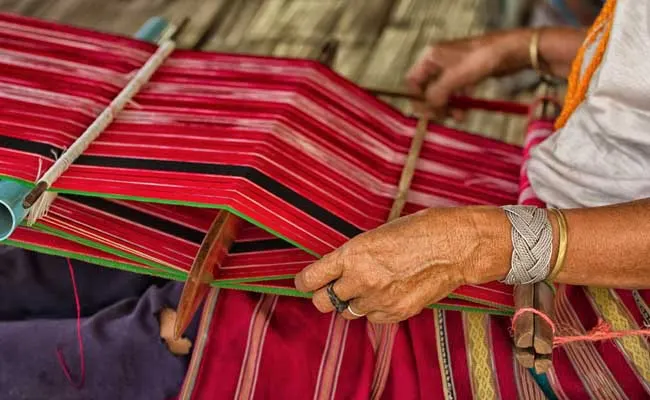
What the Union Budget 2019 holds for the Social sector in India
A quick overview of the key highlights from India’s Union Budget 2019 and what they mean for the social sector.
Read about one rural woman’s trial of the revolutionary Menstrual Cup. While urban India is making a slow shift from sanitary pads to Menstrual Cups, this young rural woman has made the bold shift, setting an example in her community. And she is happy.
In Usha Nandini’s cupboard, there is a cloth bag that is tucked into a corner in the back. The bag is precious to Usha and comes out once in a month. Inside it is a silicone Menstrual Cup. This little thing is what saves Usha from the expense of buying nearly 50 sanitary napkins a month. It saves her the ignominy of leaking pads and lack of toilets to change them in. It saves her the stress of disposing of the sanitary napkins every month. It is what makes Usha more confident and free.
Meet Usha Nandini
Usha Nandini
She is 36, mother of two young children living in Tiruvannamalai district of Tamil Nadu. Usha is a field worker in the social sector and works with Hand in Hand India’s Health intervention. She is probably the first woman in the whole district to have tried out the Menstrual Cup. A bloated uterus problem has her bleeding more than normal and when we advocated the cup, she was more than happy to try it out.
Why a Menstrual Cup?
Usha is just one of the 336 million girls and women who menstruate in India. The numbers get nasty now; 121 million of them are said to use disposable sanitary napkins.
Each woman roughly creates around 125–150 kilograms of sanitary napkin waste. While we are at the numbers, you must know that an ordinary sanitary napkin could take from 500 to 800 years to decompose.
So all this math adds up to some immense damage to the environment. An alternative that a small minority use — the tampons, a product that could lead to the lethal Toxic Shock Syndrome if left unchanged for long hours. All this makes us go back to the menstrual cup.
What is a Menstrual Cup?
The Menstrual Cup has been a global buzz word over the last few years. Eco-friendly and sustainable, they are made of biodegradable medical grade silicone and are positioned as an alternative to sanitary pads, cloth and tampons.
Menstrual cups are now available in different colours and even sizes
A woman needs to just insert the cup, go about her business, remove, wash, repeat. The cup can hold on for around 6 hours, after which one needs to empty it, wash it and put it back.
Advantages of the Menstrual Cup
The biggest advantage of the cup is its economical price and long life. But the even bigger implication of the cup is the positive effects on the environment in the long run.
An average woman menstruates for 40 years, and a menstrual cup lasts for 5 years which makes just 8 of them over a lifetime. In India, they are priced in the range of INR 299 to INR 900.
Flowcup is manufactured soft, premium, 100% medical grade silicon. The cup can be used for 5 years.
The cup is synonymous to confidence and freedom. The awkward trips to the bathroom, the time taken to wash and dry cloth, the odour, the discomfort can all be avoided in a jiffy. Unlike in a pad, the cup prevents the blood from coming in contact with oxygen, thereby preventing odours.
As Usha tells us herself, “The cup is a blessing when I compare it to every alternate hour sanitary napkin change. Once I got used to it over the last two months, life has been a breeze. I just insert it in the morning while leaving for work, clean it once in the middle of my day and re-use for another 6 hours,” she explains. No more stained clothes and worry about pad disposals!
Wondering what happens if you need to use the toilet? Usha clarifies that the cup needn’t be removed, neither does it hamper. Menstrual cups are an effective option for women, who stay out for long hours, across urban, rural and semi-urban populations!
About the project
According to the National Family Health Survey in 2018, around 62% of Indian women between 15 and 24 years of age were still using cloth instead of menstrual health products. This set us to do some thinking and we took up a two-year pilot project on Menstrual Health Management.
Hand in Hand India (Hih India) and Flow Cup have joined hands to study the success of sustainable sanitary products in rural and semi-urban areas of Tamil Nadu and Madhya Pradesh.
From January 2019, HiH India mobilisers and field staff are testing cups by Flow Cup to understand the benefits and possibilities of the product as an environmentally sustainable and cost-effective alternative. In a short span of three months, we have found that cups are a segway to narrowing the rural-urban divide of menstrual products.
Usha is holding a training programme for the women of her community and introducing the Menstrual Cup
Usha Nandini has been spreading the word around since she became a cup-vert! She is encouraging her friends to adopt this cost-effective, eco-friendly, comfortable alternative. Stories like that of Usha Nandini’s prove that with the right advocacy, training on usage and emotional support, women today are ready to experiment and make their mark in the world!
Hand in Hand India has been actively engaged in training women and girls in Menstrual Hygiene. In 2018, more than 7000 girls in Tamil Nadu and Madhya Pradesh have been made aware of menstrual hygiene.
These women have just discovered the Menstrual Cup, thanks to Usha Nandini’s efforts!
Are you a cup-vert? You can inspire more women to make the change!

Move over sanitary pads, hello Menstrual Cups
Move over sanitary pads, hello Menstrual Cups! A sustainable, cost-effective, and eco-friendly alternative for hassle-free periods.
13-year-old Rajan in rural Madhya Pradesh is determined to study. He takes a secret route to his school. This is his story.
We travelled for three hours on the dusty roads of Dhar district in Madhya Pradesh to reach Bandav village. As our vehicle arrives at the school, a group of excited children gather . We trip out, trying to adjust our eyes to the summer sun and are welcomed by muffled giggles and a ‘Namaste’ chorus.
At the insistence of the teacher Gopal Maliwad, an unruly line forms to introduce themselves to us. “Muskaan”. “Mahi”. “Bhuri”. “Bangu”. The tones alternate between loud, shy and laughing. The children aged between 8 and 14 are students of the Non-Residential School run for children who have dropped out of school.
We are here to meet these children and listen to their stories of how the school is changing their lives. During the day, we heard how Muskaan and Mahi didn’t want to come to school and now refuse to miss a day. We admire Bhuri’s colourful salwar kameez, and then come to know that her uniform is out for a wash. Bangu tells us a sad tale of how he escaped being a bonded labourer and loves school now.
Students at the Non-residential special transit schools are first generation learners.
However, we chose 13-year-old Rajan’s story today as it might bring a smile to your face, despite tinges of sadness.
Rajan gives us his best smile!
Brief note about these special schools:
Hand in Hand India runs 4 Non-Residential Special Transit Schools in Tamil Nadu and Madhya Pradesh. In Madhya Pradesh, the schools run in partnership with Humanium an organisation that supports child rights. The Tamil Nadu school is supported by Guardian India as a CSR Project. The schools are primarily meant for children of rural areas who either are too poor to attend school or whose parents are migrant labourers who could not afford schools. Children in rural India are engaged in household jobs, sold as bonded labourers or become part of their family’s farming practises. They are first generation learners.
Rajan’s routine was an unenviable one. He got up at 6 am and took the cattle out grazing. Many hours later, he would come back to a meagre mid-morning meal. His next task was to head to the brick kiln where he worked as a daily wage labourer. Coming back home, Rajan had more cattle duties to attend to. The young boy could only hit the pillow after such a strenuous day and wake up to yet another mundane day.
With nine siblings at home, Rajan never missed being with friends. “We try to eat together and share jokes, laugh together. I love my siblings”, says Rajan. The downside of this large family was that everyone had to contribute to the family income. Rajan’s mother worked as a seasonal labourer while his other siblings worked in mines or brick kilns around the house.
School was not far from Rajan’s thoughts,
“When I am grazing cattle, I sometimes wonder what it would be like to study in school, wear a uniform and read books”.
This was a year ago.
Rajan was spotted one day by a Hand in Hand India social mobilising team, while he was grazing cattle. He was quite despondent when asked about wanting to attend school. He knew, his family situation would not permit him. The school’s teacher, Gopal Maliwad went out of his way to counsel the parents to send Rajan to school. But the answer was a resounding no!
Rajan was however not one to give up.
He devised a plan. A secret route to go to school. Without his parent’s knowledge.
In January 2018, Rajan started attending school. He tells us how he did that, “I found a route to school that will bypass my home and the brick kilns. I initially felt bad to skip grazing the cattle, but I did help on Sundays”.
His parents eventually did find out but realised how serious Rajan was about school and education. The smart uniform and the daily nutritious mid-day meal also helped do the trick of convincing them!
Children praying before their mid-day meal at school.
Rajan is elated, “They are proud of me. Their happiness knows no bounds when they realise I can read and write. I do help my father in grazing cattle on Sundays but studies occupy most of my time”.
The 20-odd children in the school we visited are all from different backgrounds, impoverished, abused or bonded labourers. One factor however bound them all together — that was the urge to learn. Rajan today reads books fluently and loves mathematics. His dreams big of building a bigger home for his family and giving his parents the comforts they don’t have now.
The class with teacher Gopal Maliwad, at one of the Non-residential schools in Dhar, Madhya Pradesh
Hand in Hand India works across India in the area of Child Labour Elimination. Running schools for first-generation rural learners in Tamil Nadu and Madhya Pradesh, Converting more than 1000 panchayats (groups of villages) into child-friendly ones are some of the things we do. So far we have sent more than 3 lakh children into mainstream schools.

Follow Rajan on his secret route to school
Follow 13-year-old Rajan from rural Madhya Pradesh as he takes a secret route to school, driven by his determination to learn. This is his inspiring journey.
Ten ways to get plastic out of your life
Looking for simple ways to get plastic out of your life? We tell you where to start.
The world is riding on a ‘no-plastic’ wave, India is not far behind. Many cities have adopted the ‘no-plastic’ strategy. Simple steps to get out of the plastic addiction will help India become environment-friendly.
It’s 5.30 a.m on a weekday in a bustling metro of India. A good number of us start our day opening the ubiquitous milk sachet for our morning fix. Some would probably go for a jog and follow it up with a refreshing coconut water break, drunk with a colourful straw. Buying veggies from the local vendor? You would probably come home with a thin, almost-ready-to-break plastic bag. Later in the day, we stop by a fast food chain and have a quick snack in a disposable thermocol cup. We all lead very convenient lives thanks to one brilliant invention — plastic.
Plastic was invented in New York in 1907 and became popular in the 1960s. Polyethene is one of the most popular varieties of plastics and was considered a boon when it first came around. As we look back, plastic has invaded every aspect of our lives; both urban and rural India is affected by the plastic hazard. Polluted oceans, dying marine life, growing landfills, an increase in global temperature are just some of the environmental effects this dangerous chemical has had.
India along with several other countries have pledged to ban single-use plastics in a 4 year period at the UN General Assembly. In 2018, on World Environment Day, the Indian Government announced that India will ‘eliminate all single-use plastic’ by 2022. Most Indian states took the pledge to go with this mission, with Mumbai being the largest city implementing it. Chennai jumped on the bandwagon in January 2019.
While we are not ready for a complete ban on plastics, single-use plastics are the more dangerous types. How is this ban going to change our lives? Are we prepared for this change?
Here’s a look at what is banned by the Government of Tamil Nadu:
- Plastic sheets or cling films used for food wrapping.
- Plastic and thermocol plates and cups
- Plastic coated paper plates
- Plastic coated paper cups
- Plastic cutlery — plates, cups and spoons
- Water pouches / packets
- Plastic straws
- Plastic carry bags of sizes and thickness
- Non-woven polypropylene bags
It probably looks impossible to imagine a life without many of these plastic items. Birthday parties are centered around disposable cutlery, vegetables are wrapped in cling films and where would we be without those ever useful plastic carry bags?! India is waking up to the dangers of plastic and the ‘Zero waste lifestyle’, albeit slowly. Greener alternatives exist and we don’t need to look too far to adopt these.
These are ten ways you could take the plastic out of your life:
Bringing about change is not easy, start in small ways. It takes 21 days for habits to kick in and at Hand in Hand India, we tried it out ourselves before we wrote this piece. On World Environment Day, we took the 21-day challenge to remove plastic from our lives. We took an oath to give up straws, plastic bags and anything else that we use in everyday life and can do without. And it worked! Our campaign to the public was a success, with 120 participants contributing in their own little way to save the earth.
On a larger scale, Hand in Hand India Inclusive Development Services is an arm that focuses on Solid Waste Management. Our ‘Recycle for Life’ model has ensured close to 80% waste segregation in 5000 households in Mamallapuram, a town in Tamil Nadu.
We have been able to create impact and change in mindset, through years of innovative work. Read more about our work here.

Ten ways to get plastic out of your life
Looking for simple ways to get plastic out of your life? We tell you where to start.
Zero waste weddings are trending, and how!
The big fat Indian wedding is now giving way to small, intimate and ecologically sensitive events across the country. We took a look at how people are saving the planet in their own small way.
Weddings are grand affairs in India. Every year there are new trends in the wedding market that take centre-stage. From theme, décor to the bridal wear and gifting — everything comes with a seasonal makeover.
Weddings also tend to draw in a lot of wastage across arenas and exert undue pressure on our already-burdened environment.
The heavy use of plastics, thermocol, paper for décor and serving ware; flowers brought down from different parts of country; excessive food going waste and overuse of electricity and precious fuel are some of the major causes of concern. As a result, more and more environment-conscious couples are now opting for Zero Waste Weddings over the last couple of years.
Veena Balakrishnan, a Chennaiite and founder of eco-friendly startup, Two’s Company got married in 2018 and opted for a Zero Waste wedding. Right from opting for a minimal floral décor with flowers sourced from local markets to eliminating plastic cups and cutlery from wedding functions and gifting seeds as return gifts to guests, Veena’s wedding was a perfect example of Zero Waste wedding.
Natural flower decor is the way to go!
Similarly, Mumbai-based couple Deepa Kamath and Prashin Jagger chose alternatives trying to generate not just zero plastic waste but also opted for products that were not made by harming the natural resources for their wedding. Another Mumbai-based couple Shasvathi Siva and Karthik Krishnan went in for a wedding that was animal-friendly, had no flowers, silk, leather and dairy products, and made as little use of plastics as possible.
Zero Waste weddings have caught the fancy of young couples, who wish to cause less damage to the environment. It does require certain foresight and planning.
Here are five ways you can reduce wastage at weddings:
Choose time, month and location of the wedding carefully: A lot many Indian weddings are three-day long affairs with mehendi, sangeet and D-day functions. Often this leads to use of excessive use of electricity and precious fuel (diesel generators). One way to cut this wastage is to opt for winter weddings in outdoor locations with as many possible day-time functions and ceremonies. This would ensure least possible use of electricity (no air conditioners, fans, lights, etc) and fuel.
Use reusable décor and seasonal flowers:
Reduce the use of plastic, Styrofoam, thermocol or paper as much as possible for decoration of the venue. Instead you can make centerpieces with potted plants, glass jars with herbs or simply create things with used materials and opt for seasonal flowers from local farmers. Use eco-friendly fabrics like jute and cotton as drapes or masking food and bar counters. Repurpose old furniture to create photo booths and odd items like old wine bottles, coconut shells can be used as planters and fairy light holders. The wedding signage can be written down on chalkboards to make it look quirky.
No plastic cutlery and food wastage:
A lot of cutlery used at weddings is plastic and this is one area you can go plastic-free. There are areca leave or edible cutlery options available in most cities. You can also go for serving food on banana leaves and use steel tumblers for water and tea. We also know colossal amount of food get wasted on regular basis and instead of throwing them away, just send them over to orphanages and old-age homes. The waste from food preparation (vegetable and fruit unused parts, etc) can be biocomposted or fed to animals.
Opt for digital or seed paper invites:
We understand that not all wedding invites can be send through mails and WhatsApp forwards, especially to the elders in the family. You can go for minimal possible physical invites made with eco-friendly or seed paper for absolutely essential senior members of the family and send out digital invites for rest of your family and friends. It’s the thought that matters and not a grand invite gesture.
Wedding gifts for guests:
There are loads of options to give away to all your guests. You can go for seeds as eco-friendly gifts with a lovely message written on eco-friendly paper or locally sourced spice, honey and condiments. Handmade soaps and bath gels with naturally sourced ingredients are other great giveaway options for wedding guests. It is a great way to spread ecological sensitivity and reduce any form of excess from the wedding.
Saplings make for great gifts
As more and more individuals are realising the burden we put on planet Earth, there have been conscious efforts to reduce carbon footprint. Zero-waste weddings are sincere steps towards this cause and the way to move forward.
On a larger scale, Hand in Hand India Inclusive Development Services is an arm that focuses on Solid Waste Management. Our ‘Recycle for Life’ model has ensured close to 80% waste segregation in 5000 households in Mamallapuram, a town in Tamil Nadu.
We have been able to create impact and change in mindset, through years of innovative work. Read more about our work here.

Zero waste weddings are trending, and how!
In 2015, most of Tamil Nadu, India was ravaged by floods that took away homes and lives along with them.
Forty mothers in rural India came together to bring health and happiness to their village through an all-powerful new concept — Mothers Collective.
In the village of Korkkai in Tamil Nadu, young mother Vasuki is headed out to work in the fields. The day is like any other and her routine too — she takes her 4-year-old child to the Anganwadi or day care centre that is 2 km away in the main village. Reassured that her child will be looked after, she starts working in the fields. Two hours later, however, Vasuki was shocked to see her child, alone, walking towards the fields looking for his mother!
The year was 2016 and that was when Korkkai village woke up. Korkkai village in Thiruvannamalai district is like any other village in Tamil Nadu with livelihoods revolving predominantly around agriculture. Families are run on a daily wage basis with both parents heading for work.
Young mothers with children below 6 years of age come together as a Collective
The Mind of a Rural Indian Mother
“What is the best food for my child? How do I keep my child healthy? How do I keep diseases at bay? My expenses are rising, but I’m unable to go to work now. I wish I had a reliable support system”
These are the thoughts that run through the minds of a young mother in the villages of India. Like Vasuki, they rely on Government run health care facilities and daycare centres for children. However, the gap in the facilities provided are many; often these centres are not equipped with sufficient manpower, equipment and lack funding.
Korkkai village has nearly 40 young mothers such as Vasuki and her friends, who face issues of different kinds. Every day is a challenge for these women, as they depend on their daily wages. With no support facilities at home in the form of a day-care, the family income suffers. Accessing the Government run facilities such as the Anganwadi becomes a tedious and sometimes dangerous task, considering the distances. The lack of education prevents them from being aware of the schemes from the Government. Anaemia and malnutrition also abound among these women, not making life any easier.
Mothers Collective: The power of a group and the support of a helping hand
Early childhood development programmes are known to ready young children for higher education by making them familiar with the letters and the concept of interaction with others. The Government run Anganwadis provide the service of a day-care and health care centre for mothers and children. However, for villages like Korkkai, distances of these centres hinder families from accessing them easily.
A Mothers Collective meeting in progress
To address the issues of a quality support system and early childhood development, Hand in Hand India has brought out the unique concept of Mothers Collective. The initiative is carried out in collaboration with UBS Optimus Foundation Switzerland in villages across Tamil Nadu and Madhya Pradesh.
The primary objective of the Mothers Collective is to help the women of the village form their own family support system.
Extending the concept of Self Help Groups, the power of bringing together women was now brought in line with mothers of children aged between 1–6 years as well. A group of 20 young mothers, when brought together in a collective, were able to voice their requirements and get solutions as well. Each collective would work in conjunction with the Government nodal centres to look after the children. Hand in Hand India helps these women with the requisite support in the form of guidance to schemes they can avail, adult literacy classes and more.
The mothers are trained in all aspects of Early Childhood care and Education and become holistic caregivers to their children. Training is also provided in socio-economic empowerment of the collective; health and nutrition of women, basic financial literacy and skill development.
The happy mothers of Korkkai village
The Korkkai Mothers collective realised with they needed an Anganwadi in their own village and not 2km away. They solved this by demanding the local panchayat for an Anganwadi of their own, which they eventually got. The women of the collective took turns assuming different roles: the educated among them would look after the children and give them basic lessons. They also taught each other and assumed the form of adult literacy teachers.
A renovated Anganwadi brings cheer to the entire village and its womenfolk
With HiH India’s training, the Mothers Collective at Korakkai has understood how the Anganwadi is to be run and also ensure various Government schemes such as the mid-day meals reach the children. Korakkai’s women are now brimming with enthusiasm as they learn new trades such as basket-making and tailoring that will help them supplement their family income.HiH India’s regular paediatric camps have helped spot health issues on time. Anaemia and malnutrition are now on the wane in these villages.
Korkkai panchayat is just the tip of the iceberg when it comes to highlighting women and children rights. The happiness quotient in this village is at its highest!
About the Mothers Collective Project:
Hand in Hand India works in the areas of health in rural India. The Mothers Collective Project has been implemented in 40 villages across Tamil Nadu and Madhya Pradesh by Hand in Hand India in partnership with UBS Optimus Foundation. Between 2015 and 2018, the project has impacted more than 4000 mothers and 2000 children, addressing key gaps such as health, breastfeeding, nutrition training and paediatric assessment.

In pursuit of happiness and health — The story of Korkkai village
Forty mothers in rural India came together to bring health and happiness to their village through an all-powerful new concept — Mothers Collective.
The story of a village in India and its transformation
Village development is key to the development of a country. We take the case of Visoor village in Tamil Nadu, where transformation is led by groups of women.
In the quiet little village of Visoor in Tamil Nadu, late afternoons are when streets are empty and the village seems to be taking a nap. The silence is interrupted however by high pitched voices of women from near the village well. The group is headed by a feisty middle-aged woman, Kalamani. The group discusses their finances and Kalamani tries to address the problems faced by members. They may be just a group of village women, but this group and others like them are heading a revolution.
The future of India lies in its villages, said M.K Gandhi. More than 60 years later, the villages of India continue to thrive. Indian agriculture contributes to 18% of the country’s Gross Domestic Product and is also the source of employment to almost 50% of India’s population.
However, there is one factor that pulls down the development of these villages — poverty. The economy of villages is primarily dependent on that of income of the male member of the family. While the men head out to work, women manage the house but do not contribute in a large way to the household income.
We at Hand in Hand India have taken up Village Development with a motive of ending poverty through job creation. In Tamil Nadu’s Visoor village where we work on uplifting the village, we saw the women come together to lead the transformation.
The heroine of our story, Kalamani is looked up to in many ways by the women around her. She runs a mini-provision store that supplies the villagers with grocery and other essentials. Hand in Hand India with corporate partners has been empowering women with relevant skills and training them to contribute to their family income. Kalamani received a loan of INR 30,000 from HiH India to set up her petty shop. From a monthly earning of INR 6000, she now earns INR 9000 per month. The income partly goes towards her household expenses, while also increasing the stocks in her store. Every month sees a new item being added to Kalamani’s petty shop.
Kalamani stands proud in her shop
There are others like Kalamani too, such as Parameshwari who lives opposite Kalamani’s shop. This young lady with a bachelors degree was wondering how to add to her family’s income when she joined HiH India’s ‘Sewing Machine Operator course’. She started off experimenting with her baby’s clothes, moved on to her own and then to those of her neighbours. From then to now, Parameshwari has become quite a tailor and earns INR 3000 a month with her newly acquired tailoring skills. Eventually, she hopes to find employment in large tailoring units when her daughter grows up.
Parameshwari shows off her Tailoring course certificate
In Visoor’s agricultural landscape, milch animals are an important source of income.
When Renganayaki took an INR 30,000 loan from HiH India to buy a cow, she was thinking of supplementing the family’s milk source. But today, the cow she bought has given birth to another, enabling Renganayaki to supply milk to the neighbouring cooperative earning INR 3000 per month. HiH India’s veterinary camps are a huge help to agriculturalists like Renganayaki in keeping her cows healthy, providing them vaccinations and treatments free of cost!
Visoor’s women are today a force to reckon with, thanks to their newfound financial independence. With skills and earning power in their hands, they are out to change the landscape of their village. Hand in Hand India aims to work with them and guide them to grow.
Hand in Hand India’s Village Uplift intervention operates across India transforming villages through a multi-pronged approach. We tackle poverty through skill development, job creation and creating healthy communities. Read more about us here.
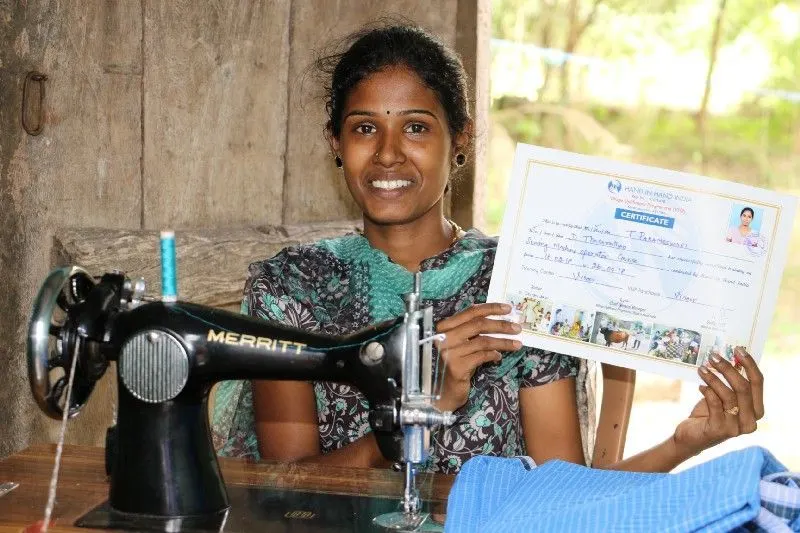
The story of a village in India and its transformation
In 2015,most of Tamil Nadu, India was ravaged by floods that took away homes and lives along with them.
story of Sakubai, from rural Dhar
This is the story of Sakubai, from rural Dhar in Madhya Pradesh, India. This is also the story of how rural women like her have found their calling thanks to Self Help Groups.
Sakubai and her family live in remote Dhar district, Madhya Pradesh. Almost 2000km away lives Muhammad Yunus in Bangladesh. The two don’t know each other, but an important word or rather a phrase connects them both — ‘Self Help Groups’ (SHGs).
When Muhammad Yunus developed the concept of SHGs and micro-finance in the late 1970s, the concept was an unknown one. Today rural India is experiencing a revolution for more than two decades with the SHG concept. The concept involves lending money to the poorest of the poor, who are shunned by banks.
Sakubai’s story is one that moves and inspires; rising from abject poverty to become the confident owner of three businesses. The magical three words — Self Help Group is what delivered Sakubai.
Sakubai (Front sitting) with four of her SHG members. These women from Dhar, Madhya Pradesh have changed their lives.
Before she joined Hand in Hand India’s SHG, Sakubai and her family lived in a one-room home, with no income other than a paltry one from her husband’s job as a cook. Her two children could not go to school, as she couldn’t afford their INR 60 fees. If any family member visited, she would have to run shamefacedly to her neighbours for tea and sugar. Despite being the owners of a 2-acre land, the family lived a hand-to-mouth existence.
The vicious cycle of poverty was the case of more than 19 lakh women such as Sakubai across the states of Tamil Nadu, Rajasthan, Madhya Pradesh, Maharashtra, to name a few.
When Hand in Hand India (HiH India) sowed the seeds of the SHG concept in these states, rural women rose up to their status of change-makers. Today, there are more than 1.5 lakh SHGs that have been formed with Hand in Hand India’s help across India. The women are given training in group management, book-keeping, financial and functional literacy, business development and enterprise creation. To support them further, HiH India provides them with credit to start enterprises.
So, how does being part of an SHG help Sakubai and other women?
When she came to know that a small loan could help her rise out of her situation, Sakubai was elated.
In 2014, she along with 10 other women from her village took the first step towards financial independence by forming a SHG with HiH India’s guidance. Her life has taken a massive 360-degree turn since then.
These are five ways SHG’s have changed the lives of rural women such as Sakubai:
1. Sakubai became aware of her earning power: As Sakubai moved beyond her small one-room home, she gained awareness about her rights and choices as a woman and a citizen of the country. She realised that women too can step out of their homes and contribute an income.
SHG meetings also give the women ideas on improving the quality of their lives and social evils like dowry, child marriage and alcoholism.
Sakubai’s older home was in a dilapidated state before she joined the SHG movement. She is now proud of her new home (right)
2. Sakubai understood money: The success of a SHG is dependent on the group’s savings and finance management. Sakubai is the leader of her 20 member SHG. With their mutual savings and small loans, all of them started small ventures. Sakubai’s first was a petty shop in her own house with a loan. Two more loans later she was running a dairy business and a tailoring unit too. Five years later, she is debt free and running successful businesses.
One of Sakubai’s three businesses — a grocery shop that she runs with confidence.
3. Sakubai is a leader now: She oozes confidence and good cheer as she speaks. Being the leader of her SHG has given her a boost in confidence. She now knows that she can now manage people and money, also take important decisions. Her status in the community has gone up and people now look up to her.
SHGs have been the launch pad for many a well known community leader.
4. Bringing together a community: SHG meetings involve not just discussing their group finances. The women also discuss their mutual problems and find solutions. If there is a well that needs to be dug for their water issues, the group moves the local body to do so. The group, therefore, brings awareness to the community and also takes part in the development of the village.
An SHG meeting in progress. Women are taught financial independence.
5. Peer support: The women of the SHG look up to Sakubai not just as the leader, but also as a knowledgeable friend. She helps them out when someone falls sick or needs babysitting support. Mutually the women watch each other’s back and provide support.
Sakubai’s story like many others, promises a ‘happily-ever-after’ ending. She is the able owner of three different businesses, has expanded her one-room home and even has a separate courtyard for SHG meetings. She and her husband have got their farmland back and sell veggies too. Her children attend a public school nearby.
When we told Sakubai about who Muhammud Yunus was and that he won a Nobel Peace prize in 2006, she had a broad smile. “I am at peace too”, she says.
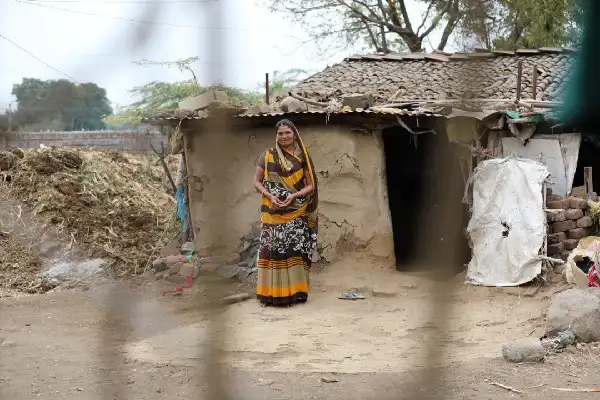
How Sakubai, a rural Indian woman got to know a Nobel Peace Prize winner
Entrepreneurs and startups are predominantly linked to the urban scenario. Not so, we say!
What happens when Self Help Group women meet
Self Help Groups are now the oldest form of creating stronger rural communities, mostly through women. Here is a peek into the lives of rural women who come together as a powerful Self Help Group. This is an account of what happens during a Self Help Group meeting, through the eyes and ears of Aparna Krishnan, an intern at Hand in Hand India.
“You can only call them, you can’t drag them by the hand,” snapped Geetha Akka, the ‘animator’ of Sriponiamman SHG (Self Help Group) on being asked about the whereabouts of the rest of her group members. I was in Uthukadu village near Kancheepuram as a part of an assignment and ended up becoming a bystander in a SHG meeting. Held around 12.30 pm, the sun right above was bringing out the cranky in everyone. Probably it was the worst time to conduct an SHG meeting but then it had to be done. A total of 16 members were bound to have a few latecomers and absentees. Twelve bickering women finally arrived; some from work, some with children attached to their hips and some of them had even left their lunch cooking on the gas, waiting to dash back once the meeting was over.
These cheery smiles hide the tough women from a Self Help Group
What did all these women have in common? Well, apart from their frowns, they all lived close by and were part of similar socio-economic strata. This is a fairly new SHG and the ‘animator’ as she is referred to, is the glue that holds these women together. The meeting was called to sort out a few issues like low attendance, inconsistent savings and lack of regular meet-ups.
To me, a relatively uninformed city-bred girl, these issues are quite grave and could lead to bigger problems affecting the group and the women personally. I found the SHG format very innovative and interesting.
SHGs are all about creating a safe space for these women, helping them socially and financially first by helping each other. The first and foremost necessity of forming an SHG is understanding that your peers act as your collateral and putting in trust, forming a bond before anything else.
Any enterprise requires money and since most banks do not give out loans without any collateral, the risk of taking loans are much higher. That is where the SHG structure come into play by providing small loans or others forms of credit or savings to those who are unable to support themselves on their own or cannot go to private banks due to extremely high rates of interests. The significance of the group goes far beyond this, which is, to empower everyone by providing security to each other, at home and at work. Being financially literate together and giving them an opportunity to be economically empowered. SHG's we found have created the strong base for women entrepreneurship.
All ears as the leader of the Self Help Group speaks.
In the meeting I attended, there was also a female mobiliser present. She is the representative of the Non-profit that drives these SHGs, i.e, Hand in Hand India. The purpose of the mobiliser was to act as a mediator between the members. In case the savings isn’t done properly, the lending won’t take place which defeats the entire purpose of forming an SHG.
The meeting started with heated arguments; who came last time and which lady was travelling and about those members who never bothered showing up at all. You would think, why not just hand in a leave application, but it doesn’t work that way here! Being fairly new to forming an SHG, it is taking some time for this group to break ground.
The situation was a little unruly, but the social mobiliser listened to them patiently and offered solutions at the SHG meeting. She underlined the importance of regular meetings and mutual support. Finally, everyone came to a mutual understanding and meeting dates were fixed. Five minutes later, a woman from the far left who I’m guessing still had lunch cooking on the stove dashed out as she saw her children returning from school. Then I realised the meeting had dissolved and the women trickled back into their lives.
All set to start balancing books, as they also balance their lives.
From managing lives to managing ledger books, these women of rural Self Help Groups have come a long way!
This peek into the lives of these rural women was an eye-opener for me. Most women schedule their lives around the needs of their family, so much that they do not realise there is a world outside that too. Sometimes, a little push, a boost of confidence is what is required to show what more could be possible.
Hand in Hand India’s Self Help Group (SHG) model is based on women empowerment and job creation. We mobilise women into groups, draw on the collective social capital, facilitate access to economic capital, provide skills training, hone their entrepreneurial ability and act as a catalyst for a gender-equal and empowered society. Read more about our work here.

What happens when Self Help Group women meet
What happens when a women's Self Help Group meets? Here's an insight.
In 2015, most of Tamil Nadu, India was ravaged by floods that were linked to climate change and global warming. The floods took away homes and lives along with them. Here’s how a village got back its homes and lives were rebuilt.
December is when the world celebrates Christmas. In Cheyyur village in Kancheepuram district of Tamil Nadu, however, December brings back memories of loss and helplessness. Govindan’s family who live in this tiny village dread this time of the year. Back in 2015 was when Govindan’s village was almost swept away by devastating floods. When the waters receded, Govindan had lost not just his belongings, but his entire home was washed away.Govindan was homeless. The whole of Cheyyur was homeless.
Climate change and Homelessness
World over, climate change is leading the way to several natural disasters that affect local communities. As we write this, many lives are lost and huge populations rendered homeless with unseasonal floods and droughts. Homes are said to be one of the building blocks of the economy, and also a basic need of mankind. When Cheyyur lost its homes to the ravaging floods, it was a challenge for the community to stand back on its legs.
A rather worrying trend observed in India was that floods were the most common type of disaster between 2000 and 2014.
How Cheyyur limped back to life
Cheyyur is largely inhabited by the Scheduled Castes and Tribes, a backward part of society. Govindan’s family was one amongst the 100 flood-affected victims who had lost everything to the devastating floods of December 2015. His family of four had no choice but to live out of a make-shift thatched hut.
After the floods, Govindan’s family resigned to sleeping on moist ground. He remembers, “my son was bitten by a snake and we had to rush him to the hospital at 1 am. He survived, but we had to stay awake through many such rainy nights, as the thatched hut and moist floor didn’t do much for us”.
As he tells his story, Govindan’s voice resonated the pain and uncertainty of life. His multiple, unstable professions as a farm labourer, an electrician and manufacturer of Goli Soda (local beverage), show despondency. Around his home, one can’t miss the bottle vending machine — vestiges of one of his failed professions — rusting under a tree, muffled in a blanket of cobwebs.
Finally, Cheyyur gets solid housing
It took two years for Govindan and the rest of Cheyyur to have a roof above their heads.
Today life has gradually shifted to normalcy for Govindan and family. He has found work as a daily wage worker, but he is glad to come home a sturdy roof!
The floods of December 2015 had changed the story of many such families, whose houses were inundated. These dwelling units have paved the way economic growth in pockets of the country like Cheyyur.
Our Village uplifts may be a small stepping stones but these efforts do bring a huge amount of hope to the rural underprivileged. Take this other story of a village which was transformed by its women folk.
For this project, we had partnered with Cognizant Foundation to bring dwelling units for nearly 60 families in Tamil Nadu affected by the 2015 floods.
Hand in Hand India is an International NGO based in India that works in alleviating poverty through integrated community development. Our Village Uplift Programme works to bring development to villages across India. Different aspects of development, such as education, skilling, health, environment — make it holistic. Read more about our work here.
We believe in the Public-Private Partnership approach. Here’s more about our partnerships.
.webp)
Building homes and lives
In 2015, most of Tamil Nadu, India was ravaged by floods that took away homes and lives along with them.
Here’s our take on friendship. Across ages. Across states.
“ To the world, you might be one person. But to one person, you might be the world — Dr.Seuss”
On Friendship Day this year, we took a look at all the people we came across in our work. We found many friends and different things that tie them together. One common factor — Smiles, in plenty.
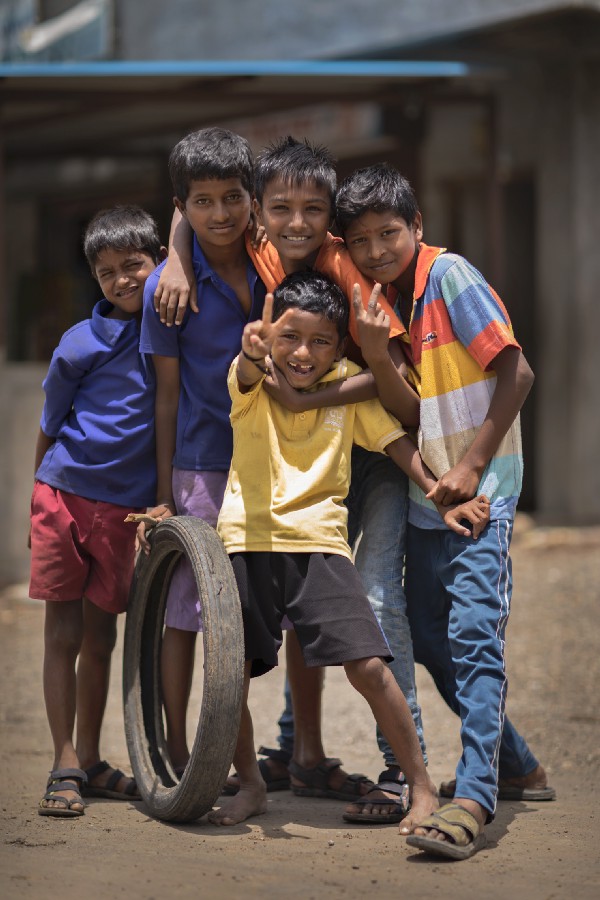
Maharashtra, India
Friendship = Togetherness
We call them the Pirates of the Indian Ocean. For these youngsters from the Government School in Maharashtra, friendship is togetherness. A day spent with friends is a day well spent they say. Our Activity Based Learning Systems help these children have fun alongside education.
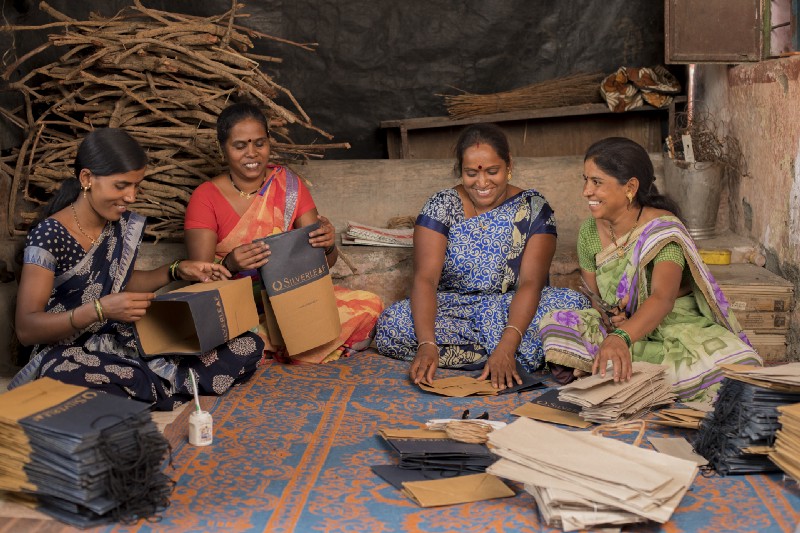
Self Help Group Members come together to form an enterprise, building self-confidence and family income
Maharashtra, India
Friendship = Comaraderie
Vanita (Centre) and her three friends run a paper bag making enterprise. Friendship for these women is the daily banter, stories they share as they make profits. Our SHG’s are all about bringing together women together and creating a strong bond. Transformational stories like that of Sakubai from Madhya Pradesh are also our favourite.
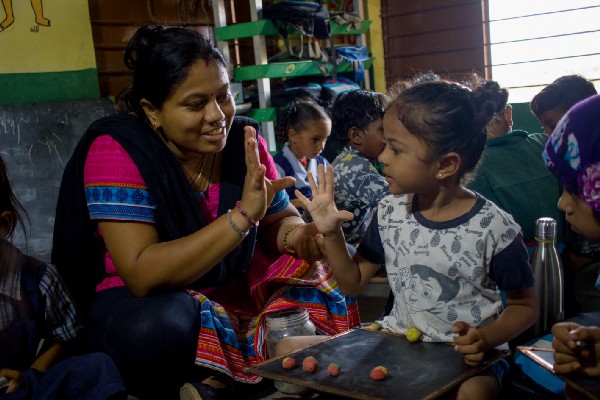
Gujarat, India
Friendship = Bonding over lessons
For these little girls from SABL school in Gujarat, their teacher is the best friend! Every day is fun with the interactive learning methods that are used here. We along with our CSR partners ensure that the environment for our little ones is such that they are rearing to come to school every morning!
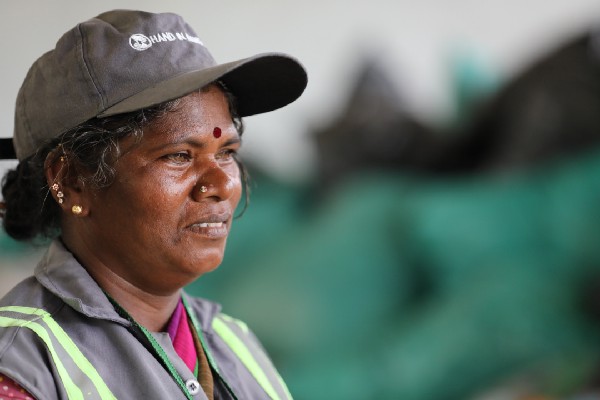
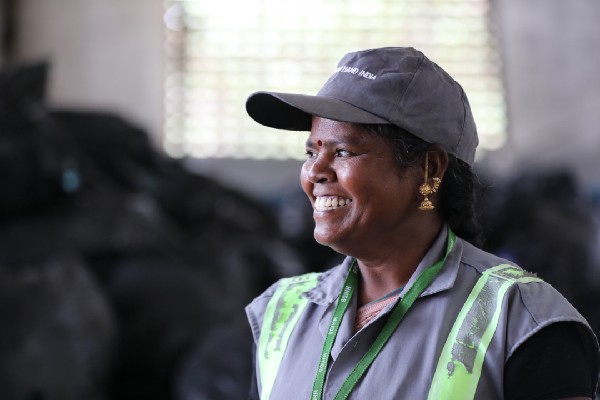
Tamil Nadu, India
Friendship = Lending an ear and a hand
Amutha and Kalaivani are best friends. They are also co-workers: the two work at one of our Solid Waste Management Projects as Green Friends. As they go through their job of sorting waste, they also lend each other an ear for their mutual problems. Amutha being the older offers advice and Kalaivani looks up to her senior as the friend she never had.
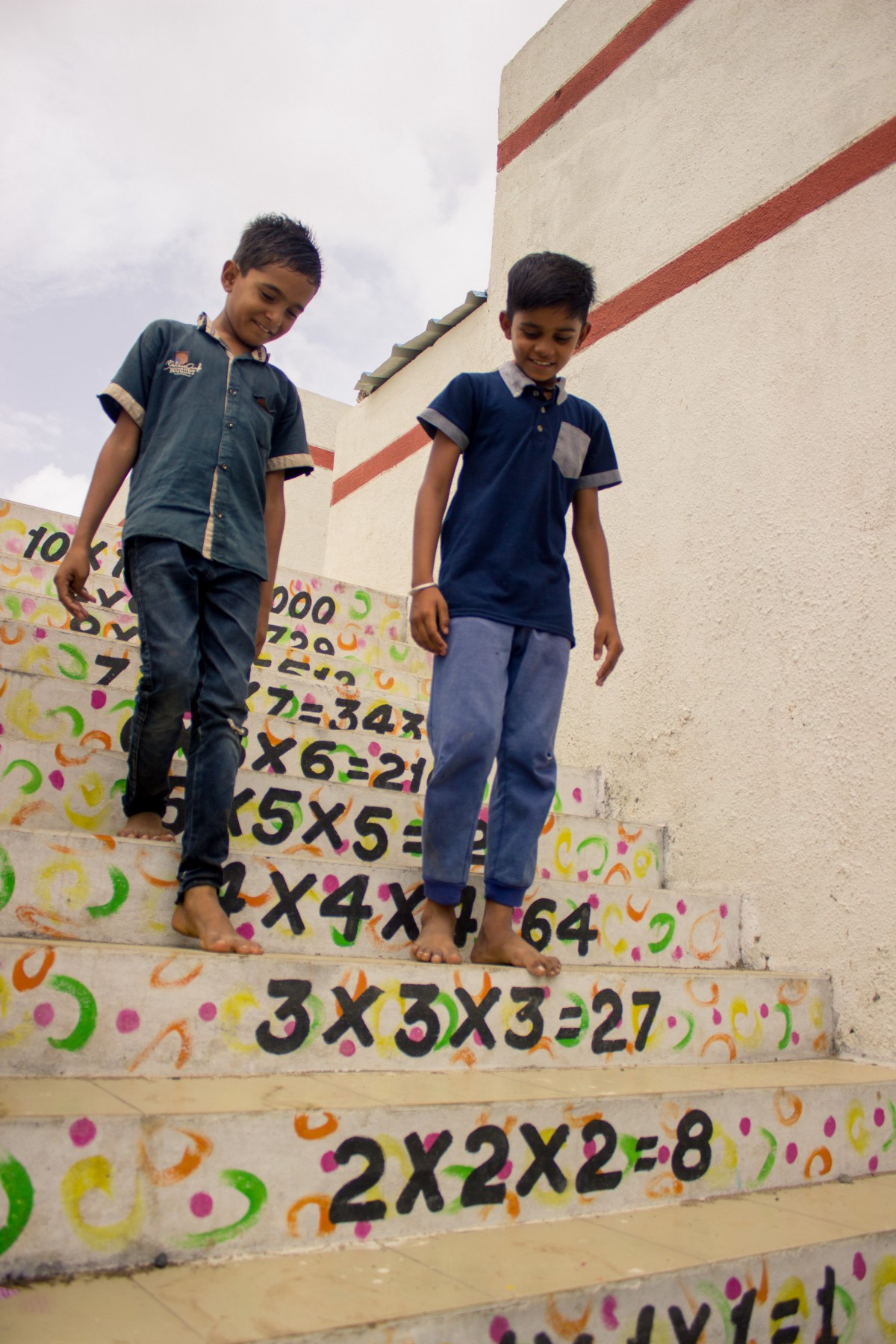
Gujarat, India
Friendship = Learning together
At this school in Gujarat, Anand and his bestie Mithun are not just buddies, but they also study together. While Anand gives his friend some math tips, Mithun helps him with English language. We played a small part in their friendship by giving them a colourful and fun environment to learn in!
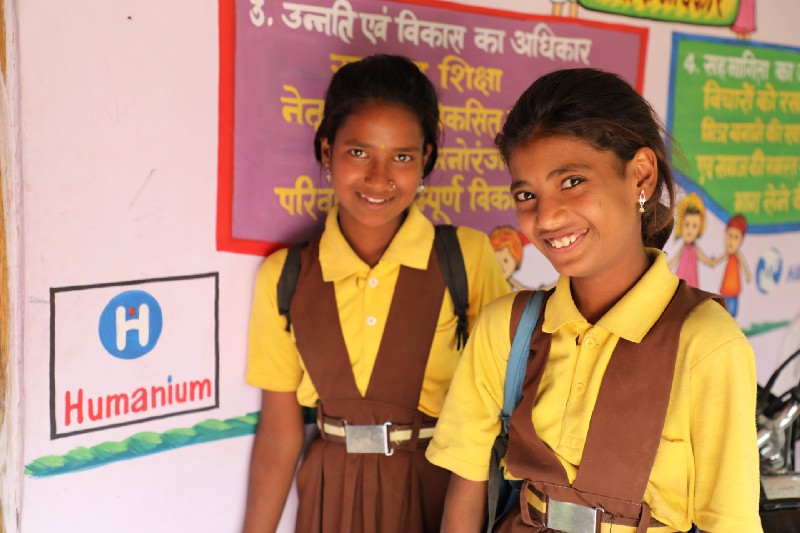
Our transit schools provide a chance for children of migrant labourers to not miss out on their studies
Madhya Pradesh, India
Friendship = Sisterhood
Meet Muskan and Mahi, two sisters and friends from our Transit School in M.P. At home, they help with household chores. The school gives them an opportunity to catch up on where they dropped out. It also gives them time to bond! The sisters also found themselves new friends at school. Like Muskaan and Mahi, we have more interesting stories like that of Rajan, who found a secret route just to get to school!
We are an Indian non-profit working in the areas of Children, Women, Skill Development, Health and Environment. Read more about our work here.


Friendship in Frames
We work in more than 15 states of India. We asked people- adults and children, what friendship meant to them. Smiles and stories followed.
Big things have small beginnings.
A new normal in the world of business has brought about change to the MSME sector too. They now have a revised definition and a huge part to play in the country’s development in the post-COVID world. The MSME sector, however, has plenty to learn and change to work with the new world.
On MSME Day, we at Hand in Hand India have put together 8 Tips for rebuilding Indian MSMEs in the Post-COVID world.
Re-defining the MSME in 2020
The Micro, Small, and Medium Enterprise Development Act in 2006 was the beginning of small, but meaningful development in India. According to this act, MSME’s were classified into - Manufacturing and Service enterprises.
Today, there are more than 63 million MSME units (data from the CII), across India that contribute to 6.11 percent of India’s GDP and 24.63 percent of the country’s services. Next to agriculture, the MSME sector is the one that provides the largest employment for Indians, mainly in the rural areas.
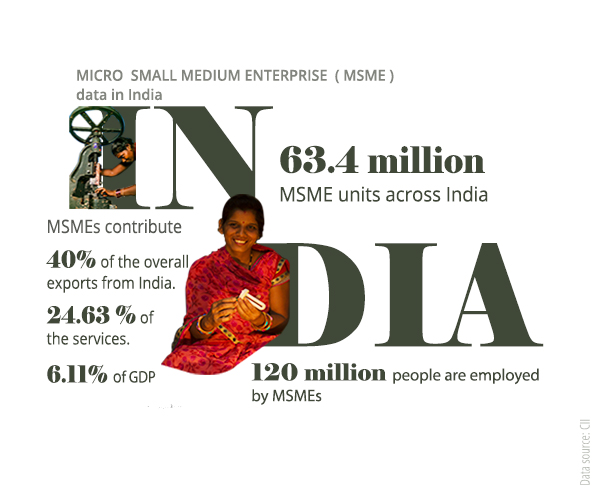
In the current pandemic situation, India has recognized MSMEs to be the key solution to riding these tough times through the Atma Nirbhar Bharat Abiyaan. Stressing on supporting local industry and thereby building a resilient India, this scheme of the Government has changed the definition of the MSME.
The RISE project: Building women-led MSMEs
In 2015, we at Hand in Hand India, embarked on a futuristic project with Vodafone India Foundation and Indus Towers - RISE or Rural Women’s Initiative for Self Sustained Enterprises. As part of this initiative, we addressed three key components - entrepreneurship, technology and marketing and created an exclusive digital B2B market-place for our Self Help Group women entrepreneurs. Nearly 50,000 women from across Tamil Nadu were part of this project - some were into small scale manufacturing or assembly, others were tailors or even farmers.
One of the biggest challenges for women entrepreneurs remains the lack of market linkage support. Many have excellent products but with no channels to sell them. The RISE project bridged this gap by digitally empowering women and building their capacity to grow their businesses to scale.
An exclusive mobile application was developed serving as an online marketplace for women to interact and trade their products - all they needed was a smartphone! Training women for this project involved familiarizing them with smartphones, encouraging them to use the internet, to start with. On the ground, we also trained them to improve the quality of products, marketing them and educating them on Government regulations.
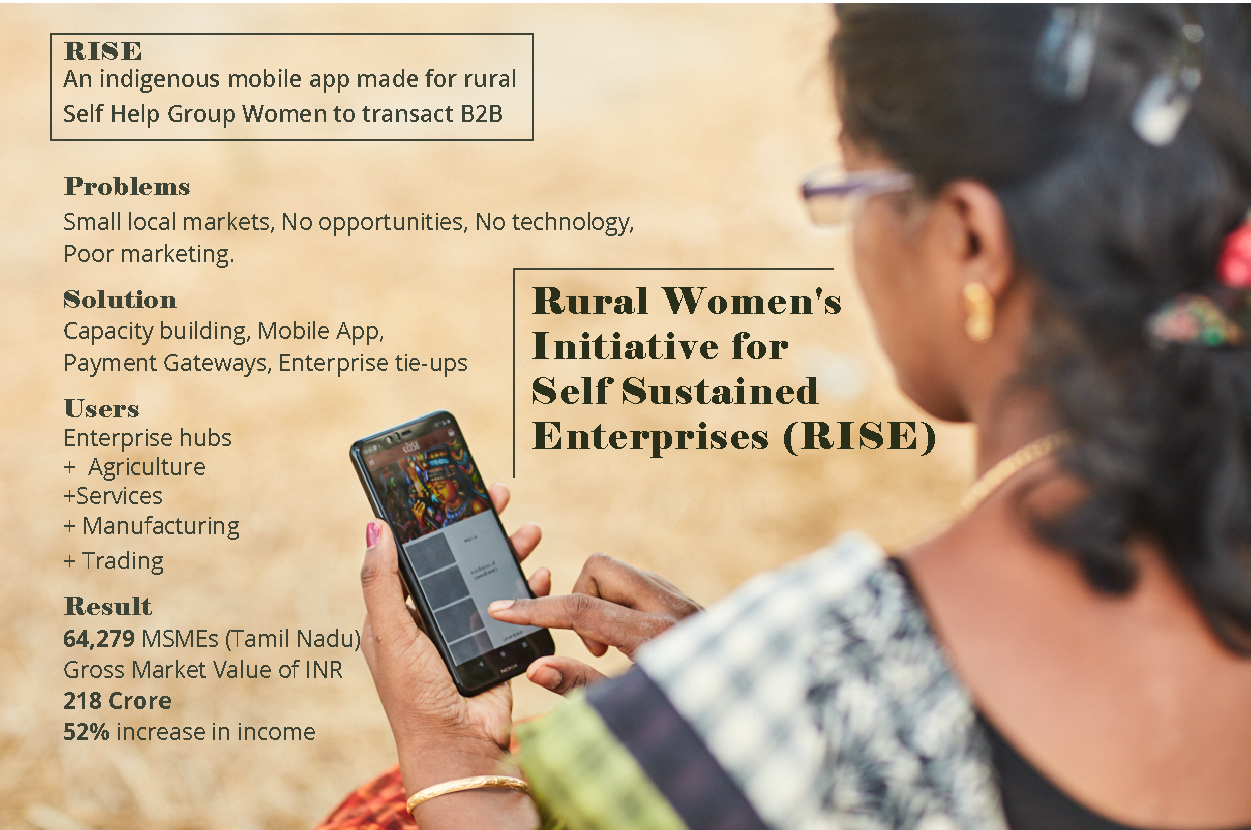
The Business-to-Business approach of the app is devised to provide a spectrum of products, giving the buyer options like any online store. The products range from appalams, pickles, rice to sarees and mats. It directly connects the buyer and seller through without the intervention of any middlemen.
Today, the RISE app has been instrumental in heralding a revolution in rural Tamil Nadu by helping SHG women to market their products and services to a wider audience. With a lot of potential for growth, we hope to replicate the RISE app across India.
The problems faced by MSMEs during COVID
With an unexpected lockdown for over three months, India’s MSME sector has taken a huge hit financially. Be it lack of cash flow, employee layoffs, lack of access to raw materials or stock that is stuck, small enterprises have been facing hardships on all fronts.
As an NGO working with women entrepreneurs, we have helped build several MSMEs across India. In our interactions with these entrepreneurs, we found them all to be affected in small or big ways due to the COVID pandemic. How these brave women are facing it is another story.
Take organic farmer Abirami - who has her own farm and sells traditional varieties of rice and pulses from the outskirts of Kancheepuram, Tamil Nadu. She sells all over the state and with the current pandemic, is stuck with stock of rice, pulses and oil at her end while her customers wait for their orders. In another corner of the country, Ramandeep Kaur struggles to source ingredients for her food processing unit in a small village of Punjab.
These are just some of the many problems that COVID-19 has brought into the lives of the MSME sector. Meanwhile, we spoke to our trainers, industry experts and entrepreneurs to gather these tips to rebuild Indian MSMEs to face the post-COVID world.
Tips to rebuild Indian MSMEs to face the post-COVID world
Tip #1 - Your business is Plan A, do you need a Plan B?
We got this first tip and most important one from Sathya, our entrepreneur friend who runs a large food catering unit. She told us how she re-looked at her business with a new eye. Her’s is a classic case of business loss - no customers, no cash flow. Sathya sat back and thought up a Plan B of growing horizontally and targeting clients in the same sector. She was quick to put it in action too. Read her story here.
Tip #2 - Have you registered your business?
You might have been doing business for years but not bothered to have registered it? The benefits of registering are many - from getting the right Government benefits or finance options and to be compliant with the law. Visibility of the business increases too, for instance if you want to be part of the Government of India’s e-marketplace, you will need to be a registered business.
Tip #3 - Need funds to restart?
Every small business would have suffered a setback in terms of earning. The Government’s new schemes for MSMEs have many benefits such as quick working capital availability, tax-filing deadline extension and more.
Tip #3 - Evaluate your spends
If your business is spending on marketing or advertising, those spends might need a revisit. What you deemed fit for a world before COVID might not be the same any more. Plan a smaller spend, decide on a different medium. Try to postpone CAPEX for the time being and conserve cash.
Tip #4 - Set your books right
Are your books in order, do you have receipts for your transactions? This is the time to get these in order. Move any transaction you can, to a digital platform. Examine your options among banks and other funding sources for any future requirement. Implement software to capture transactions and predict or forecast your business, this will help you in the long run.
Tip #5 - Brick-n-mortar Vs. Click-n-order
If your business is a traditional one that relies on a typical store front and cash counter, you may want to have another option too. Some part of your business could move online - payment online and delivery home maybe? If your business can easily be converted to an online one, it’s time to invest in a website or mobile app. Better still join an existing online platform such as RISE!
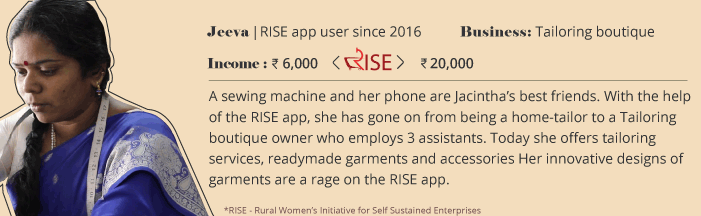
Tip #6 - Diversify your skills
Adapting to change is one of the key skills of any entrepreneur. If your main product or service is something that has taken a hit during the pandemic, adapt and venture into something connected or upskill yourself. Yet another of our inspiring women, Hema owns a beauty parlour and her business was down. But she has used her MSME license to advantage and started a sanitizer making unit with the help of her staff! Infact, the District Collectors in Rajasthan and Madhya Pradesh encourage women to take up such tasks that not only support their families and benefit the community at large. More stories on adapt or die here.
Tip #7 - Explore and Expand
Explore new means of expanding your customer base. If word of mouth has been one key factor in bringing you customers, try going online. Facebook, Instagram and Whatsapp are the brand new ways of expanding your business, maximising sales with the least acquisition cost!
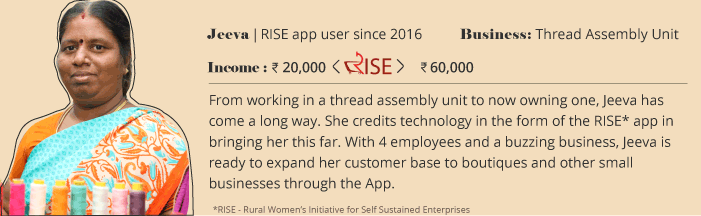
Tip #8 - Go Local
With the pandemic also came the reverse migration of workers who were employed by MSMEs across India. If you are running an MSME and have run short of employees, it is time to spend this time in ‘Skilling the Locals’. Hire locals, skill them if needed and enjoy better goodwill in your town or city.
The lockdown might have brought difficulties for India's MSMEs, but it has also brought with it a whole lot of opportunities. We work with our women entrepreneurs and tell them to look at the half-full-glass. These 8 tips to rebuild Indian MSMEs are our small way of telling entrepreneurs to look for opportunities. Our enterprise team is actively working with women despite the lockdown, remotely connecting with them to help them get back on their feet - either by counselling, virtual training or connecting to the relevant Government schemes.
Hand in Hand India’s Self Help Group (SHG) model is based on women empowerment and job creation. We mobilise women into groups, draw on the collective social capital, facilitate access to economic capital, provide skills training, hone their entrepreneurial ability and act as a catalyst for a gender-equal and empowered society. Read more about our work here.

8 Tips to rebuild Indian MSMEs in the Post-COVID world
The Covid19 pandemic has not only disrupted economies, healthcare systems and human lives but also access to education. We looked around to find the answer to - is e-schooling sustainable in the Indian context?
Deepa, a 10-year-old sixth-grader was very excited at the end of May. She was excited at the prospect of a new way of schooling - e-school. Living in Chennai, Deepa’s parents had already given her a spare laptop to access her online classroom during the COVID-19 pandemic. Come July, a month into the new schooling system, Deepa’s excitement has waned. Hours of sitting in front of the laptop, with no outside playtime weren’t helping.
In the outskirts of Cuddalore, Ajay spends most of his day playing with his sibling or helping his mother with household chores. In the mid-morning, his mother shows him her phone where his teacher has sent a Whatsapp message. Today he has 5 maths sums to do. It’s not an easy task - the math is easier than accessing lessons from his mother’s outdated smartphone.
At Hand in Hand India, we run residential schools for rural, drop out children and also run formal matriculation schools for predominantly first generation learners. However, shifting to online schooling remains a work in progress, with several stumbling blocks. Is e-schooling sustainable in the Indian context?
India’s schools have changed their pedagogy. But it looks like e-learning is only window-dressing. We look deeper.
Stumbling blocks to e-Schooling
Teaching and learning are traditionally considered a two way street, but India has been thrown into online education owing to Covid19. While urban India has managed to shift online (though not very seamlessly), rural and peri-urban areas still have a long way to go in bridging the digital divide, making ‘education for all’ a distant reality.
Smart-classrooms but no class?
Access to the internet. Access to a computer. Access to technology. Access to funds. Access to continuous power supply. Access, or rather the lack of it, is one of the biggest stumbling blocks for children in India to adapt to e-schooling.
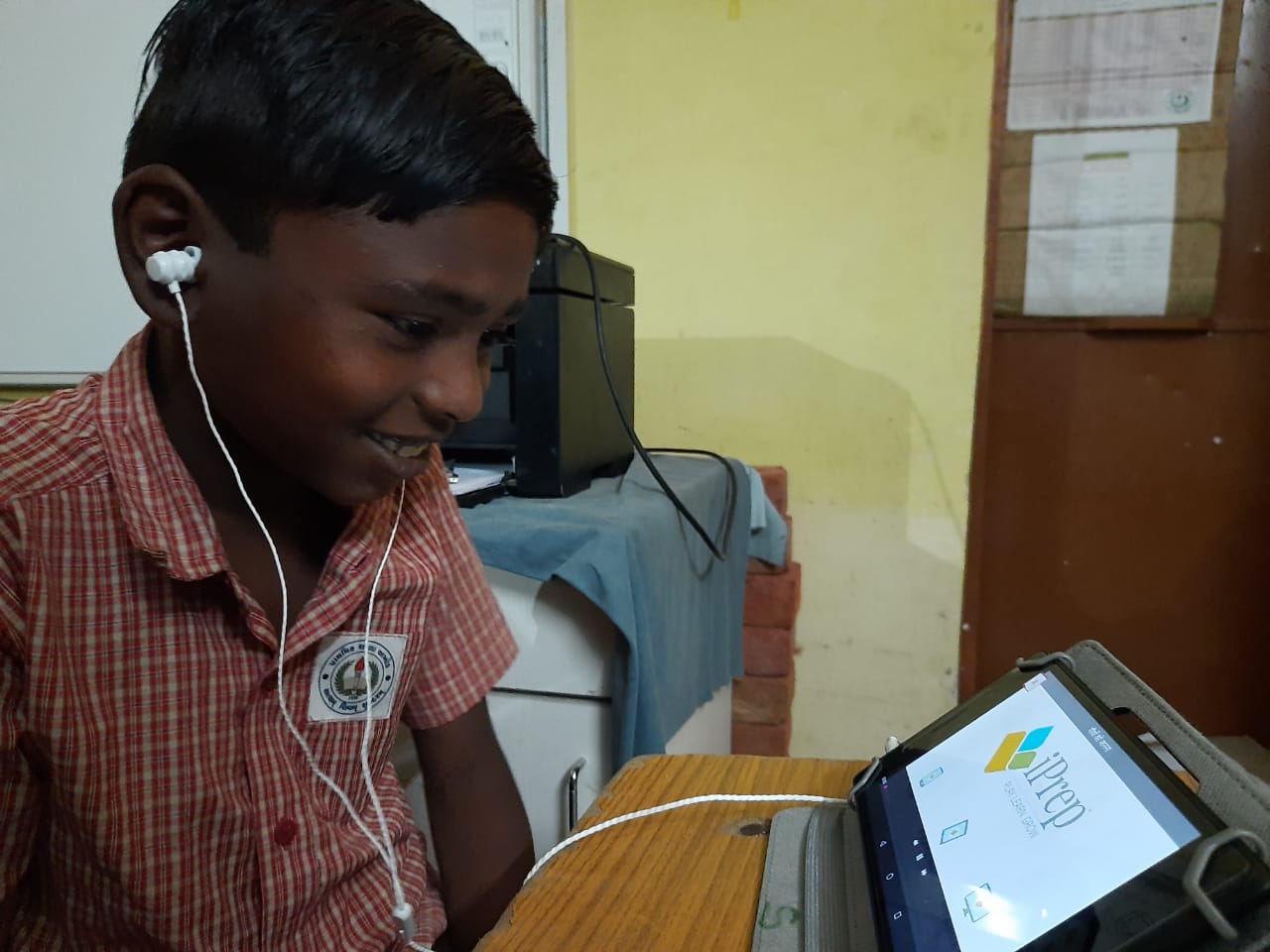
Most schools in India, especially in peri-urban and rural areas are equipped with only basic infrastructure - walls, blackboards and maybe desks. In stray cases, some technology is seen in the form of a smart classroom - just a computer enabled classroom with a projector instead of a blackboard. While these institutions may have aspirations to offer the best to the students, the lack of access plagues them. With the parents economic background, lack of funds or fee leads to a lack of development. There is also the lack of access to reliable, consistent network connectivity that adds to their problems.
E-school Etiquette
In an Indian city school, no teacher would have even dreamt that she would be addressing a screen instead of students from June 2020. Welcome to the world of Zoom, Google classrooms and so on. Educational Institutions have had to cope with the resources and initiate teachers into the world of online teaching.
The role of parents is as significant as students, providing them with a spare phone, laptop or tablet. Those with more than one child at home, or with working parents, prioritizing (or even having access to) devices becomes a challenge. Solutions have now come in the form of recorded lessons, e-worksheets via phone and even teaching over Whatsapp, but are these really e-learning tools?
What about Physical Education & Arts?
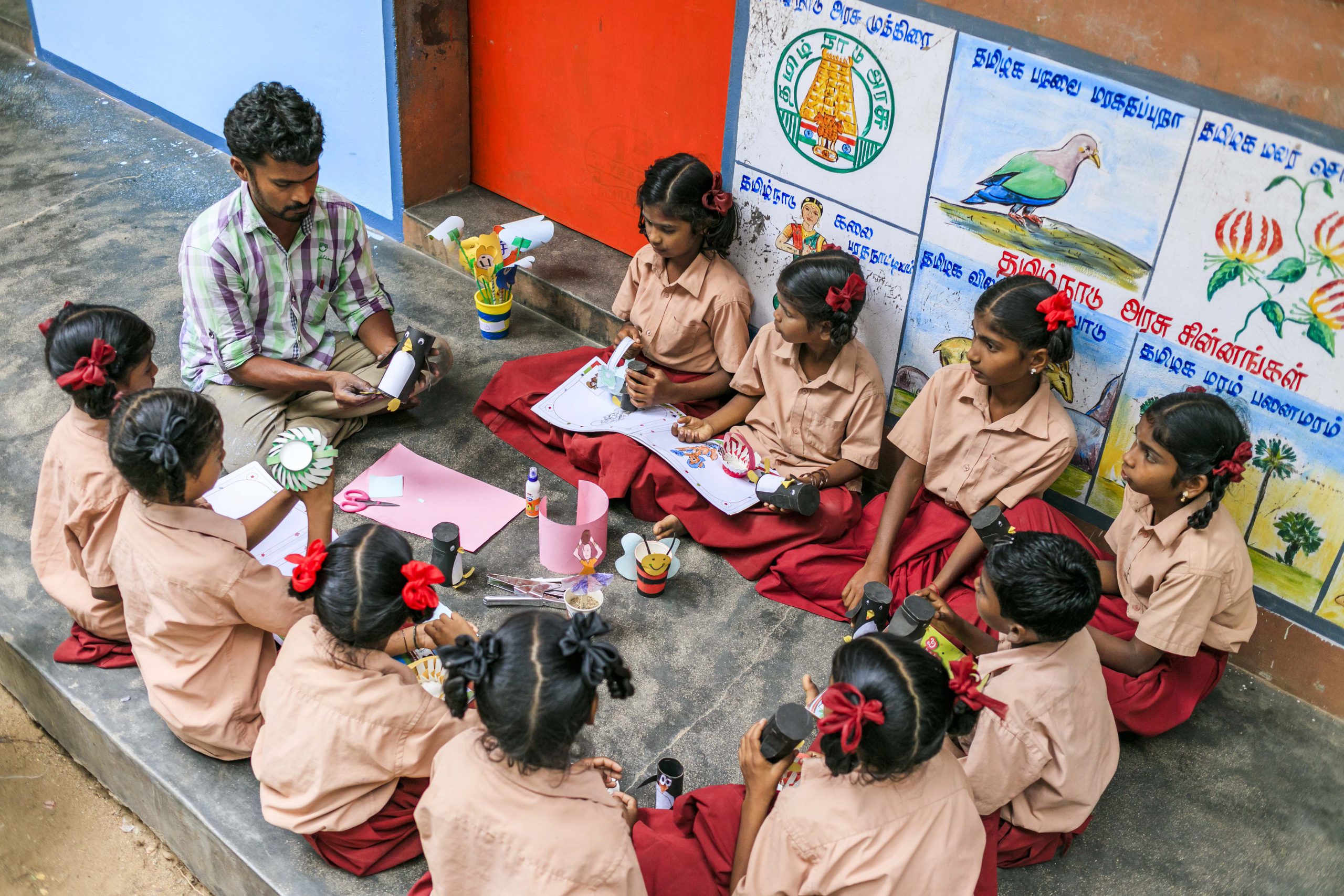
Traditional sciences such as math or social studies – the so-called textbook subjects, are somewhat sorted we could say. But how about the very important physical education? Or the wonderful world of art and crafts? Online curricula must be robust enough to include physical education, value education, art & craft and free periods to get students to interact as they once would in a classroom. Although difficult to reconstruct, these would build a semblance of normalcy in the child’s mind while providing a more holistic learning environment.
Effectiveness of E-schooling
The 2019-20 batch of 10th graders were lucky enough to pass their year without writing the dreaded final exams. But not so the current batch. A typical grade 10 student today is well into his 10th grade syllabus in just two months of online classes – a feat that would have taken close to two terms in regular school. He/she plugs into the device available at hand and is online almost the entire day – how much he registers is something yet to be tested.From another angle, toddlers require physical environments with objects to touch, learn and play with – something the online world cannot compensate for. Likewise, the challenge is even more pressing for older students who are at the cusp of starting University education.
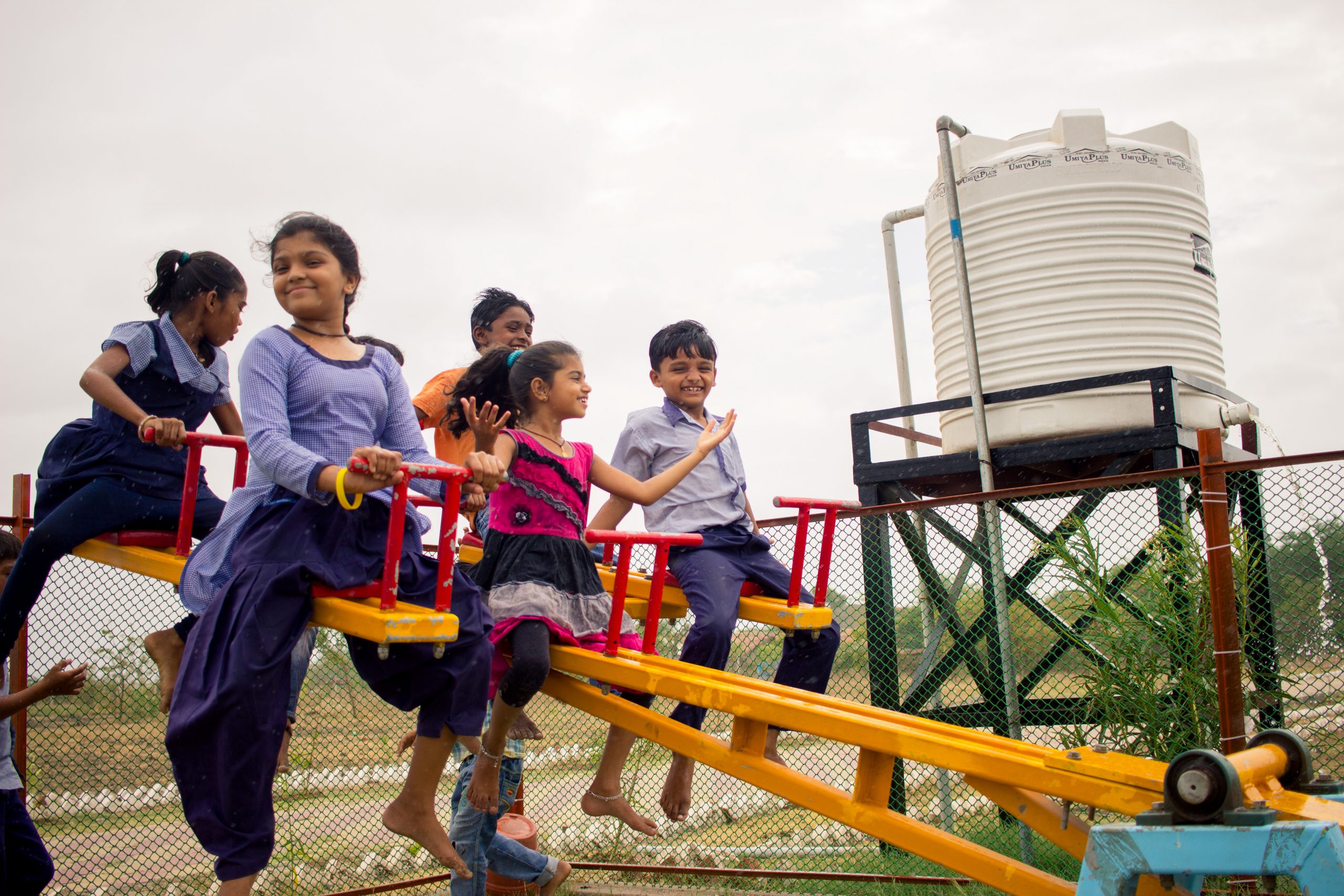
E-schooling vs. Eyesight
In Middle school and above, the minimum amount of time a child attends e-school would be on an average of three hours. This means three hours of being glued to a device’s screen. Not to forget more time in front of the same screen while accessing homework or worksheets. And which child doesn’t watch TV? That’s a very long day spent in front of many screens - potentially damaging eyesight and creating back problems too.
No Guidelines and framework
One of the major roadblocks in e-learning in India is the lack of a proper vision, infrastructure, framework and guidelines from the Government on e-learning. There should be standard operating procedures for online classes with an earmarked budget for each school. Teachers and parents must be trained and could consider this as an option for students to keep in touch with subjects even during normal school days. This would be a huge step in making e-schooling sustainable in the Indian context.
Opportunities Unfolding
Despite present challenges, the Covid19 situation has reiterated the need to shift to online education as a tool to ensure that no child is left behind. It is estimated that 85% of India will have access to smartphones and mobile data by 2024 – translating to an opportunity that even in the remotest of places modules can be pushed to students through smartphones. There also remains an opportunity to change the method of rote learning to more interactive learning methodologies. A two way platform needs to be developed where the students can raise questions and teachers can dynamically test if the learning has really taken place. Partnerships at a macro level by Government Education Departments with online e-learning platforms could be one way of bridging the digital divide at scale. Aside from e-learning solutions, the Covid19 situation also presents a chance of finally having smaller classroom strengths with more individual attention to students once schools reopen – creating a more active learning environment.
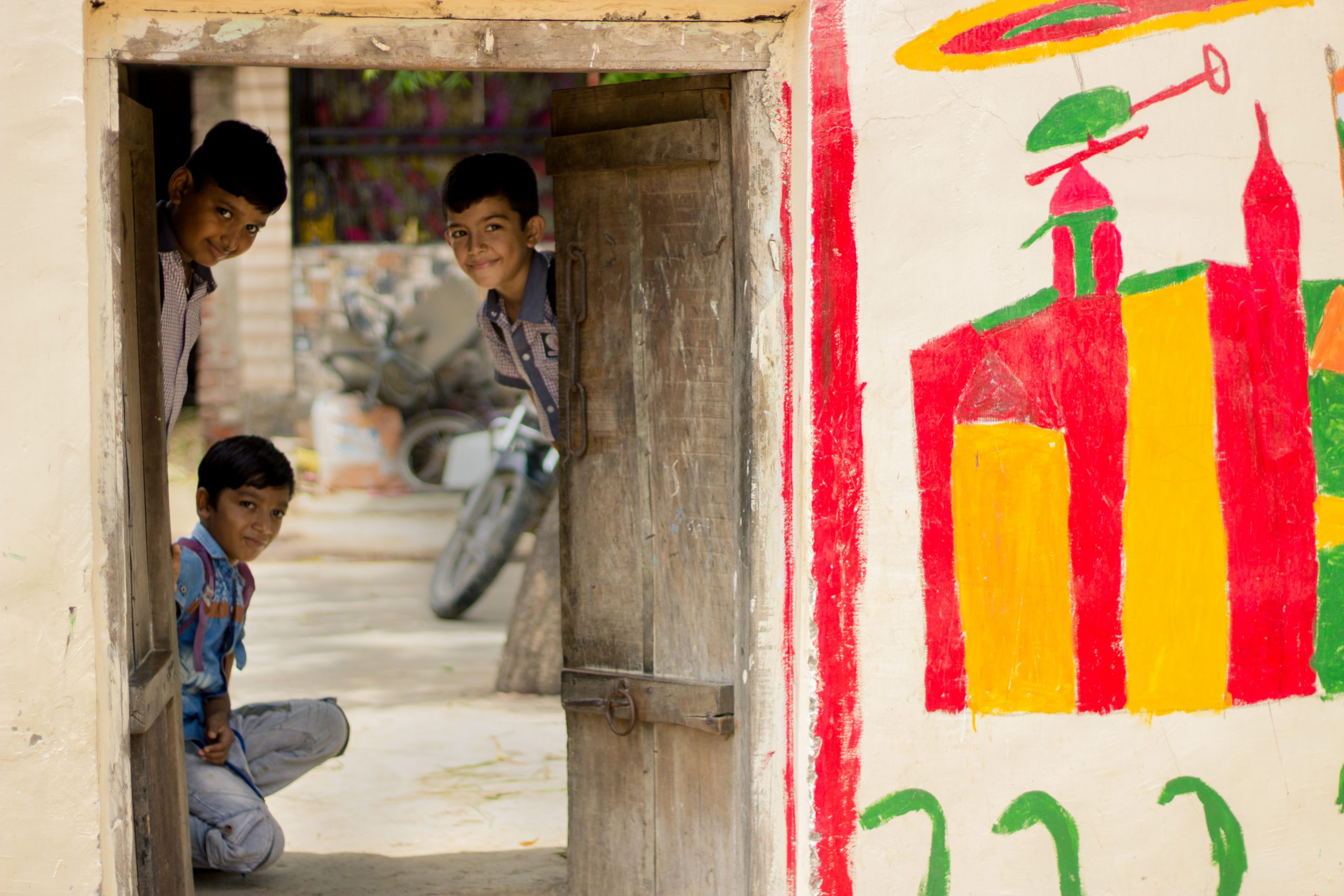
For young learners, digital learning could be a way of life in the coming years. The role of a parent in children’s education has become more apparent than ever. Whatever the approach taken, virtual classrooms can never replace classroom teaching and peer to peer learning. Hopefully, India will witness a new inclusive digital ecosystem built not only around technology but also around learning, compassion and value education in the years to come.
A version of this article was originally published in the July 2020 issue of the Industrial Economist.
Hand in Hand India works across India in the area of Child Labour Elimination. In addition to 8 residential special training centres for child and bonded labourers in Tamil Nadu and Madhya Pradesh, we run 2 schools for first-generation learners in Kanchipuram. Through our initiatives, more than 3 lakh children have been mainstreamed into formal Government schools and have converted more than 1000 panchayats (groups of villages) into child-friendly ones. Read more about our work here.
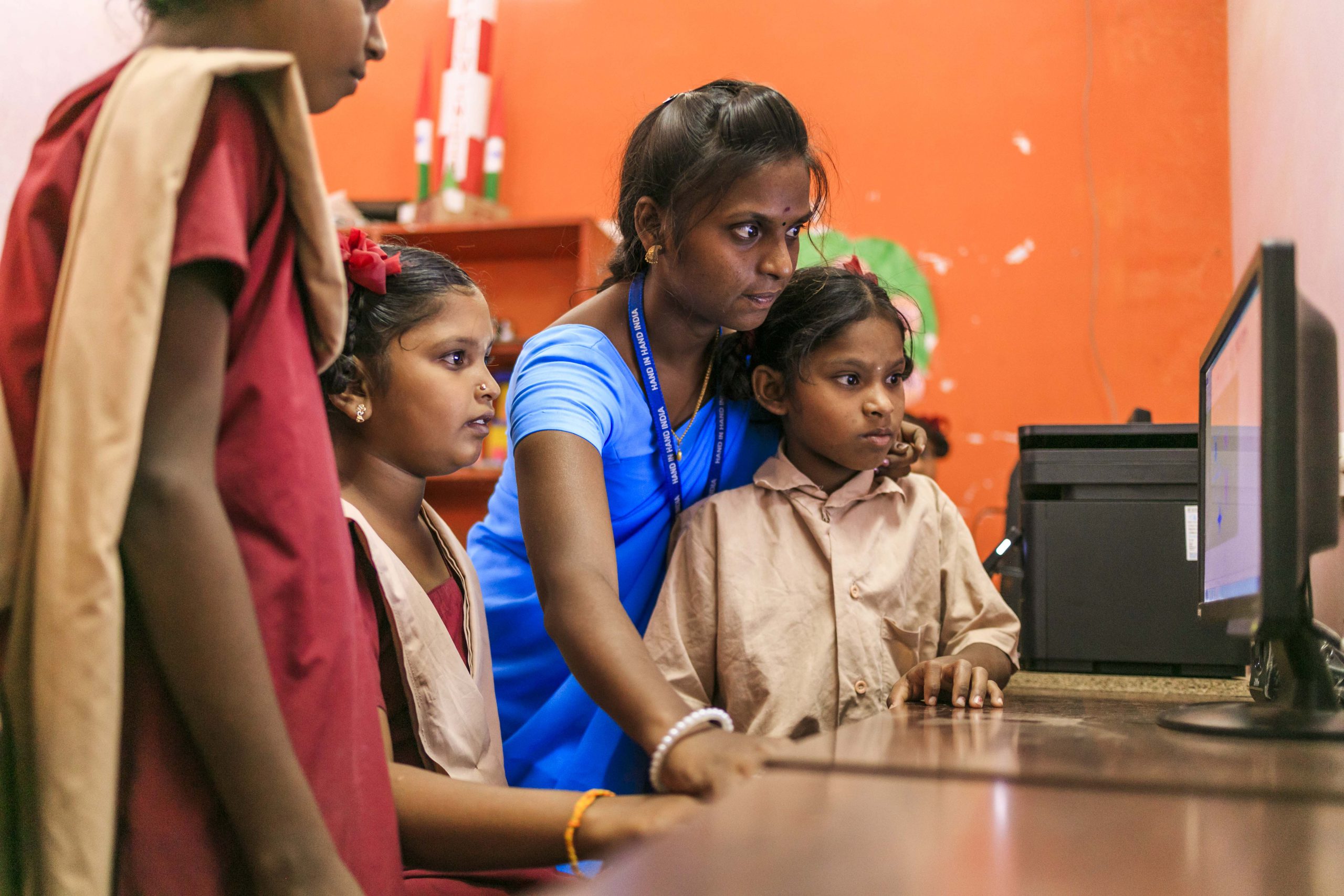
Is e-schooling sustainable in the Indian context?
With the COVID-19 pandemic, India's education system woke up to e-schooling. We dig deeper to find out if e-schooling is sustainable in the Indian context.
Social Return on Investment is the latest and best way of measuring impact in the development sector. This is how we measured our impact as a nonprofit working to alleviate poverty.
The term ROI is commonly used across businesses to measure Return on Investment or simply put, ‘the revenue received for every rupee invested in the activity or product’. The term works well in a business scenario that measures ‘Financial impact’, but it isn’t the right measure for a Non profit organization to use to measure its impact.
At a non profit, we create change in many ways - social, environmental or economic. These factors are very important to calculate impact created by our projects. This is where SROI - Social Return on Investment comes into the picture. The metric, SROI is a fairly new one and has been helping NGOs like ours measure our impact effectively.
What is SROI?
Social Return on Investment (SROI) is a prominent tool used in the development sector that accords a monetary value to the social, economic and environmental benefits and costs created by an organization or initiative. SROI borrows from techniques of economic analysis as well as social accounting to provide a valuation that can be used to better understand the task, outcomes and impacts of an organization.
The idea behind SROI is that “returns‟ of a social enterprise are accrued by the whole community rather than only the investors. These “returns‟ can be easy to quantitatively measure (e.g. increased income, community tax savings etc.) or hard to measure in monetary terms (increased self-esteem, empowerment).
Though it is commonly compared to a cost benefit analysis, the major difference is that the SROI is a tool that allows for managers to organize and utilize organizational resources in the most efficient manner.
The SROI Framework
Given the volatile and diverse nature of the industry, a framework and tool is essential to evaluate methods to improve performance, aid management decision making and evaluate impact of an investment on stakeholders. It is a framework for measuring and accounting for the broader concept of value; it seeks to reduce inequality and environmental degradation and improve wellbeing by incorporating social, environmental and economic costs and benefits (Nicholas et al, 2012).
A contingency framework developed by Prof Ebrahim and Prof Rangan (2010) of Harvard Business School highlights that the nature of change and choice of operational strategy are the two approaches that must be used for performance assessment within the SROI.
An SROI Study of HiH India
Indian Institute of Technology (IIT - Madras) had taken up a novel and first of its kind study of SROI in India with Hand in Hand. Combining the framework with Hand in Hand’s five-pillar program and a rigorous methodology, SROI metrics were developed for four of the pillars (interventions). The methodology was longitudinal in nature and included three phases of a combined quantitative and qualitative study.
The cost of delivering the benefits was primarily obtained from the financial records of each pillar and Hand in Hand India. A simple net present value of the monetary benefits divided by the present value of the costs provided the SROI for the pillar.
Findings and Conclusion
Self Help Group (SHG) Pillar - SROI INR 41.29
One of the interventions we wanted to study the impact of was our Women's Self Help Groups. Here we included training costs and loans for education, dairy or microenterprises.
We also studied the social benefits that the SHGs gained:
-Making better decisions with children's education
- Increased income- New business and employment opportunities
- New Skills acquired such as banking and book-keeping
- Lesser stress loans were taken
The SROI for the SHG pillar was calculated to be INR 41.29, i.e. every INR1 spent yields INR 41.29!
Child Labour Elimination (CLEP) Pillar - SROI INR 33.5
Our CLEP pillar focuses on bringing education to children and keeping them away from child labour. Here we included costs relating to social mobilization, household surveys, setting up of our residential and non-residential schools and cost of education per child.
We found that the benefits that our CLEP pillar provided were as below:- Reduction in crime rate and percentage of youth involved in crime- Saving on cost of unemployment- Private benfits per individual visible in the long run.
The SROI for the CLEP pillar was calculated to be INR 33.5 i.e. every INR1 spent yields INR 33.5!
Health Pillar - SROI INR 36
Through our Health pillar, we try to make healthcare accessible to rural India. Here we included costs relating to setting up clinics, conducting medical camps, health care checkups like anaemia and more.
Here's what our Health Pillar's benefits were:
- Better wage hours and Higher income due to better health
- Reduced hospital costs for individuals
The SROI for the Health pillar was calculated to be INR 36 i.e. every INR1 spent yields INR 36!
Environment Pillar - SROI INR 15
Our Environment pillar consists of Solid Waste Management and Natural Resource Management wings. Hence the costs included here are partnering with local bodies and cost per hectare of land.
The benefits of our Environment pillar were as below:
- Direct benefit of transforming uncultivable land to cultivation fields
- Single to Double crop growth- Lifesaving irrigation
- Longterm benefits of ground water restoration
- Increase in employment
The SROI for the Environment pillar was calculated to be INR 15 i.e. every INR1 spent yields INR 15!
In conclusion, this study proves to be a stepping-stone to future research in the field of SROI and of quantifying variables in a field where value or output is measured through joy and smiles created. The challenge ahead as rightly pointed out by Ebrahim and Rangan (2010) lies not only in measurement of these variables but about infusing these results with governance and strategy.

Social Return on Investment - Measuring impact in the development sector
Much like ROI in the business scenario, Social Return on Investment helps Nonprofits measure impact of their work in the development sector.
On International Youth Day, we bring you some of the bright young stars who work with us in the Social Sector. They are our teachers, our communications team, and even a doctor.We asked them what makes them want to work for a nonprofit? What or who inspires them? We hope they inspire more to work for the social sector, bringing change as they go.
Milkal
Teacher - Hand in Hand India Residential School
“A relative told me about Hand In Hand India, I was inspired by their mission and vision. So I did my teacher's course and joined as a teacher when I was 19 years old, I've been a teacher ever since. Most times I'm not just a teacher but also a parent, an elder sibling, or friend.
Someone who impacted me personally was Mrs. Vidhya, a fellow teacher. She gets everyone involved in any team work, and works well under pressure. All the students enjoy her class. And she always says that there's so much to learn from these students, especially those who have come from difficult backgrounds.
The greatest way for me to create impact is to care for my students and to teach them their worth. I'd advise everyone else to be confident. Teach what you learn, not through the blackboard or money but through your values. That is what defines a person. That is how we can make a change at any age.”
Parvatha
Research Associate, Hand in Hand India Academy
“When I first joined Hand in Hand Academy, I was an intern involved in health projects and now I'm a research associate. I enjoyed research because details always get the ball rolling for new strategies.
Every person I worked with was very dedicated and purpose-driven. Mr.Ethirajan, in particular, is a strong presence. He’s the head mobilizer from the health pillar. He always encouraged people to participate and interact more. As I was new to the villages he ensured I was safe. It's because of him that I now understand the bigger picture and am constantly motivated to do good for society.
As a medical practitioner, my profession revolves around helping people directly. I was at crossroads in my career when I interned at Hand in Hand India and the work I did then guided me and resonated within me.
The youth of today must be more mindful when it comes to social responsibility. Volunteering or interning with an NGO could help them experience the social climates of smaller villages. The difficulties, faced by so many could make them more passionate and be the driving force behind them wanting to do their part too.”
Aparna
Communications Manager, Hand in Hand India
“My work at SHG enterprises began when I started there as an intern and had to do research on women’s financial independence. Now as a communications manager for Hand in Hand India, I have learnt many lessons and had the chance to travel and engage with many different people with such incredible stories. Alongside handling social media, I work on different campaigns, case study documentation, and blogs.
I have great respect for Ms. Babita, an SHG mobilizer, she was one of the first people I met when I was just an intern with broken Tamil. She was always ready to answer every question I had with such care and patience. Over time I began to realize how she and the other mobilizers are vital pieces to the entire organization.
I worked hard to become a development practitioner and am extremely passionate about inclusive socio-economic development which is the sole reason why I wanted to work for Hand in Hand India.”
Sounder
Teacher, Hand in Hand India Residential School
“My journey began in July 2015 when I started my work at Peenjamanthai RSTC at Jawadu hills. Once I had joined, I realized I had to play a bigger role in the children's lives as many of them had faced issues in the past and because they were all away from their family and friends. I was not only a teacher but a brother and friend to them.
Back when I started my Teacher Training course, my goal was simply to work with children. But when I joined the RSTC, I felt satisfied that I was making a difference in the young lives at the centre. I started to teach children games, yoga, and counseling them using creative methods.
My colleague, Mr. Veeraraghavan is my role model. His patience and cheerful nature make him a favourite among students.
I chose this job because this is the place where children, who are rejected from other systems, are taken in. I take immense pride in helping the organization identify more of these children and guiding their education.
My belief is that If we simply help educate at least one child in need, we can make a definite impact in the country.”
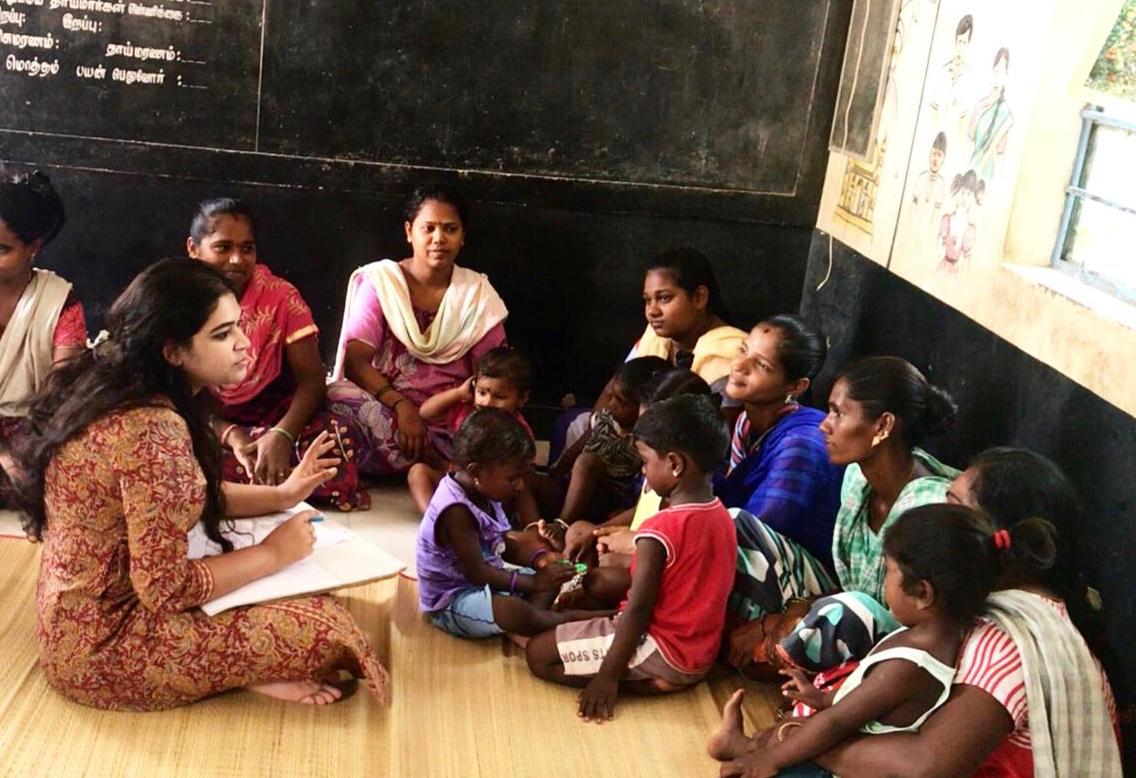
Celebrating Youth in Social Sector on International Youth Day
On International Youth Day, we asked the young people who worked with us, what brings them to the social sector.
What are the lessons learned by Microfinance Organizations from COVID-19 pandemic? We share the results of a study conducted by our group organization, Belstar Microfinance across its customer base. This study also helped Belstar prepare itself for a post-COVID world.
With the COVID1-19 pandemic, lives and livelihoods across the nation were affected and the economically weaker section witnessed a huge blow. Workplaces shut down, bringing millions of workers and small business owners among others to deal with the loss of employment, fall in income levels, food shortages and uncertainty about their future.
To build a deeper understanding of the livelihood crisis especially within its customer base, and explore solutions to address some of the existing customer level challenges, Belstar Microfinance Limited (Belstar) and Hand in Hand, India, undertook an impact study.
A Study on the Impact of COVID-19 in Rural India
The study was undertaken in all 17 states and Union territories that Belstar has its microfinance operations. The respondents were selected through a purposive sampling method to ensure diversity in location and type of work done. An average of 100 regular customers per state, with payment/non-payment records in the month of May was chosen. More than 90% of the survey sample belonged to rural areas. The respondents were interviewed between June 15 and June 30, 2020; thus, the findings might differ with respect to the current circumstances.
The Objective of the study were two:
– Understand the extent of impact on livelihood on their existing clients
– Understand the financial health of the customer base
Key Findings
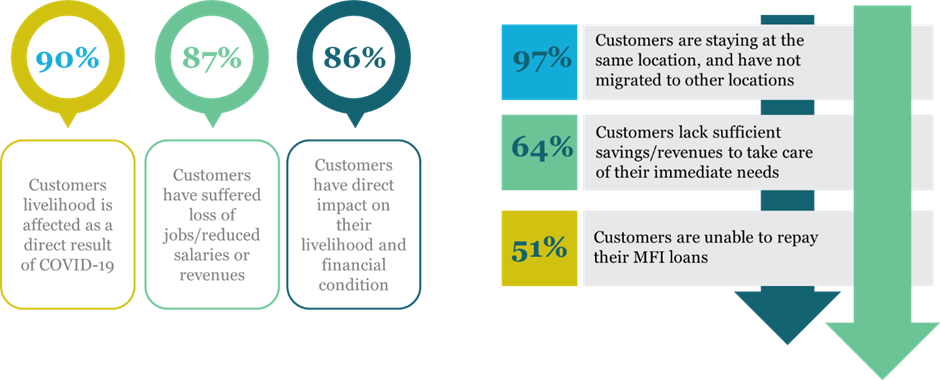
1. Almost 90% livelihood of the customer base are affected as a direct result of COVID-19
While the effect on livelihood impact of Covid-19 was well known, it has massively hit the customer base of microfinance institutions (MFIs).
89.8% of the respondents reported that they have been affected by the aftermaths of the Covid-19 virus. This is primarily because the microfinance companies cater to third quintiles of the income distribution pyramid and have very minimal stability of income.
Odisha and West Bengal had a double whammy hit of Covid-19 and cyclone Amphan during the said period, which resulted in 100% affect to the customer base during the lockdown period.
2. Job loss for 87% of customers
More than 87% of the customers contacted have either lost their job or must live with reduced salary/revenues. Merely 12% of the customer base reported either No change or increase in revenue, during the lockdown period.
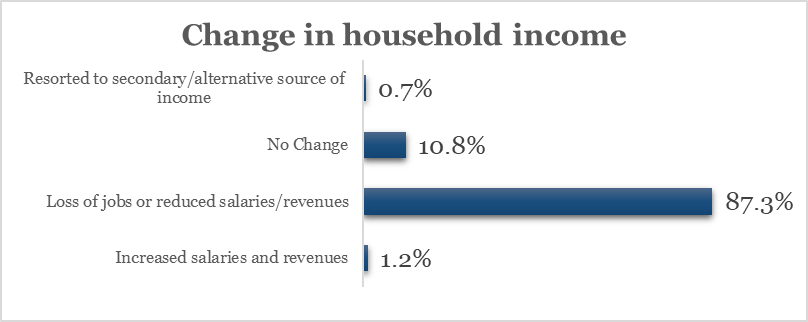
A similar macro level study conducted by Rustandy Centre for Social Innovation, has also reported 84% of households had a fall in income, due to the lockdown.
Movement restrictions played a pivotal role in hampering the livelihood of the customers. States like Gujarat and Kerala where there was an initial outburst of Covid-19, the livelihood got impacted because of concerns of leaving household (due to health) and limited transport facility. Furthermore, the impact was worsened by reduction in demand and inaccessibility to markets.
3. Livelihood impact on customers
The spread of the epidemic and the economic lockdown enacted in response have impacted the daily lives of nearly all Indians. The same has been certified by respondents interviewed, who felt the heat of the lockdown in their livelihood and financial conditions.
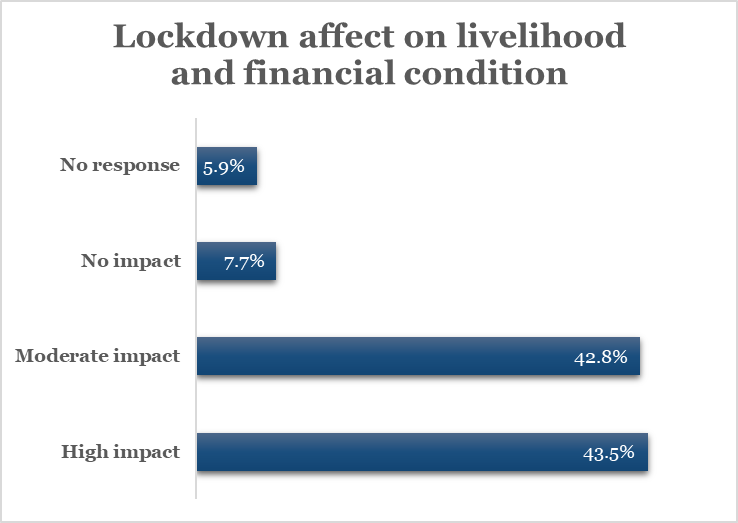
More than 86% customers have been impacted as per the survey. The customer base comes from a section with predominantly labours and working-class population, who are more prone to income fluctuations. Various studies validate this assessment, for a similar customer segment.
4. Lack of immediate savings for 64% customers
More than 85% respondents have a family of 4 or more. Given the low baseline wealth of many households, a large share of Indian households’ state that they will be unable to continue — even over relatively short periods — without additional assistance. Across India, 64 percent of all households’ report being unable to survive without additional assistance.
5. More than half the customers are unable to repay their MFI loans
The severe effects on the livelihood of the people are likely to impact their capability to continue loan repayments of microcredit lending institutions. Around 40% respondents have an exposure to more than 1 MFI while 86% have an average total loan outstanding between Rs. 25,000 – 50,000
Despite high number of households reporting low in savings, a good 49% of clients have shown willingness and stability to repay their MFI loans. This can be attributed to the microfinance sector which is unique in being a double bottom line of financial and social objectives. The sector has stood with its customers in tough times, and the customer has also shown resilience time and again.
6. Little or no migration to other locations
Though problems with migration of labor, and its aftermath have caught many eye balls in the country. As per our data assessment, only 3% of the surveyed client base has relocated with states like West Bengal, Uttar Pradesh, Maharashtra, and Gujarat reporting 0% migration issues.
However, for the ones staying at the same location, sustaining their household needs is a bigger challenge. In such a crisis, sensitivity of lending institutions towards their economic welfare will instil a sense of trust and belongingness among the borrowers, thus assuring lesser payment defaults in future.
However, for the ones staying at the same location, sustaining their household needs is a bigger challenge. In such a crisis, sensitivity of lending institutions towards their economic welfare will instil a sense of trust and belongingness among the borrowers, thus assuring lesser payment defaults in future.
The Assessment
The COVID-19 pandemic and the consequent lockdown infused a sense of fear for both health security and financial stability. The effect was acutely felt by the lower stratum of the financial pyramid who are already prone to financial instability. While the disruptions in livelihood have been severe, the chances of reviving a steady income have also dwindled, given the fragile state of economy.
The analysis revealed two important conclusions:
• Due to impact on livelihood, a large majority of the customer base is having a Saving crisis at their household
• Customers with higher loan outstanding range have a high probability to default/delay the loan repayment to MFIs
Also, the Financial Stability Report of RBI states that the overall economy is going through a tough time and the proportion of NPAs with the banks are likely to go up. As per the report, ‘Macro stress tests for credit risk indicate that the GNPA ratio of all SCBs may increase from 8.5 per cent in March 2020 to 12.5 per cent by March 2021 under the baseline scenario. If the macroeconomic environment worsens further, the ratio may escalate to 14.7 per cent under very severe stress.’ This leads us to an estimated increase in NPAs for MFIs in a substantial manner.
The above estimates lead NBFC-MFIs to a vicious cycle of increased payment defaults and reduced operational sustainability, which furthers increases the difficulty in arranging for bank funds to sustain their operations. The risks further strengthen for institutions with smaller sized Balance sheets.
Interventions
Preparedness to deal with potential NPAs
While the collections within microfinance sector is slowly gaining momentum, we estimate 5-10% of the current loans to turn NPAs . Subsequently, as the economists don’t expect a V-shape recovery, augmenting capital, reducing operating expenses, and creating upfront provisions can help balance the expected rise in PAR.
Focal shift from expansion to stability
MFIs are likely to become risk averse and would not target new client onboarding and fresh geographies. The business expansion must be gradual and cautious, focusing more on quality of the disbursements instead of being aggressive. The state-wise difference in severity of impact on livelihood, can help assess expansion potentiality and reduce negative repercussions.
Innovative but customer centric business approaches
While this lockdown has been a jolt to the MFIs, it has also opened arenas for adopting long pending innovative techniques. MFIs can harness technology to keep their clients connected to the financial system even in the face of crisis. The use of technology mitigates the risk and lack of information associated with underserved households via digital financial services and enhanced risk-assessment skills.
In such testing times, it is important for MFIs to retain their customers and its goodwill in the market, apart from gradually recuperating its business operations. The need of the hour is to evaluate the effect of pandemic and lockdown on the customer base and estimate the impending impression of this effect on business activities, thus enabling the management to make informed decisions. At the same time, it gives us an opportunity to assure the customers that apart from being a lending entity, the organization is also committed to ensure the greater good of its clients.
This study was authored by Divyani Jain, Biju Sasidharan and Arpan Sahni of Belstar.
Belstar Microfinance Limited (Belstar) is a Non-Banking Finance Company (NBFC) and a subsidiary of Muthoot Finance Limited. Belstar’s business model is unique as it pursues a double bottom line focusing on both financial performance as well as social performance with the assistance of the Hand in Hand India in alleviating poverty coupled with community development. Belstar provides microfinance loans in semi-urban and rural areas under the SHG and JLG-based lending models.
As on March 31, 2020, Belstar operates in 17 states and one Union Territory with 603 branches and a loan portfolio of INR 2630 crore and 12 lakh borrowers.

How a Microfinance Organization can prepare for a post-COVID world
With the COVID1-19 pandemic, lives and livelihoods across the nation were affected and the economically weaker section witnessed a huge blow.
A vast majority of India’s farming operations is carried out by marginal farmers, who may or may not be landholders. With small landholding, these farmers face several problems – lack of control on cost, process efficiency, scaling to bigger levels and most importantly, access to finance. Solving these problems is the idea of a cooperative association or a Farmer Producer Organization (FPO). Today, with the Athmanirbhar Bharat model gaining importance, FPOs play an important role in linking farmers producers with agri-food markets or the consumer. More so, during COVID-19 lockdown, these FPOs have adapted to the new situation and focusing on product differentiation and food safety.
Our recent series of webinars have focused on various development related topics, the latest one being the ‘The Future of Farmer Producer Organizations in India’. In this seventh edition of our webinar series, our esteemed panellists discuss the way forward for FPOs and strategies to unearth their potential. Our discussions as captured below focused on how the FPO acts as a catalyst for farmers, equipping FPOs for efficiency and how to achieve profitability.
Here’s a brief on our panellists:
Dr.Venkatesh Tagat is Chief General Manager (Retd) of NABARD who initiated the development of producer organizations in 2014 and has authored a paper on FPOs in 2016.
Mr. Anil Kumar is the founder of Samunnati, driving markets for smallholder farmers through his organization.
Prof Annapurna Neti is Associate Professor at Azim Premji University and comes with vast experience in MSMEs, financial inclusion and producer companies.
Ms.Kusum Balsaraf is the General Manager at Mahila Arthik Vikas Mahamandal Ltd. She has managed several Government schemes and worked in grassroots livelihood promotion.
The discussion was moderated by Mr. N Krishnan, a farming enthusiast and our Chief Operating Officer.
Question: How do FPOs act as a catalyst in changing the farmers' economic situation?
VT: The two most critical problems of farmers are – cutting down on cost of cultivation and setting a better market price for produce. Cutting down on cultivation cost is not easy, as farmers spend most of their money on purchases, while market pricing is not within their control. These are the two points which FPOs help in a macro level – by providing better input supplies through bulk purchases, for instance, seeds and fertilizers are cheaper when bought in bulk. A critical role is also played in getting access to markets.
KB: In addition to the two issues mentioned, we also noticed farmers do not have a risk-taking behaviour as individuals. The cooperative format of FPOs have stringent rules and help farmers who are otherwise illiterate to grow together.
AN: The economy of farming can only be increased through greater participation and control over the value chain. FPOs will help strengthen value chains and creating more jobs.
AK: FPOs help farmers only if the produce is being sold at market prices, if they support farmers in primary processing and finally aid in bringing a little liquidity for their next crop. Only if these factors are covered, can an FPO improve income generation in farming. The role of an FPO is complex; farmers face a loss when they sell right after harvest when prices are lowest. An FPO at this point can offer liquidity to the farmer by ensuring support for selling at higher prices. The set of farmers who come together as the FPO should have access to the working capital as soon as market linkages happen.
Farmers are comfortable farming and not running an institution alongside their regular day. Hence a sound marketing advisory is essential for FPOs to develop their capabilities as an institution.
Question: FPOs are for the farmers and run by the farmers. How are they equipped to navigate complex areas such as credit access, management, governance?
AN: Compliance requirements for FPOs are important. Often it has been seen that farmers who are the producers are also seen as the supplier to the FPO, in some cases they could also be a consumer, the owner and a part of the board of the producer company! It is difficult for these small and marginal farmers to navigate these roles as a professional. Hence it is necessary to have a good resource institution who can handhold and help these producer companies through challenges and compliance requirements.
AK: The main objective of bringing these entities under the Company’s Act is to bring out a governance dimension. Compliance in terms of secretarial/audit dimension is essential to the FPOs as part of their engagement. This makes FPOs stronger in ways like risk mitigation. It is a symbiotic relationship where they are compliant when the farmers are compliant. So investing in these building blocks in the initial days are quite quintessential.
KB: Since company laws are stringent, resource organizations should give handholding support. The future becomes more sustainable when we invest in building capability.
Question: What are the critical elements that contribute to FPO viability (break-even and profitability)? What sort of model works well?
VT: A great starting point for businesses would be on the input angle. Procurement processes and access to market linkages are key to viability. Larger participation can help viability too.
AK: Active participation from members, aggregated demand, creating economic interest among members and importantly communication skills – make FPO models work well.
Question: How do you see the role of women in FPOs and how can their participation be enhanced?
AN: In India, among 7000 producer companies, there are less than 200 women. However, in recent decades, a lot of women collectives have trained them on multiple aspects such as financial literacy and business skills. The challenges seen in forming women FPOs from these Self Help Groups were: finding a common business activity to scale, governance issues and lack of awareness among board members of their responsibilities. Just because we have an SHG architecture we can't just form an FPC. We need an FPO policy to set the structure in place with strong business plans.
KB: Not even 18% of women own lands in India, which indirectly means they are not farmers and membership in an FPO is a question. Unless we create an enabling environment we can’t enable women to participate in an FPO. Other issues include gender biases; women labourers being paid less than men. Also, society diktats that expect women to handle household chores and FPO affairs makes it difficult without family support.
Question: To the extent possible, FPOs have to satisfy their role as both social and economic organization. How do we make the FPOs future proof – in terms of enhancing their financial capability, governance, and contributions to society? In other words, what is the way forward?
VT: An FPO’s viability is higher when it plays a role in ensuring agri-operations and becomes an essential service.
AN: The COVID-19 pandemic has show how important collective processes are, and how important technology helps FPOs take their produce to market. Support is required from the Government to ensure success.
KB: It is important to make FPOs more cohesive entities so they can influence the future of farming.Youth should be brought into this sector and technology plays an important role in this.
AK: Policy level initiatives are bringing in private sector capital flow into the agriculture sector and startups are working directly with farmers. This is an opportunity for FPOs.
Question: The role of youth in FPOs
VT: To attract youth into farming, we need to formalize a more enterprise based set up.
AK: Nature of the activity is important in attracting youth. An ability to handle technology in FPOs boosts the self-esteem of the young. They can deploy new-age techniques to make farming better.
Watch the webinar here!
Key Takeaways from the webinar
1. Focus of FPOs must be improving input supplies first, then on market linkages for the produce and later on processing, value addition and branding.
2. An FPC’s statutory compliance is important, but also difficult to achieve. A two-tier model can help, where Tier-1 FPCs with experience can help others. This arrangement can extend to the procurement of inputs, marketing of produce, capital investments for processing etc. Often, statutory compliance manifests into a better governance system, which in turn keeps a check on better compliance systems to be in place.
3. Women working in FPOs can transform the rural scene in terms of gender equity. Opportunities must be enhanced.
4. Increased participation of youth in FPOs helps in leveraging the role of technology in the farming sector.
Hand in Hand India’s Natural Resource Management wing has been implementing watershed programmes successfully since 2006. We work in the states of Karnataka, Madhya Pradesh and Tamil Nadu. Our team trains farmers in reviving agricultural traditions and promotes organic farming with training support. We also have helped organic farmers come together under a common umbrella called the ‘Indian Natural Farmer Producer Company Ltd. and help them market their products. Read more about our work here.
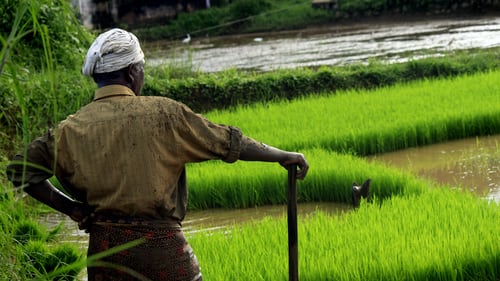
The Future of Farmer Producer Organizations in India
In our latest webinar series, the discussion was on the Future of Farmer Producer Organizations - the way forward for FPOs and strategies to unearth their potential. Here's a quick summary of what our panellists spoke.
The Purpose of Deepa’s Life: Her Daughter
Deepa, a Recycle Guardian from Melakottaiyur, dreams of a brighter future for her daughter through education. With support from Hand in Hand India, her family gained access to essential documents, government schemes, and financial literacy. Inspired by her daughter's learning, Deepa is also learning to read. Their story reflects resilience, hope, and the power of community-driven change.
_page-0001.jpg)


Towards a future full of dignity, hope, and choice.
Join our newsletter to see the impact firsthand